
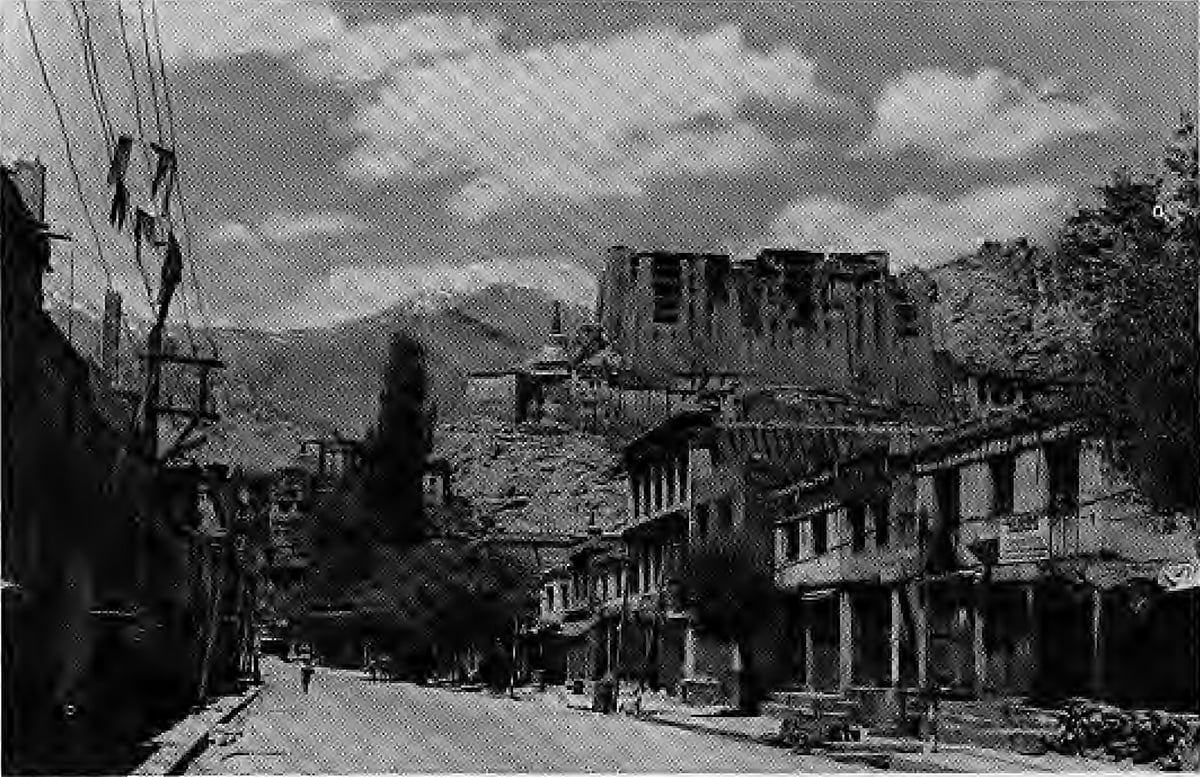
It has been a commonplace habit to refer to Ladakh as a "remote and inaccessible" region of India. In the past few weeks and months, the news from Ladakh has been such that it now appears to have been properly assimilated into the modern world, or at least the world of modern politics. The reports have a familiar ring to them, one that seems endemic to politics today: there has been unprecedented rioting between Buddhists and Muslims in Ladakh.
When reading the newspapers, one would think that this was an age-old rivalry. There are reports of explosions being set off in monasteries, shops being looted or burned, and stones being hurled at mosques. And through word-of-mouth less sensational but, perhaps, more tragic news: gangs of vigilante youth walk about beating up members of rival communities. For the first time in living memory, Ladakhi Muslims and Ladakhi Buddhists failed to exchange greetings at the festival of Id ul-adha.
One cannot be completely surprised by this turn of events. The incidents being reported are no more (and one might add no less) than a "sign of the times," and the times are those of the Kali Yuga. However, those involved, particularly the Ladakhis themselves, are not absolved of the need to know the genesis of the problems that have shattered their peaceful existence. Indeed, if there is any hope of arresting this downward spiral in the life of Ladakh, it Lies in an understanding of its beginnings.
There is no dearth of theories as to the causes of the riots. It has been suggested that the problems have arisen due to resentment amongst the Ladakhis at the Kashmiri merchants' monopoly of the tourists trinket trade. Other reasons suggested are election-year politics, economic competition within Ladakhi society, dissatisfaction with the state government, and even forcible conversions of members of one community by those of another. If the causes were so easily identifiable, their effects would only be temporary. But the real reasons behind today's riots in Ladakh are a bit more complex and have to do with the victimisation of Ladakhis, both Buddhist and Muslim, by the phenomenon that might be termed intellectual colonialism.