
This week at Himal
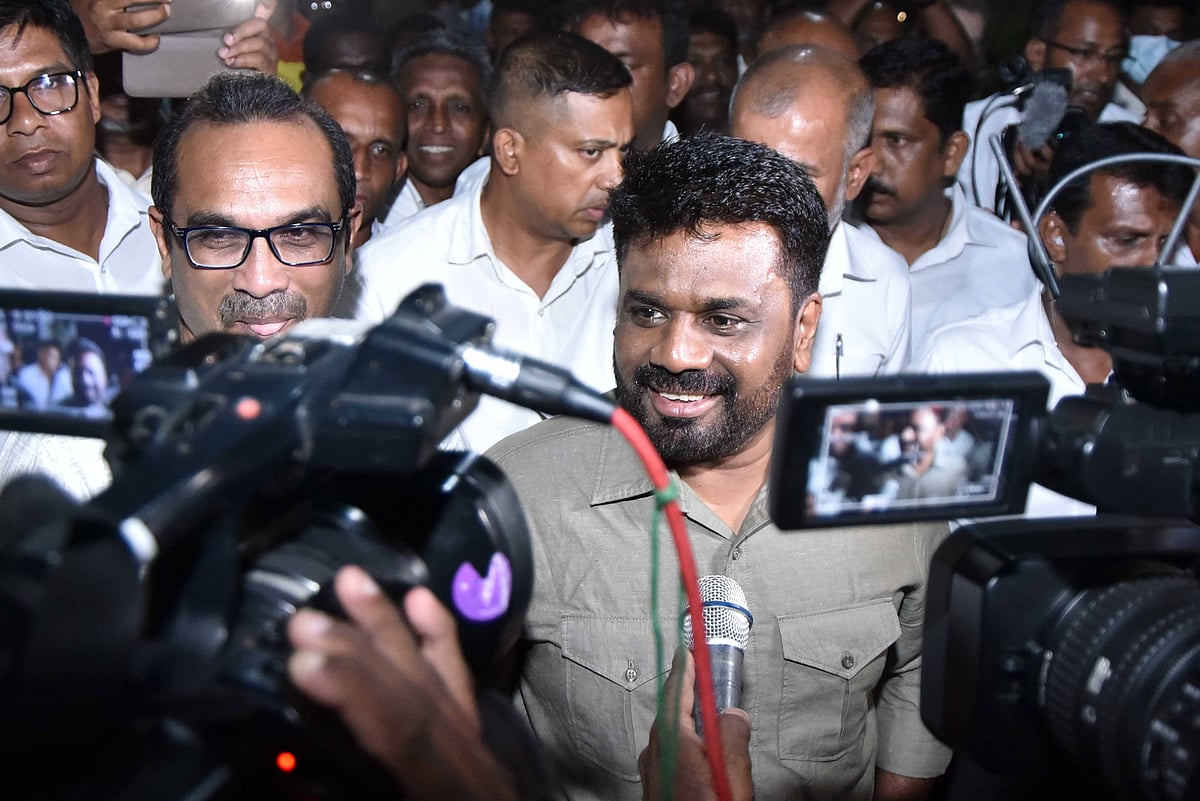
In the latest episode of the State of Southasia podcast, host Nayantara Narayanan interviews Ambika Satkunanathan, lawyer and former commissioner of human rights for Sri Lanka about Anura Kumara Dissanayake’s meteoric rise to executive presidency, powered by public dissatisfaction with the political establishment. Satkunanathan discusses why minority communities in Sri Lanka remain wary about Dissanayake, his first few days in office in which he has shown an openness to working with different groups, and the challenges he faces ahead.

Salman Rafi Sheikh writes that despite recent glimmers of hope about Pakistan’s economy, the country cannot meaningfully fight stagnation and mass unemployment without freeing control of its resources from the highest echelons of the military, bureaucracy and political class.
You have just three more days to catch Supermen of Malegaon, directed by Faiza Ahmad Khan, our featured documentary for Screen Southasia this month. If you want to sign up to watch it (for free!) click here.

Manage your preferences here.
Also read: Elite capture is the real issue plaguing Pakistan’s economy
This week in Southasia
Nepal and Myanmar struggle to mitigate impacts of flooding
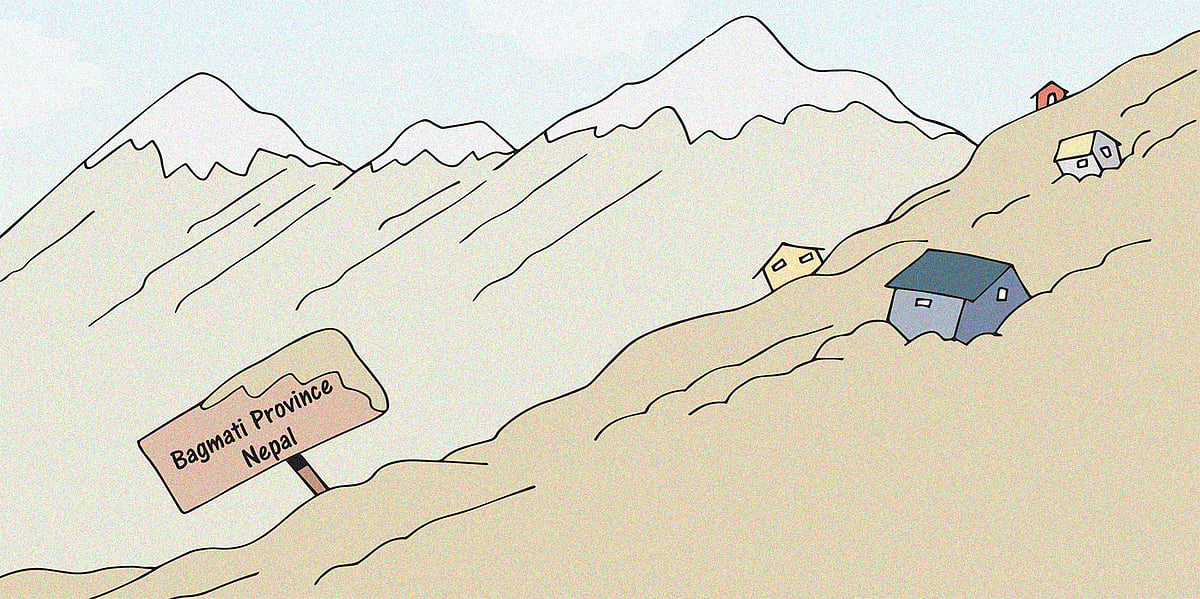
The last couple of weeks have seen the impacts of climate change and unplanned development on the Southasian region. In Nepal, more than 200 people were killed and thousands of houses were damaged as record breaking rainfall (the highest recorded since 2002) caused the Bagmati river to breach its banks. The flooding mainly impacted Kathmandu and surrounding areas. Nepal’s army reported that more than 4000 people were rescued using helicopters, ziplines and rafts as damaged infrastructure and roads hampered rescue operations. In mid September, flooding caused by Typhoon Yagi saw over 200 people killed, with the devastation spanning nine states, and with as many as 388 relief camps opened across nine states.
Experts say climate change has increased the frequency of extreme weather events, including typhoons and flooding. However, analysts also pointed to haphazard planning and urban encroachment around the Bagmati river in Nepal which worsened the impact of the flooding Nepal’s drainage system has also not been updated to cater to Nepal’s growing population. In Myanmar, the military has allocated just USD 14.3 million (or 30 billion kyats) for flood relief, in stark contrast to their bumper defence budgets, which the junta continue to use to carry out indiscriminate air strikes. The recent headlines underscore how the Southasian region continues to be disproportionately impacted by climate change, despite contributing less to overall emissions and having fewer resources to adopt climate-friendly policies.

Elsewhere in Southasia 📡
- Climate activist Sonam Wangchuk released from detention after arrest at the Singhu border, will meet with Indian Prime Minister or President soon to address Ladakh concerns, including calls for statehood and inclusion under the Constitution’s Sixth Schedule
- Protesters in Dhaka stage sit-in in front of Chief Adviser Muhammad Yunus’ residence, seeking a meeting to raise concerns about increase in age limit for government jobs to 35 years old, police fire tear gas
- Maldives Monetary Authority (MMA) issues regulations requiring tourism facilities to exchange a set percentage of their foreign currency income and USD 500 per guest through local banks after reports of falling foreign currency reserves. MMA Governor Ahmed Munawar says new regulations will create a stronger demand for the Maldivian Rufiyaa.
- Afghan journalists report hundreds of cases of abuse by government officials, including torture and arbitrary detention, as well as increasing censorship under the Taliban including new media regulations banning government criticism, live shows
- Pakistan’s Punjab government imposes Section 144 in Lahore, banning political rallies, sit-ins and protests for six days, ahead of Pakistan Tehreek-e-Insaf’s planned protest against inflation and for release of party founder Imran Khan
- International Monetary Fund officials meets Sri Lanka’s new government economic team, reviewing the IMF programme and the country’s ongoing economic reforms
- Bhutan’s government partners with Anil Ambani-led Reliance group for major renewable energy projects, including a solar plant and hydropower project, marking one of the largest foreign investments in the nation’s energy sector
- One person killed and 30 others injured while protesting outside garment factory in Dhaka, defying ban on public assembly ban near public administration buildings imposed by Bangladesh's interim government
- New data reveals 77 percent of sewage and septic tank workers workers are Dalit, and 92 percent from Scheduled Caste, Scheduled Tribe and Other Backward Class categories, despite Union government denials
- Myanmar launches nationwide census which it says is for voter lists for upcoming elections, while anti-junta groups urge boycott to avoid legitimising junta rule
- French museum which replaced ‘Tibet’ with China-approved name ‘Xizang’ in its exhibits says it will undo change after backlash from Tibetans
- In good news for regionalism, Nepal, Bangladesh and India sign tripartite deal to trade 40 megawatts of electricity, the first allowing Nepal to sell electricity to Bangladesh
Only in Southasia
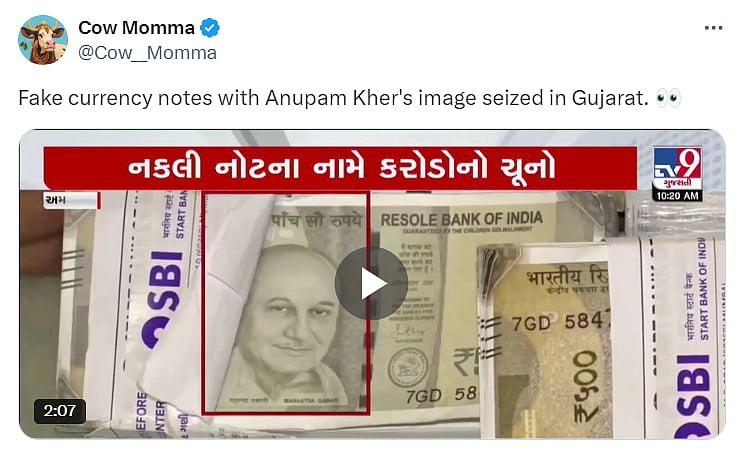
A bullion trader in Gujarat was cheated out of 2.1 kilogrammes of gold in a most unusual way. Two unidentified men handed over currency notes worth 1.6 crores (over USD 190,000). There were just a few small problems - instead of Gandhi’s face, the notes bore the image of veteran actor Anupam Kher. The fake currency also had the words ‘Resole Bank of India’ printed on them, instead of ‘Reserve Bank of India’.And the notes were wrapped in paper proclaiming they originated from the Start (not State) Bank of India. Photos of the notes circulated on social media, drawing amused reactions, including from the Bollywood actor himself. “Anything can happen”, he declared.
Clarification: Last week's newsletter described Namal Rajapaksa as winning 3 percent of the vote in Sri Lanka's recent presidential election, thus taking the mantle of "Mr 3 percent" from Anura Kumara Dissanayake, who previously held this unofficial title. A sharp-eyed reader points out that Namal actually only got 2.57 percent of the vote, and the rounding up to 3 percent is perhaps excessive. Point taken – and we hereby award Namal the title of "Mr. 2.5 percent" instead!
Got a meme or satirical post you'd like to share? Send us a meme that made you laugh from the past week here.
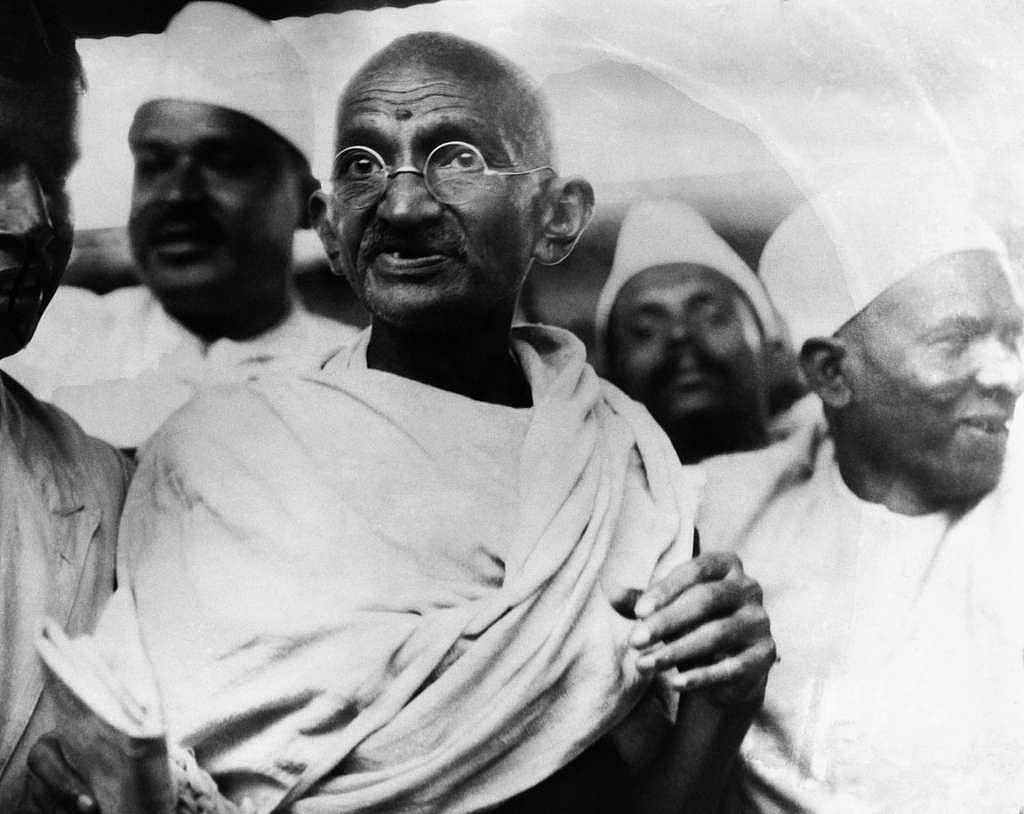
From the archive
The rhetoric of relevance and the graveyard of Gandhi (February 2010)
As India marks the birth of Mohandas Karamchand Gandhi on 2 October, Vinay Lal’s article from 2010, which takes a long, hard look at Gandhi’s legacy, is worth rereading. Lal unpacks and questions the idea of Gandhi as a historical figure of nonviolent resistance, finding that he rejected most critical categories of modern and humanist thought. Lal writes that modern Gandhi admirers have sanitised his legacy, making the very question of his legacy irrelevant.