
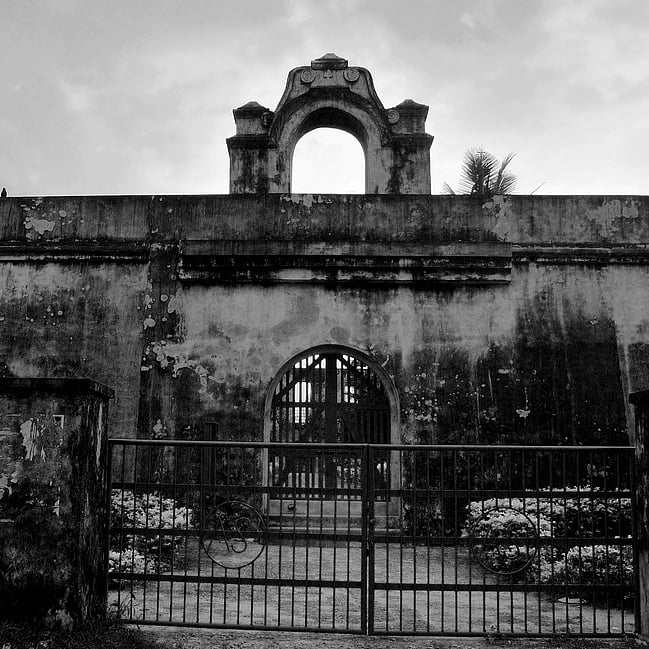
Summer was at its peak, the river water hot, but the lethargic noon silence was broken by a cacophony of birds, wings flapping, crows and vultures furiously circling the objects floating in the estuary. The people inside the fort were in the punkah rooms, sheltering from the extreme heat, and did not notice the avian turbulence at the river.
Towards evening, a few topasses – native servants of mixed race – came straggling back to Angengo Fort, off the Arabian Sea at Travancore. They were all heavily wounded, their bodies smeared with mud and blood, and broke the news of the massacre at the Queen's Palace at Attingal, where they had travelled the previous evening.
Their grand procession had left the fort in the afternoon on 14 April, 1721. It was the auspicious day of Vishu, the Hindu New Year, on which the Queen's subjects paid their respects and gave her their annual gifts. She had given the Honourable East India Company (EIC) the right to build a trading post at Angengo (which they called a Factory), in her kingdom. The Angengo settlement was built around 30 years earlier, during the reign of 'Queen Ashure', as the Rani Aswathi Thirunal Umayamma was called in English records. Her country was rich in pepper, and its calico was of excellent quality, but the relationship between natives and English traders had never been smooth. There had been constant disputes and encounters, and a decade earlier, the settlement was attacked by natives who accused the English of lodging pirates. Such skirmishes were routine in most early English settlements along Indian coastlines.
The Attingal Kingdom was a beehive of political intrigue. It was traditionally ruled by matriarchs, although real power was wielded by the Ettuveetil Pillamar – Nair chieftains from eight prominent houses – and their vassals, who controlled revenue collection and enforced caste hierarchy. These families were fighting among themselves for supremacy. After Umayamma Rani's demise, the chieftain Kudamon Pillai had installed his choice as the queen. This angered his rival, the Vanjimattam Pillai. The factors – the EIC's official traders at the English fort – played a part in these disputes and intrigues; the Company officials neglected to pay their dues to the queen, leaving the mandatory tributes to her in arrears for several years.