
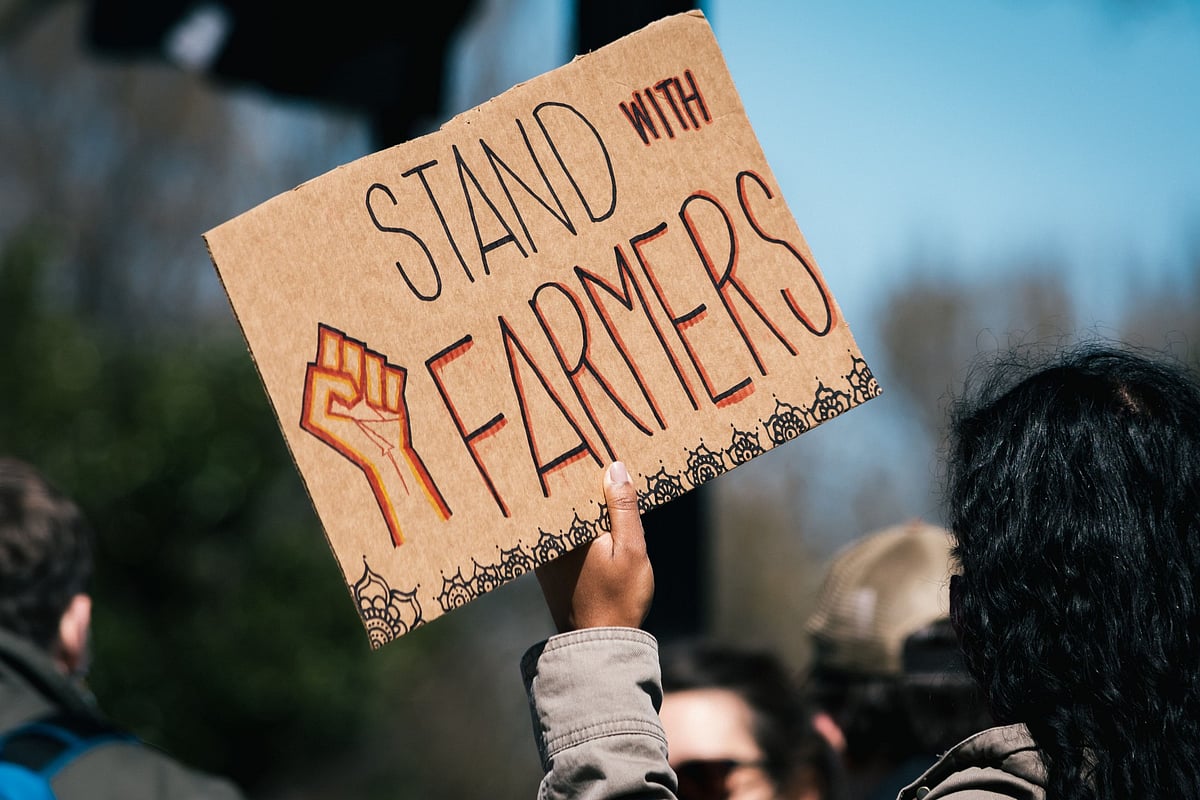
For the first time in the history of postcolonial India, two different parades marked the Republic Day 2021 celebrations in New Delhi. At the Rashtrapati Bhavan, the president's residence, the rightwing government organised a public spectacle of Hindu nationalism, parading tableaus of new temples and artilleries, and sanctifying them as emblems of the emergent 'Hindu nation'. Meanwhile, on the outskirts of the country's capital, thousands of farmers and agrarian workers took out a 'tractor parade', protesting the new farm bills passed by the ruling government.
The contrasting political receptions accorded to the two parades epitomise the postcolonial condition, as enforced by the Indian state and as endured by its working people. While the political establishment openly applauded the new tableaus of Hindu nationalism, the police forces publicly brutalised the country's farmers and agrarian workers, assailing them with a barrage of lathis and tear gas. Long after the official parade was over, the police violence continued unabated. And soon, the tableaus of bloodied farmers and workers suffocating in the plumes of tear gas became the unofficial postscript to the nationalist pomp of the Bharatiya Janata Party's (BJP) Republic Day celebrations.
And yet, far from being a mere exception, this onslaught of state violence has long been the rule that governs everyday political life in India. Indeed, these tableaus of police brutality are only one part of a perpetual rightwing parade, a macabre succession of pogroms and lynchings of Muslims and Dalits, state-sponsored attacks on public universities, settler-colonial violence in Kashmir, a full-blown war against tribals in the mineral-rich forests of Central India, and regular arrests of activists, intellectuals and artists across the country.
A few hours after violently suppressing the tractor parade, the police forces commenced an extraordinary operation of fortifying the New Delhi borders: setting up multiple layers of metal barricades, barbed-wire trenches, six-foot-high walls draped in concertina wire and deploying heavily armed contingents of the Rapid Action Force and the Central Reserve Police Force. Indeed, it is as if a full-blown border has suddenly sprung up inside the bounds of the Indian state, decisively fracturing its body politic into two contrasting political visions.