
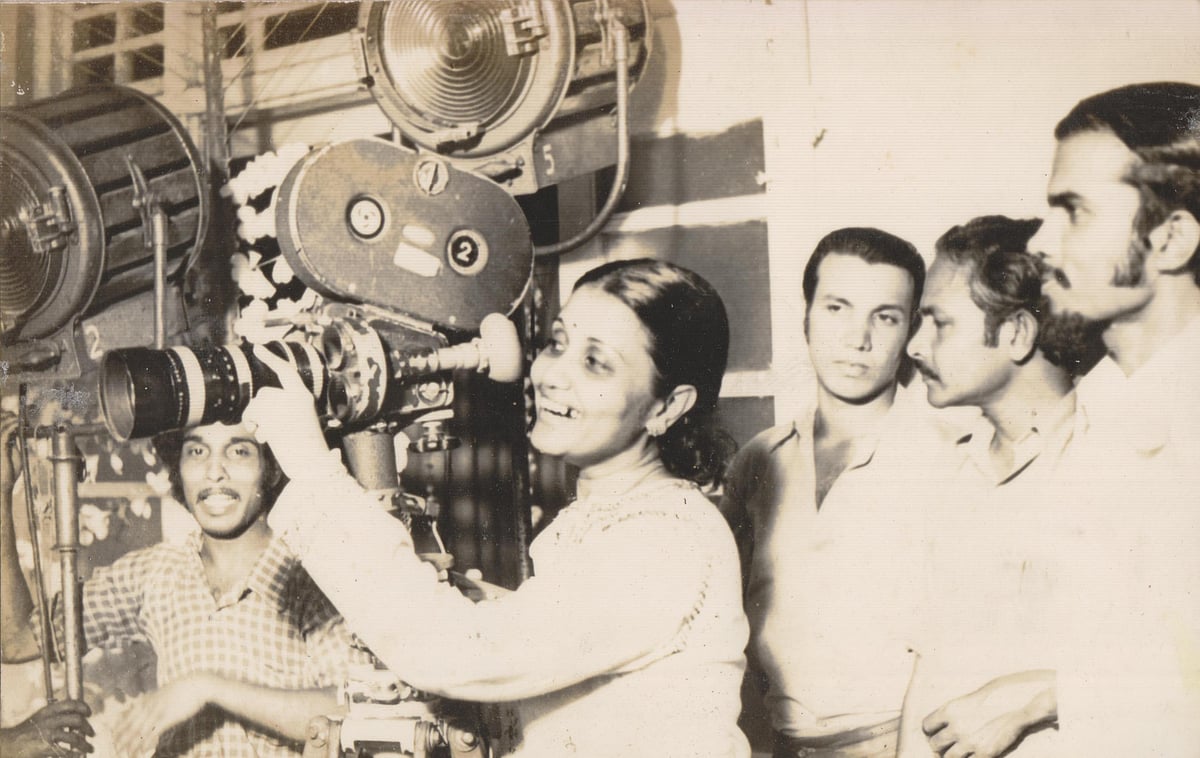
The past several decades of Southasian cinema have introduced technicolour spectacle, summoning vivid evocations of romance, action and history. This is one of the biggest film industries in the world, and today it has transformed into iconic categories of its own. And yet, while uniquely observant, Southasia's cinematographic gaze often objectifies women, representing them as transcendent symbols of imposed standards and expectations. Although many scholars have written on the region's mainstream film industry, few among them have noted the contribution of women pioneers – both in the field of representation and in highlighting the importance of women-centric stories.
While attempting a chronology of women filmmaking in Southasia is no easy task, the first key figure in this regard is Fatma Begum. In 1926, Begum made her first film through her own production house, Fatma Films. Later, in Pakistan, 'Sangeeta' Parveen Rizvi and Shamim Ara made their debuts as directors, while later in Bangladesh, Kohinoor Akhter, popularly known as Suchanda, followed suit.
What bound these women together was the way their careers developed. Almost all of them transitioned from acting to directing. It was later, with the onset of an experimental 'new wave' in Indian cinema in the 1980s, that a new generation of women filmmakers emerged. Directors including Mira Nair and Deepa Mehta took centre stage, helped in no small part by the contacts they managed to establish with filmmakers and film schools in the Global North. One among these remarkable women directors, who continues to stand out in Sri Lanka, is Sumitra Peries.
Spanning the almost eight-decade history of Sri Lankan cinema's existence, women's filmmaking has been irregular and fragmentary, similar to how early women filmmakers in the region saw their work shelved and forgotten. Though Sri Lanka's film industry is largely male-dominated, several women continue to make their mark, and not just in the field of acting. Sumitra's work epitomises this breakthrough, particularly her dedication to telling women's stories and revising the representation of women on the screen.