
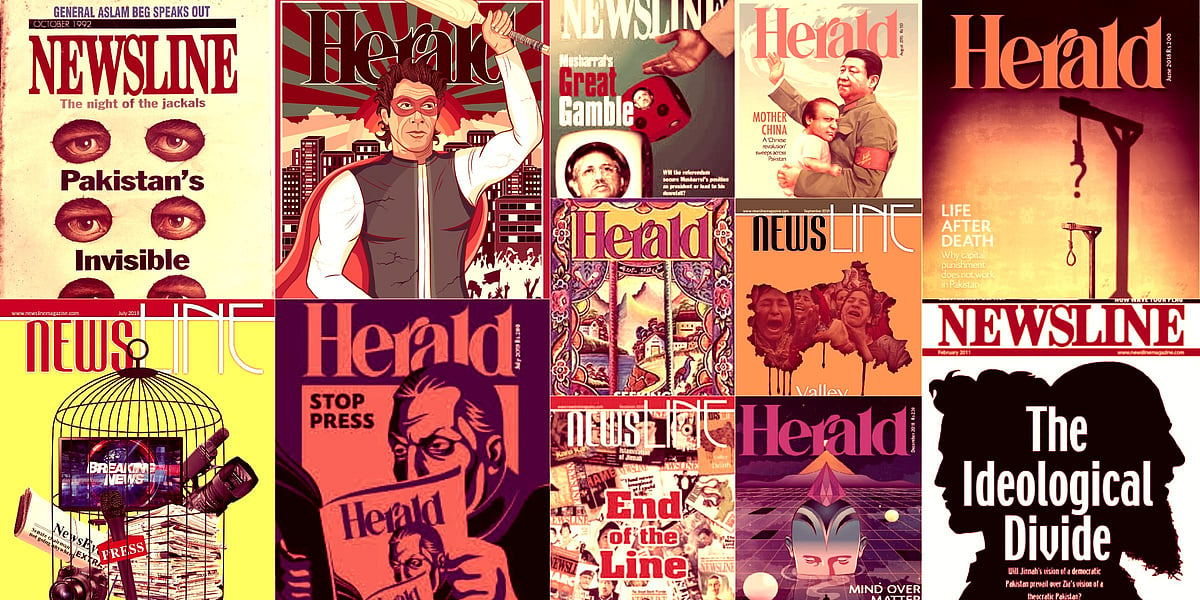
2019 was a difficult year for Pakistani journalism. Due to a history of state-orchestrated financial pressure and censorship, a faltering national economy, and poor management by media houses themselves, scores of journalists either lost their jobs, suffered significant pay cuts, or simply had to find work elsewhere to make a living. In the midst of the crisis, Pakistan lost two of its leading English-language magazines of current affairs the same year: Herald, which published its final issue in July and ceased its operations after 49 years of publication, and Newsline, which bid adieu in December after 30 years of existence.
Both magazines occupied a privileged place in the Pakistani print-media landscape, thanks to their fearless reporting and high standards. They won the recognition of readers and peers from around the world, housed and trained some of the best editors and journalists in Pakistan, and now leave behind a rich legacy – as well as a gap that will be hard to fill.
Connected histories
Herald was owned by the Dawn Media Group, which also publishes the country's best known English-language daily. Previously known as The Illustrated Weekly, the publishers renamed it 'Herald' in 1970. But the magazine as most came to know it – one which so infuriated General Zia-ul-Haq that, waving a copy of the magazine at a press conference, he said he could not tolerate its kind of journalism – was given shape in 1984 by one of Pakistan's most influential editors, Razia Bhatti. As political scientist Eqbal Ahmad put it, it was she that "had elevated [Herald] from a society rag to one of the best English language monthlies in the world." The magazine became particularly known for its investigative reporting and analysis at a time when the country was under a military dictator.