
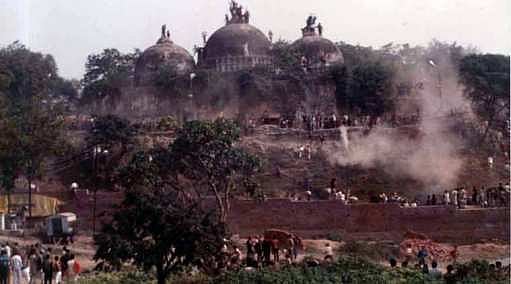
(From our archives: this article was featured in our January 2009 issue 'The many faces of terror')
On 6 December 1992, the demolition of the Babri Masjid by rightwing Hindu forces heralded a major shift in the Indian political landscape. In a way, it signalled that the long-cherished Indian variant of 'secularism', or the Gandhian notion of sarva dharma sambhava ('Let all religions prosper'), which held as its ideal the symmetrical treatment of all religions, was now increasingly outliving its utility for the ruling classes. And no wonder: since that time, the academic community in India has unleashed vigorous debates on secularism, and Indians have been greeted with all kinds of communitarian and postmodern critiques of the same. While the times to come will surely pronounce a verdict of some type on these sophisticated intellectual endeavours, let us first digress in order to explore some areas less treaded by the Indian academic elite.
Some examinations of the Babri episode have linked it to the neoliberal shifts in the Indian economy that took place around the same time, particularly the ambitious economic reforms launched by the Congress government in 1991. Such an approach has also required studying the concomitant need to promote authoritarian and fascist tendencies by powerful interest blocs to divide and tame the working classes. While such a perspective is quite conceivable, whether there actually existed any formidable working-class challenge to bring about such a drastic response from the powers-that-be is worth investigating. Meanwhile, other readings of the event concentrate on a major incident: the acceptance of a single recommendation put forward by the Mandal Commission report by the V P Singh government in 1990, which reserved jobs for Other Backward Classes (OBCs) in the central government.
This one measure resulted overnight in V P Singh being hailed as a veritable messiah of social justice by the disadvantaged castes. At the same time, however, it also precipitated what has been dubbed by the sociologist Gail Omvedt as the "twice-born riot against democracy", wherein the upper-caste youth took to the streets of North India, attempting to immolate themselves for what they saw as a 'darkening of their futures'. After all, how could such a loud test of the upper-caste monopoly of privileged public-sector jobs have gone unchallenged? In fact, V P Singh, in his deposition before the Justice Liberhan Commission of 2001, opined clearly that, "Mr L K Advani undertook the rath yatra in 1990 to counter the Mandal Commission's report, as the BJP was apprehensive that it might lose the middle class if the party supported the report." Moreover, "the BJP also did not want to oppose the report as it feared that it might result in alienation of the backward classes, and thought that religious issues would be the proper answer to cloud the Mandal issue."