
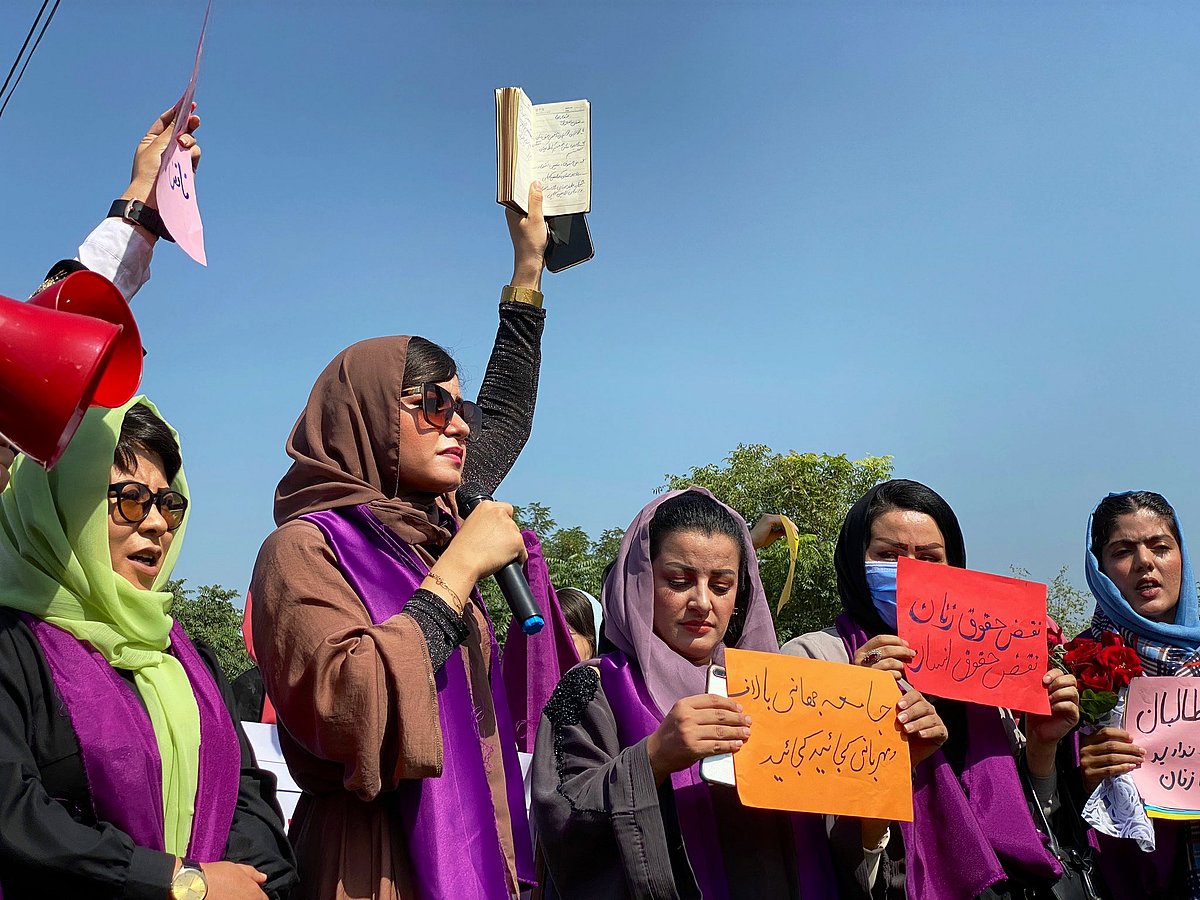
Among the first narratives to come out of Afghanistan after the collapse of Ashraf Ghani's government involved the erasure of women from public view. On 15 August, ToloNews TV head Lotfullah Najafizada tweeted a photo of a man painting over ads outside a beauty salon in Kabul, shortly before the Taliban advanced on the capital. Since then, women have been turned away from universities and workplaces, leading to protests in Kabul and Herat. On 4 September, a women's protest in Kabul turned violent, with Taliban forces using tear gas and at least one protester injured. As competing claims emerge from Panjshir, where there has been heavy fighting between the Taliban and the National Resistance Front, the fate of the country's women and women activists remains uncertain.
This is the subject of our interview with executive director of the Afghan Women Network, Mary Akrami, who also founded Afghanistan's first shelter for women fleeing family violence.
Himal Southasian: Can you describe what the situation in Kabul was when you were still there? When did you leave Kabul?
Mary Akrami: I was in my office when the Taliban entered Kabul, and I had to leave without even taking a notebook. I will never forget that moment. I was pressured by my family to leave first my office and then my home, as it would not have been easy for my family if I didn't. So I left for a family member's [house] near the airport. It was not an easy decision to make. I only left out of respect for my family. I am still in shock.