

This week at Himal
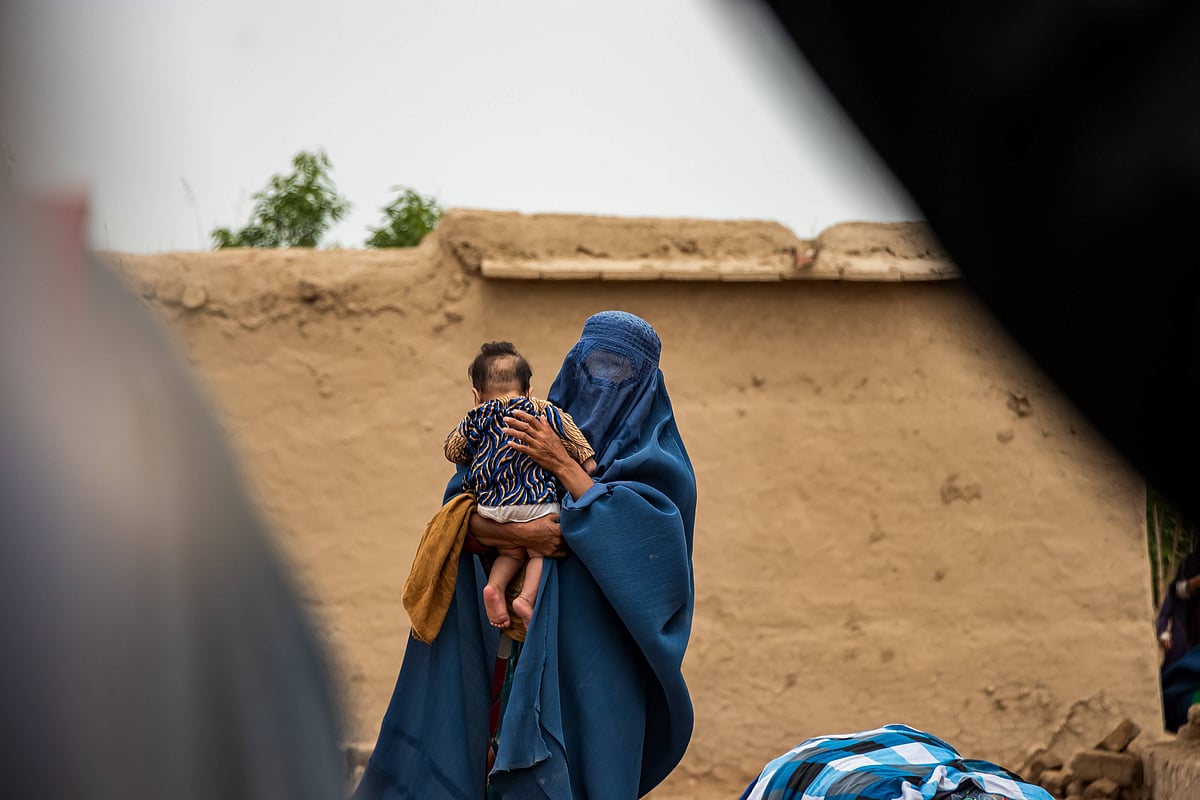
In a brand new episode of the State of Southasia podcast, host Nayantara Narayanan talks to Kate Clark, co-director of the Afghanistan Analysts Network, a research organisation in Kabul. The conversation unpacks recently introduced “virtue and vice” laws and their impact on the social interactions and private lives of citizens, Afghanistan’s reliance on foreign aid and how citizens have been coping with deprivation.
Sarah Anjum Bari writes that Noorjahan Bose’s memoir deftly weaves personal stories with political history, spanning Partition, the Bangla Language Movement, the Liberation War and the post-independence history of Bangladesh.
In a poignant personal essay, Sumana Roy writes about Maya-mushi, a sharp-tongued refugee and domestic worker whose use of Bangla proverbs and idioms often evoked plant life.
Next week, we’ll be streaming Prateek Shekhar’s Chai Darbari for Screen Southasia. Chai Darbari unpacks the sociopolitical context in Ayodhya as the city prepares for the 2019 general elections, revealing frustrations and anxieties. Sign up to watch it here.
Want to help shape Southasia Weekly? Take our quick 2-minute survey.
Also read: A Bangladeshi feminist’s personal – and political – history of her land
Also read: The Weed Woman: How a sharp-tongued refugee made a forest of the Bangla language
Also read: State of Southasia #08: Kate Clark on how Afghans are coping after three years of Taliban rule
This week in Southasia
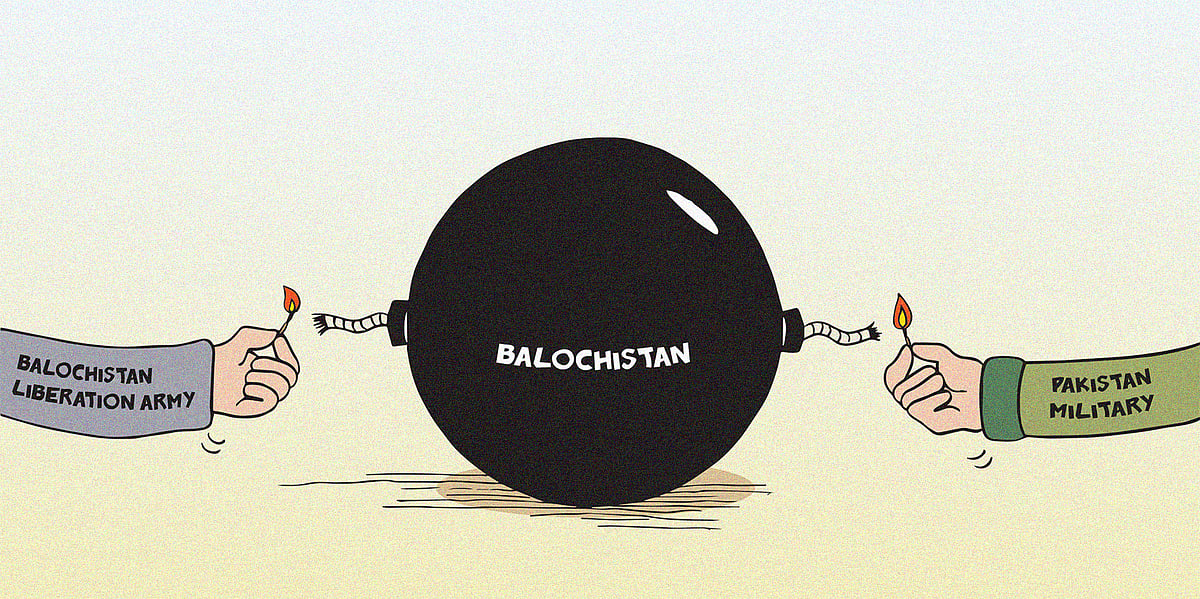
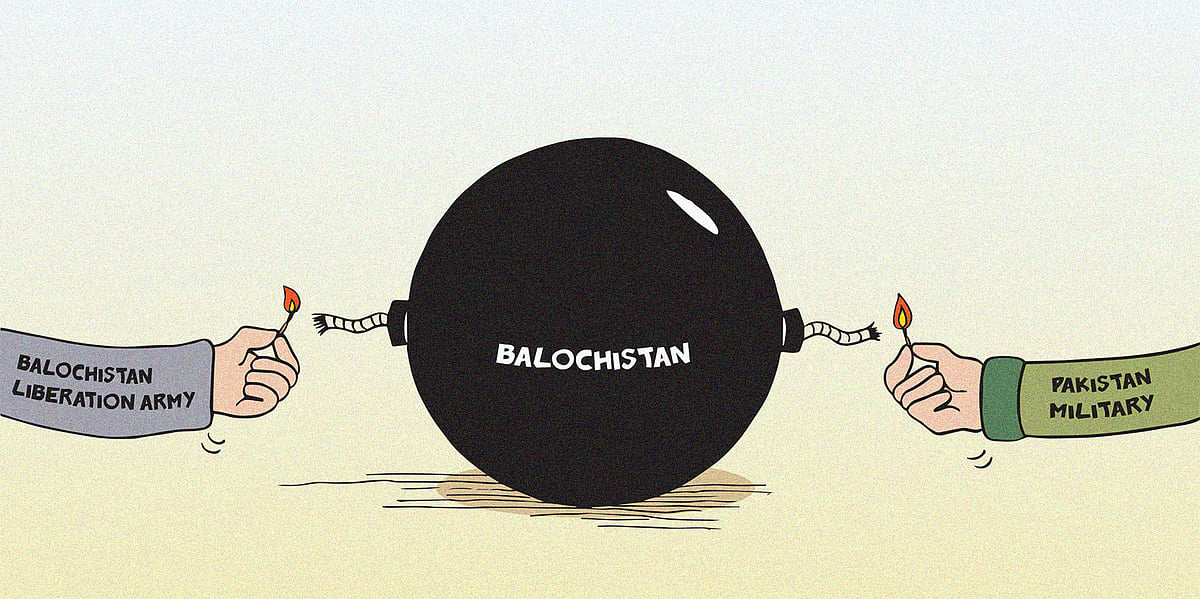
Targeted killings in Balochistan highlight Pakistan's inaction on Baloch issues
More than 73 people were killed in Balochistan after separatist groups attacked police stations, railways and highways this week. The Baloch Liberation Army, one of the largest separatist groups battling the central government, took responsibility for the attacks. This marked the first time the group launched several coordinated attacks in the space of a few hours. In one incident, gunmen killed 23 people after forcing them out of their vehicles and checking their identity, with all residents from Punjab singled out. In response, the Pakistan government approved an additional PKR 60 billion to fund counterterrorism operations in the region.
The attacks bring fresh attention to Islamabad’s continued insistence on using military tactics in Balochistan instead of addressing legitimate grievances, such as militarisation extrajudicial killings and enforced disappearances targeting Balochs, their calls to control their natural resources and genuine political and institutional representation at the provincial and national level. They also highlight the growing xenophobia of the Baloch Liberation Army in response to the state’s inaction on Baloch issues.

Elsewhere in Southasia 📡
- The Taliban codifies “vice and virtue” laws detailing behaviour and lifestyle restrictions, including measures for women to conceal their face, body, and voice in public. UN envoys say the law extends “already intolerable restrictions” on the rights of women and girls
- Kerala government announces special investigation team to probe allegations of sexual abuse as a growing number of women speak out against high profile names in the Malayalam film industry after release of Hema Committee report last week
- The Bank of Maldives announces card limits for foreign transactions, then reverses decision after intervention from the Maldives Monetary Authority, amidst reports of an upcoming financial crisis
- Bangladesh's interim government lifts ban on Jamaat-e-Islami party, previously put in place by former Prime Minister Sheikh Hasina’s administration, accusing its members of inciting unrest during the student uprising that led to her resignation
- India’s endemic Chandipura virus outbreak is the largest in 20 years with 82 deaths, says World Health Organisation
- Asset disclosure of all 39 candidates for the Sri Lankan presidential election reveals financial disparities among them, with media mogul Dilith Jayaweera and former law and order minister Wijeyadasa Rajapaksa declaring the highest monthly incomes
- Sri Lanka seeks stronger ties with Central Asian countries with a focus on economic diplomacy, the Ministry of Foreign Affairs said
- China closes border crossings in northern Shan to pressure armed groups battling Myanmar’s military junta into peace talks
- Hospitals in Nepal’s rural districts are overwhelmed by an influx of patients from the dengue outbreak. Health ministry officials admit the disease is shifting towards hill and mountain regions, revealing the impact of climate change on Nepal’s healthcare system.
- Bhutan hosts meeting in Paro with Bangladeshi and Nepalese government officials on improving water management using advanced technology to reduce risks posed by natural disasters.
- Activist group Justice for Myanmar uncovers global network of companies from European Union, United States, Israel and Singapore enable military junta’s continued use of Avions de Transport Regional aircraft
Only in Southasia
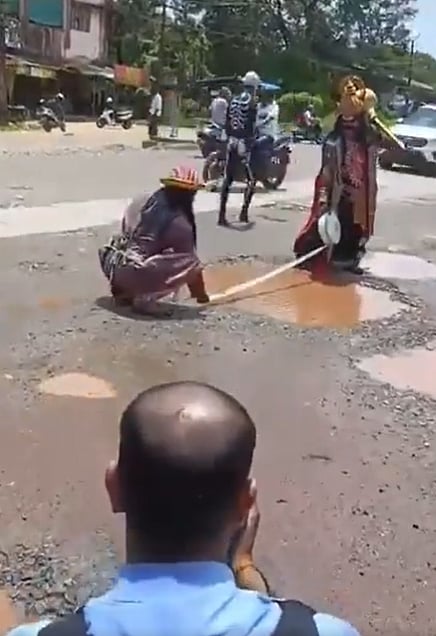
Recently, residents of Udupi in Karnataka came up with a unique way of highlighting the poor state of their road infrastructure. A video which went viral on social media showed Yamaraja, the Hindu God of Death, conducting a long-jump competition on the potholed road, assisted by Chitragupta, the deity who serves as a registrar of the dead, accompanied by a number of ghosts and ghouls. It was a unique form of protest to draw attention to the state of the heavily potholed Adi-Udupi-Malpe road.
Got a meme or satirical post you'd like to share? Send it to us here.
From the archive
Foothold in history (March 2016)
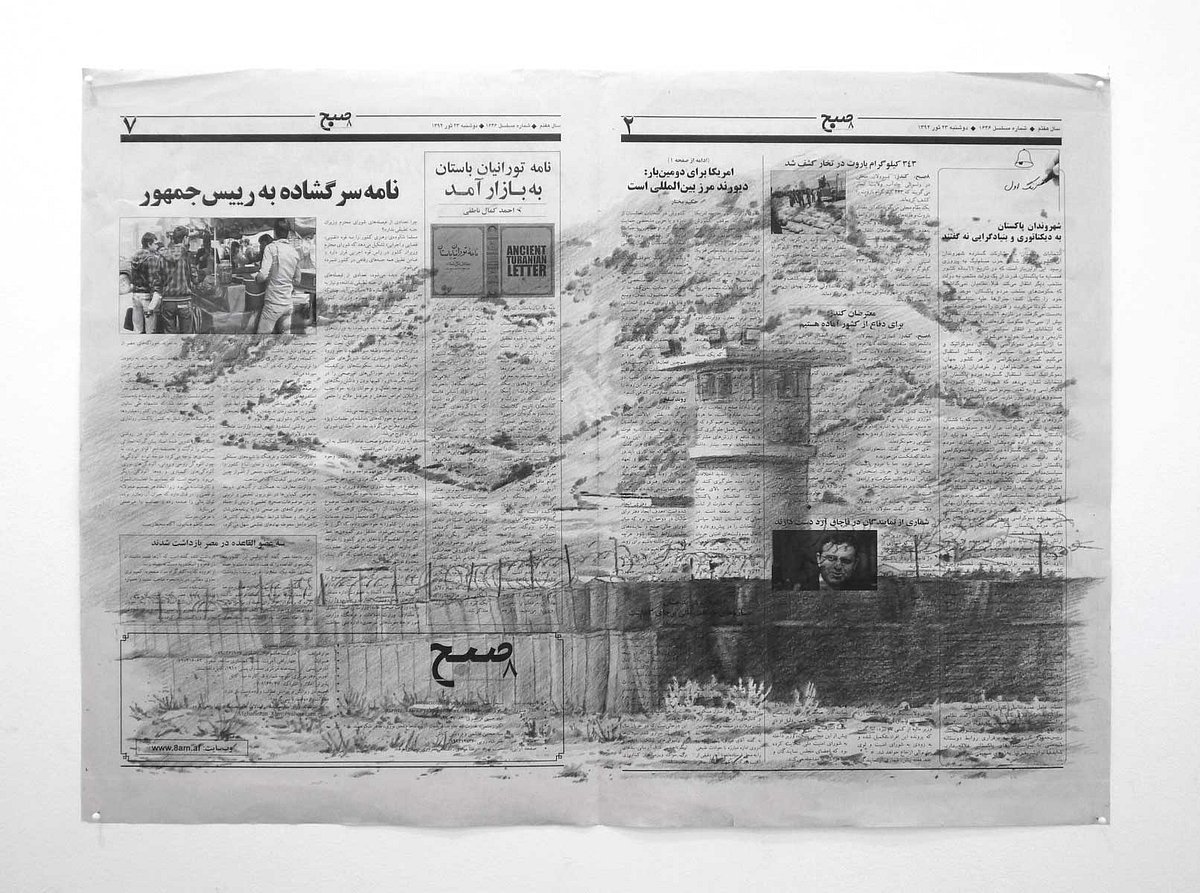
30 August marks three years since the US troops’ withdrawal from Afghanistan in 2021. In light of this, Noah Coburn’s article is worth re-reading. From 2016, Coburn tracks the withdrawal of US troops from Bagram airbase, the logistics hub of the war in Afghanistan. Coburn discusses how US money and political influence disrupted local politics, creating a mix of patronage, violence and commerce, which changed the landscape and divided people politically.