
In February 2021, Mushtaq Ahmad Wani, a resident of India-administered Kashmir's Bellow village, was arrested with six others for organising a prayer at an empty grave he dug with his own hands. According to recent updates from the ground, he was charged under the Unlawful Activities (Prevention) Act (UAPA) and spent several months in imprisonment. Wani had dug that grave for his 16-year-old son Ather Mushtaq Wani, a class 11 student killed by Indian forces in Lawaypora on December 30, 2020. Ather lies buried hundreds of kilometres away in the picturesque tourist spot of Sonamarg. The same year, the Inspector General of Police (IGP) of Kashmir, Vijay Kumar announced in a press conference that they had buried 158 armed rebels in isolated locations across the Valley in a move which, according to him, had stopped the 'glamourising' of "terrorists". He called this action historic.
Ather is one among thousands who lie scattered in unmarked graves (a few of these graves later marked by families) throughout the region, denied dignity even in death. What marks Kashmir, then, is not just an absence of people – or their bodies – but also a wider absence of justice, of freedom.
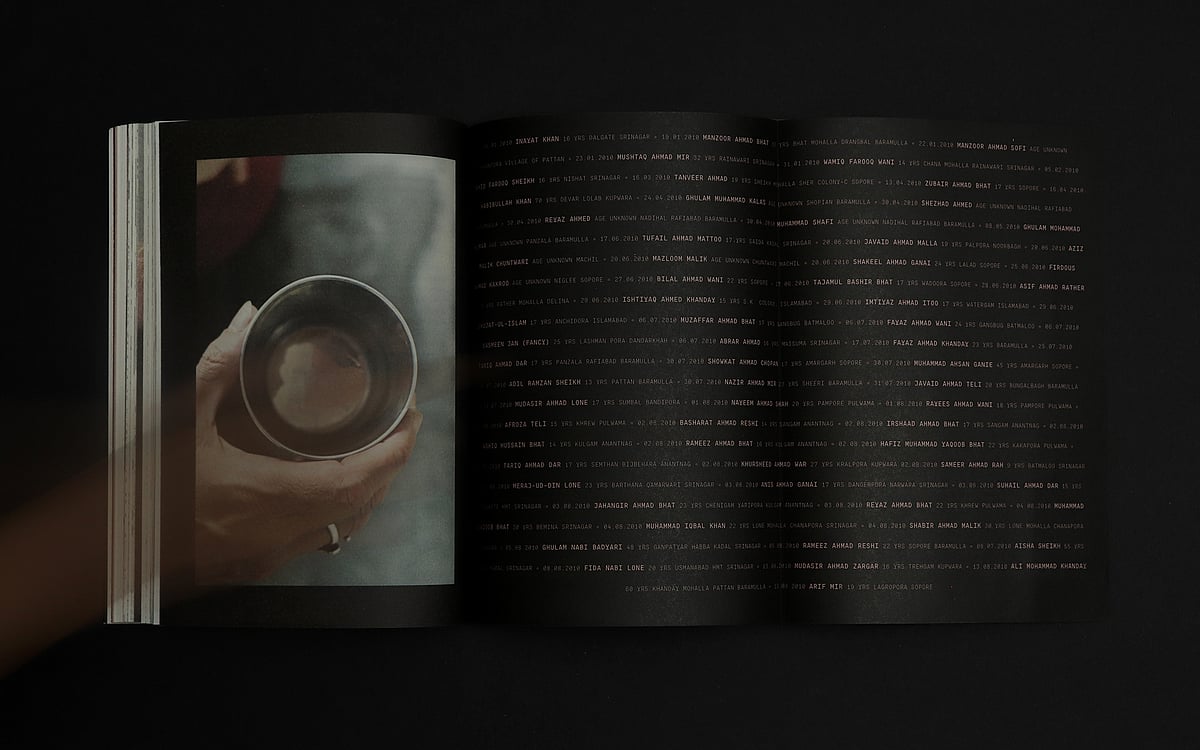
It is in the context of this absence that Australian artist Alana Hunt's work gains compelling urgency. Conceptualised as a participatory memorial honouring the deaths of over 118 Kashmiri locals killed by Indian forces during the 2010 summer uprising, her book Cups of Nun Chai joins several tender archives preserved over decades by Kashmiris to pay homage to their beloved martyrs. With public taps and town squares named after the fallen, as well as an inventory of flex banners and hoardings sprawled across the streets with photographs, promises, and prayers, the history of Kashmir's resistance is simultaneously a history of remembrance.
In 2010, news of three Kashmiri villagers being killed by Indian forces in Machil spread through the Valley, becoming a conduit for the oppressed to express their anger against decades of injustice under the Indian rule. The streets smouldered with young men and teenagers aiming stones at every emblem of the occupation. As protests raged for months, hundreds were killed and thousands were injured – some maimed for life. Yet, these lives and their aspirations made it to no global conversation. Unsettled by this silence, Hunt sat down to converse with 118 people across Australia, Europe, Bangkok, Southasia, and Jammu & Kashmir, where she photographed each person holding their cup of Kashmiri salt tea (nun chai). She wrote from memory about each of these conversations connecting Kashmir's story to various struggles against colonialism, fascism, majoritarianism, and state-sponsored violence across the world.