
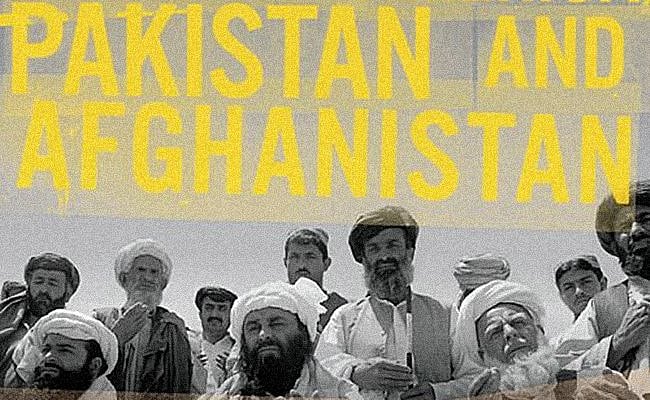
Pakistani president Asif Ali Zardari rushed to Chicago at the last instance in mid-May 2012 for the NATO Summit. The message had come from the White House that the US was willing to make some concessions if the Pakistanis would re-open the supply lines from Karachi to Afghanistan. However, when Zardari arrived in Chicago, US President Barack Obama snubbed him. The Americans found Zardari uncooperative. The supply lines would not re-open.
Relations between Pakistan and the United States have been fraught for decades, with occasional warmth when Washington sees some use for Islamabad, but more often marked with coolness. The fracas over the killing of Osama Bin Laden by the US and the arrest of Dr Shakil Afridi – accused of collaborating with the CIA – by the Pakistanis in retaliation, are only the latest in a string of such incidents. All this disturbs the Pakistani journalist Ahmed Rashid, who would like to see the Pakistani elite properly ally itself with the United States in their common war against extremism. Both seem to have a common enemy, the Taliban – whether its Pakistani or Afghan franchise – and yet, because of the limitations of the Pakistani elite (through the agency of the military and the ISI) this alliance has not fully germinated.
According to Rashid, Pakistani elite is in two minds about its American ally and about the Taliban. It is suspicious of American intentions, and wishes to keep the Pakistani Taliban and extremist element alive and well to use as leverage in Afghanistan against the lingering Indian threat. Rashid sees the Pakistani elite's view of the US and of India as unhealthy paranoia.
It is always a delight to read Ahmed Rashid, as his highly informative material comes packaged in crisp prose (perhaps under the lasting influence of Derek Davies, the flamboyant editor of the Far East Economic Review and a very capable stylist). What is less pleasurable is his claustrophobic political vision, which gets more and more airless with each of his books. I remember reading with great pleasure Rashid's The Resurgence of Central Asia (1994), written when Rashid was in full flower at, among others, the Far East Economic Review, and a decade after he had returned from the hills of Balochistan, where he had gone with his comrades from the London Group, including Najam Sethi, to join the armed struggle. Rashid's superb reporting from Afghanistan informed his book, Taliban (2000), which became a primer on that movement after 9/11. Its partner volume, Jihad, appeared in 2002, and took the story of political Islam further north into Central Asia. Rashid's next major book, Descent into Chaos (2008), took his work in a different direction. It was a book of great melancholia, worrying that both Pakistan and Afghanistan were on the precipice of disaster. In that book, Rashid laid the onus firmly on the Pakistani elite and on his friend, Afghan president Hamid Karzai. The US received a free pass, coming off as an honest actor trying its best to defeat the remnants of the Taliban.