
This week at Himal
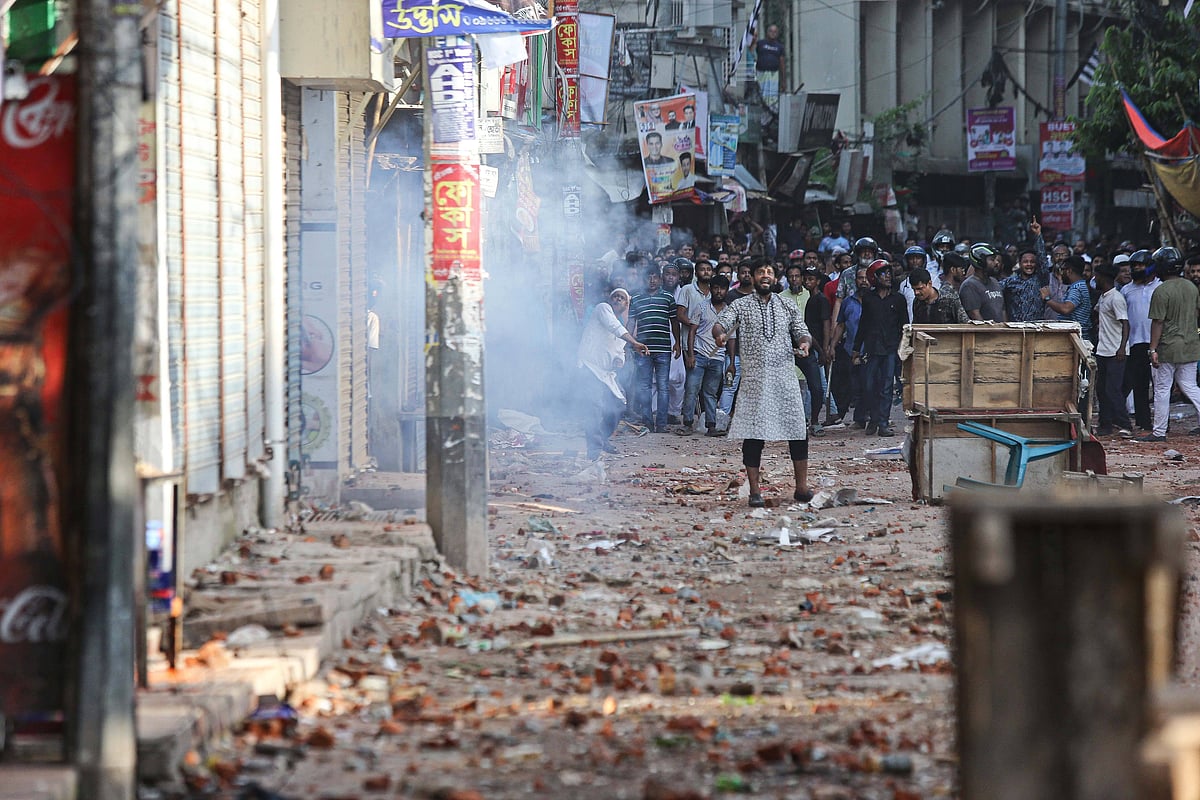
This week, the latest episode of the State of Southasia podcast saw host Nayantara Narayanan in conversation with political scientist Ali Riaz on how the ongoing mass protests have already caused the political ground to shift in Bangladesh. Riaz talks about widespread disillusion with the Awami League government which led to thousands to come out on the streets, despite the real possibility of violent reprisal.
From Sri Lanka, Uditha Devapriya writes about the complex dance of Sinhala and Tamil nationalist politics in Sri Lanka in light of Sri Lanka’s upcoming presidential election, with mainstream and Tamil-led parties taking increasingly hardline positions.
Auqib Javeed writes about how elections in Jammu and Kashmir saw record-breaking turnout, thanks to separatist groups deciding not to call for a boycott, allowing voters to express their frustrations with the central government’s actions in Kashmir.
This week, we’re streaming Iqraar Naama, telling the story of a Partition refugee family’s journey from Lyallpur to Amritsar as part of Screen Southasia, our monthly screening of Southasian documentaries in collaboration with Film Southasia. Sign up here, and join the Q and A with director Priyanka Chhabra on 5 August.
Also read: Sri Lanka’s complex dance of Sinhala and Tamil nationalist politics
Also read: Lessons from Kashmiris’ record 2024 election turnout – for Kashmir and New Delhi
This week in Southasia
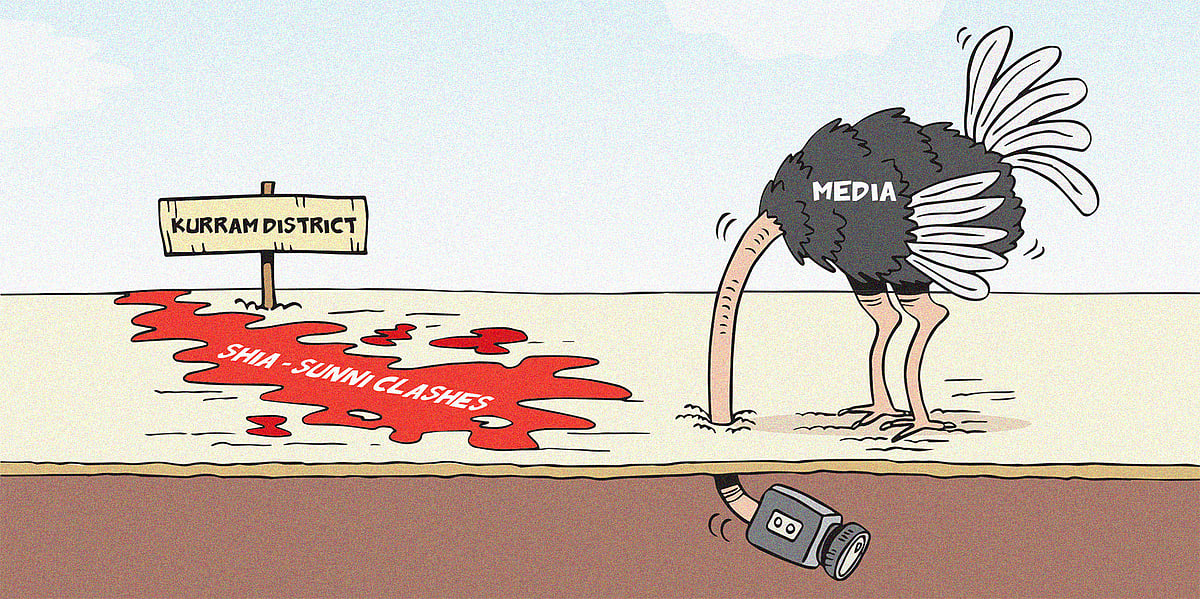
Sectarian violence in northwestern Pakistan leads to 49 deaths
At least 49 people have been reported killed and over 150 injured in sectarian clashes in Kurram district in northwestern Pakistan over the past week. What began as a land dispute between rival Shia and Sunni tribes in Boshehra village quickly spiralled into sectarian violence, fuelled by militant groups linked to the banned Tehreek-e-Taliban group from neighbouring Afghanistan. As a result of ongoing hostilities, there are shortages of essential supplies, including medicine, as the lone road in Parinachar (where much of the fighting is concentrated) is blocked.
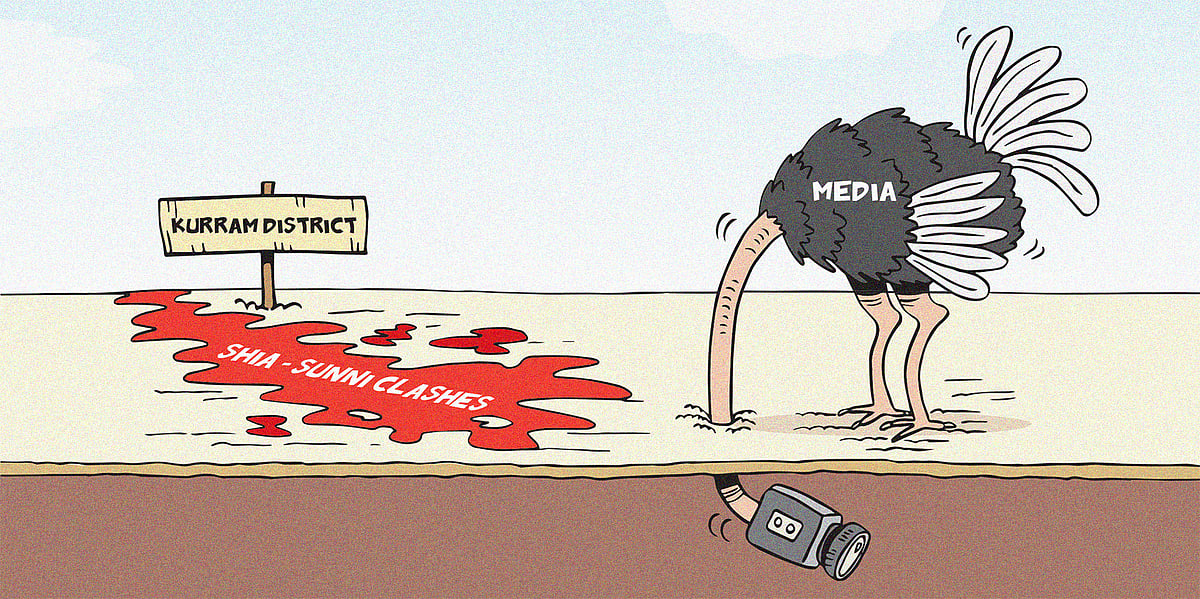
As has been the case in the past, Pakistan’s media reported the violence in Kurram as primarily a conflict between rival tribes. The violence is likely to impact relations between Pakistan and Afghanistan, with Pakistan’s government often blaming the Taliban for allowing cross-border militancy to flourish. As a consequence Pakistan has begun deporting Afghan migrants and refugees, with a recent attempt to deport registered Afghan refugees halted at the last minute thanks to intervention from the UN.


As the Olympics is underway in Paris, we’re keeping score on the performance of the region’s top athletes.
India
- 117 athletes are participating in the 2024 Olympics including javelin champion Neeraj Chopra and boxer Lovlina Borgohain
- On Day 2, India’s Manu Bhaker won the bronze medal in the women’s 10 metre air pistol event, becoming the first Indian woman to win a shooting medal
- Manu Bhaker and Sarabjot Singh also won a bronze medal in the mixed team air pistol event
Pakistan
- Pakistan has sent a 7 member contingent to compete in Paris
- Shooters Gulfam Joseph and Kashmala Talat failed to qualify for the men’s and women’s 10 metre air pistol event, placing 14th overall in the air pistol 10 metre mixed event qualifying rounds.
- Pakistan’s best hopes for a medal lie with javelin thrower Arshad Nadeem, who will compete in the qualifying round on 6 August
Bangladesh
- Five athletes are representing Bangladesh at the Summer Olympics including an archer, a sprinter, a shooter and two swimmers.
- All eyes will be on 18-year-old Sagor Islam from Rajshahi who will be competing in archery and is the lone direct qualifier
- Shooter Robiul Islam was eliminated in the 10 metre air rifle event, though he narrowly missed directly qualifying for the Games.
- Swimmer Samiul Islam Rafi turned in a career best timing of 53.10 seconds in the heats, and placed 69 out of 79 competitors in the 100 metre men’s freestyle event
Sri Lanka
- Six Sri Lankans qualified to compete in the Olympics in swimming, badminton and track and field events
- Badminton player Viren Nettasinghe turned in a spirited performance but lost matches against Malaysia’s Zii Jia Lee and the Spanish Pablo Abian
- Swimmer Ganga Senaviratne placed first in the heats of the 100 metre backstroke swimming event, but was unable to qualify for the semifinal round. Swimmer Kyle Abeysinghe finished last in the men’s 100 metre freestyle heat
Afghanistan
- Afghan athletes are competing in a gender-balanced team under the flag of the Islamic Republic of Afghanistan, which the Taliban overthrew in 2021, with a further five participating in the Refugee Olympic Team, led by Chef de Mission Masomah Ali Zada
- Cyclist Yulduz Hashimi finished 26th in the women’s individual road cycling time trial with a time of 44:29:13
- Faizada Mohammad Samim was eliminated in the round of 32 in men’s judo 81kg.event. Samim is the only athlete still living in Afghanistan, while the Taliban regime is refusing to acknowledge the female athletes participating in the games
Bhutan
- Three athletes are representing Bhutan in the 2024 Olympics
- Marathon runner Kinzang Lhamo won the Bhutan International Marathon last March
- Archer Lam Dorji ranked 28 out of 64 in the men’s individual archery ranking round but was eliminated in round 32
- Swimmer Sangay Tenzin finished the men’s 100 metre freestyle heats with a time of 56.08 seconds, eliminating him from the semifinal
Nepal
- Seven athletes are representing Nepal at the 2024 Olympics
- Swimmer Alexander Shah finished the men’s 100m freestyle heats qualifying round with a time of 51.91, a personal best and a new national record, although he did not make it to the semifinals
- Duana Lama finished 30th in the women’s 200 metre freestyle heats, failing to qualify for the seminfinal
- Shooter Sushmita Nepal ranked 42 out of 43 in the women’s 10 metre air rifle qualifying round.
- Badminton player Prince Dahal lost to Israeli player Misa Zilberman, after also having lost to Viktor Axelsen of Denmark and N Nguyen of Ireland.
- Table-tennis player Santoo Shrestha and judo player Manita Shreshtha Pradhan also failed to qualify in their rounds.
Maldives
- The Maldives’ contingent at the Olympics consists of five athletes.
- Fathimath Dheema Ali, the table tennis player who was the lone direct qualifier for the Olympics, lost to Poland’s Katarzyna Wegrzyn 4-0 in the preliminary round of the women’s singles table tennis.
- Badminton player Fathmath Nabaaha Abdul Razzaq made her Olympic debut, and lost to India’s P V Sindhu and Estonia’s Kristin Kuuba in the women’s singles badminton group play stage.
Myanmar
- Myanmar competed in badminton and swimming at the Paris Olympics.
- Badminton player Thet Htar Thuzar lost to Japan and Canada in the women’s singles event. Thuzar was able to hold her own against higher-ranked players, but ultimately was unable to dominate against Canadian player Michelle Li, losing her second group match 21-16 and 25-23.
- Phone Pyae Han ranked 73rd in the 100 metre men’s freestyle swimming heat, falling short of qualifying for the next round.
Elsewhere in Southasia 📡
- Death toll crosses 250 after monsoon rains, landslides hit India’s Kerala state, washing away entire villages. Heavy rain hampers rescue operations. Environmentalists say landslide warnings were ignored, revealing gaps in weather prediction systems.
- Sri Lanka’s presidential election set for 21 September, the first election after economic crisis of 2022.
- Fresh violence breaks out between police and protesters in Dhaka, Sylhet during ‘March for Justice’ by Bangladesh’s Students Against Discrimination movement protesting killings, arrests. European Union postpones talks with Bangladesh government on cooperation agreement after criticism of government crackdown
- At least two dead in clashes in Gwadar after protest by Baloch highlighting rights violations, extrajudicial killings and enforced disappearances, as Pakistan continues to refuse to address Baloch grievances
- Taliban cuts ties with 14 Afghan embassies in Western countries set up by the former government and rejects consular services, causing difficulties for Afghan citizens living abroad.
- Maldives’ and India’s tourism ministers discuss plans to boost tourism between the two countries at a New Delhi meeting. Indian tourists to the Maldives have decreased in 2024, while the Maldives is hosting a series of roadshows in India to promote tourism.
- Sri Lanka women’s cricket team wins the Asia Cup tournaments for the first time, receiving USD 500,000 USD from Sri Lanka Cricket
- Pakistan deports British-American journalist Charles Glass who sought to meet and interview incarcerated former Prime Minister Imran Khan, jailed for nearly a year on charges of terrorism and corruption.
- At least 20 patients contract cholera across cities in Nepal, possibly from consuming contaminated water from the monsoon rains. However, active cholera surveillance isn’t available in all districts because of health budget restrictions.
- Myanmar acting president Min Aung Hlaing extends emergency rule by another six months as anti-junta groups continue to make gains in Shan and Mandalay
Only in Southasia
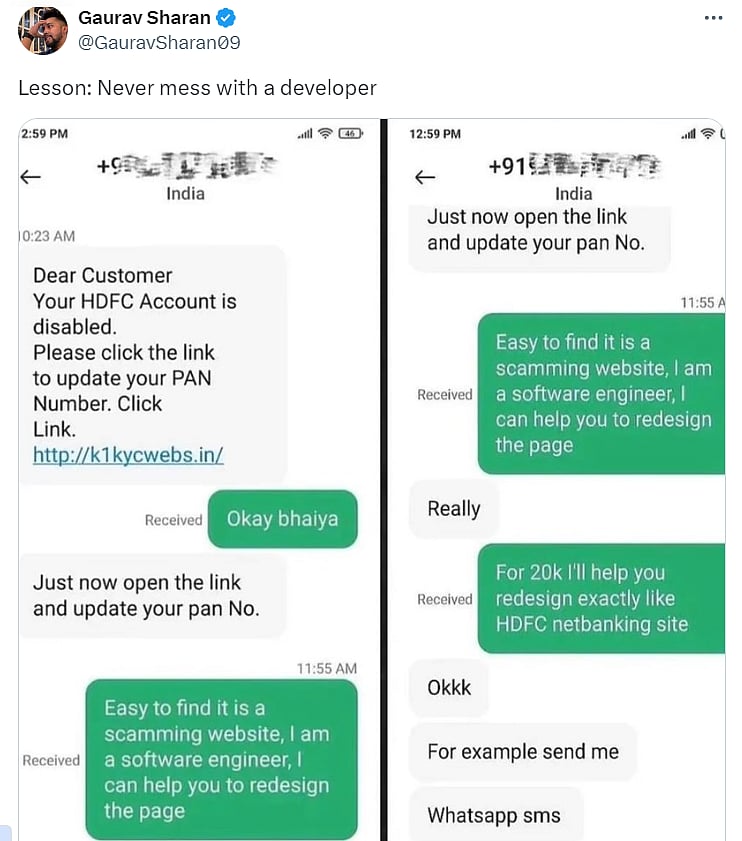
This week, a software engineer in Gurgaon turned the tables on a would-be scammer, leaving netizens in splits. Gaurav Sharan, the engineer in question, received a text message claiming to be from HDFC bank, urging him to update his Personal Account Number through a dodgy looking URL. Recognising the scam, Sharan responded humourously, telling the scammer that the jig was up. Rather than leave it there, he offered to redesign the fake website so that it exactly resembled the HDFC digital banking website, for the low low price of INR 20,000. Not to be outdone, the scammer asked Sharan to share some samples on WhatsApp.
From the archive
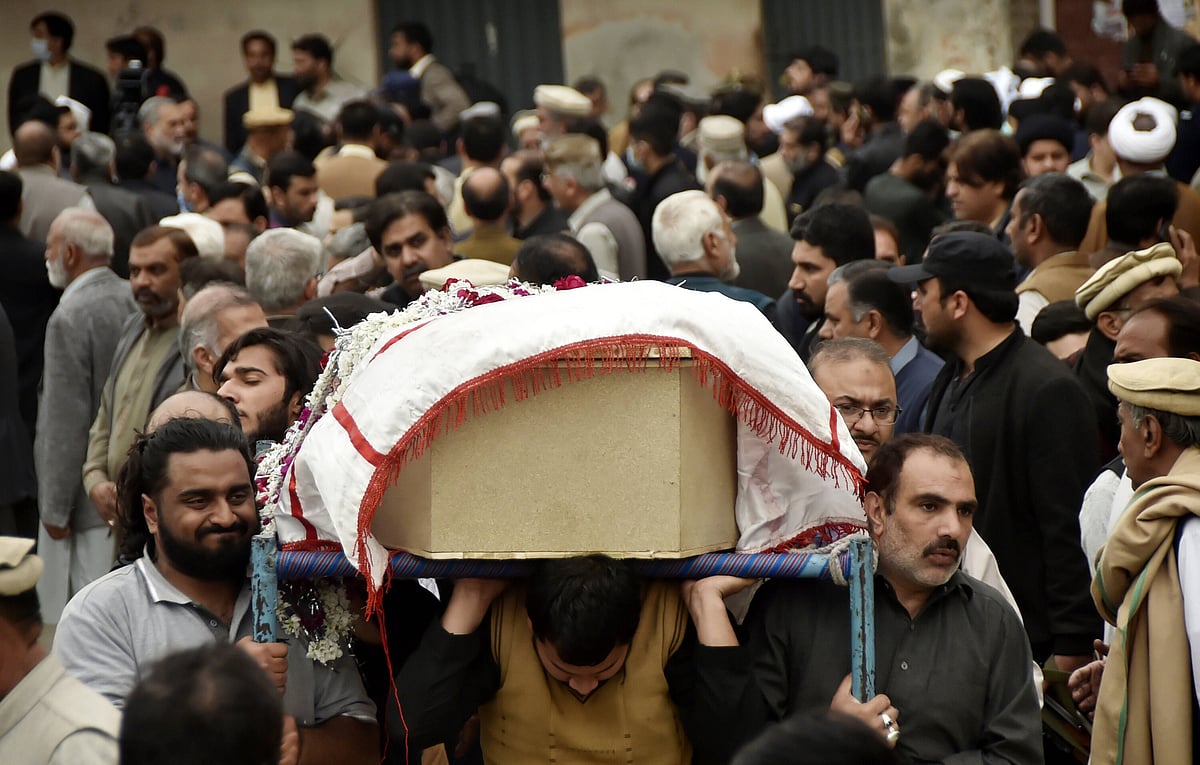
Fighting the erasure of anti-Shia violence in Pakistan
In light of reports of sectarian violence in Parinachar, Sana Batool’s article from 2023 is worth revisiting. Batool writes that Pakistan’s mainstream media has obscured violence against Shias and other minorities, with volunteers choosing to record incidents of anti-Shia violence online. She notes that the marginalisation of Pakistan’s minorities has led to their fears and concerns being largely overlooked in national debate.