
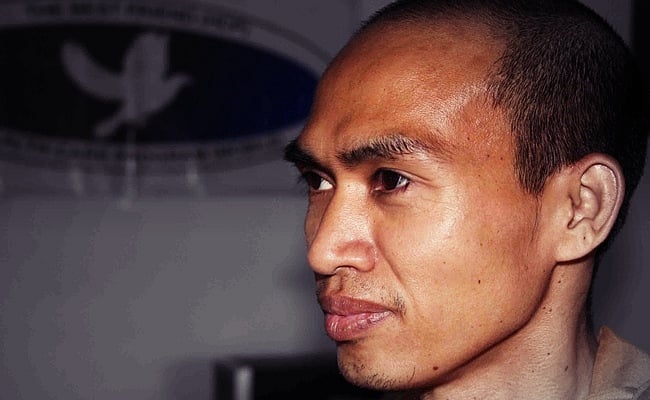
On the fifth floor of a building in Mae Sot, Thailand, King Zero welcomes young visitors. Like him, they come from Burma. Dressed only in a saffron robe, he fulfils one of his duties as a Buddhist monk: the transmission of the Dharma, the teachings of Buddha. He recites some traditional prayers and gives blessings to the young. They kneel before him three times. They may not know, but this thin, small man is on the Burmese government's list of most wanted persons.
In September 2007, panic seized the junta that had been ruling Burma since 1962. Without weapons, without violence, Buddhist monks took to the streets, dragging with them thousands of students and citizens in the largest popular movement since the 1988 protests. In its 50-year history, the regime had faced guerrillas of all kinds, and dealt with popular uprisings including the challenge of opposition leader Aung San Suu Kyi. This time, it was different. In few other countries is the veneration of Buddhist monks as significant. In Burma, a country of 50 million, the clergy is 400,000 strong. The protests, when they happened, were suppressed with bloodshed. Some of the leaders were arrested. King Zero, meanwhile, managed to escape.
King Zero, whose real name is Ashin Issariya, was born into a humble family of peasants across the border. His political consciousness dates back to his childhood: 'I was very concerned about the misery of the people, and so I was very restless and slept badly. I had to take sleeping pills.' His concern about the difficulties of his country's people transformed itself into a critical discourse. 'Since the days of General Ne Win – the dictator between 1962 and 1988 – military commanders have been stealing the money while the people remain poor. I asked questions to the teacher but he did not like it, and he hit me. In Burma, the teacher requires students to learn their lessons by heart, but they do not understand what it means.' He continues: 'Buddha taught us that this is not the way. We have to criticise. If something does not seem right, you can say so.'
Burgundy revolution
A monk and an activist, King Zero takes on both roles. To him, religion and political struggle are two sides of the same coin. Opposing the discourse that sees Buddhism as a source of passivity, King Zero defends its progressive dimension: 'Buddha said that the present time is very important.' Following this idea, King Zero decided to create a network of libraries, the Best Friend's Library, to train and encourage young people to think critically. Among other activities, he organised workshops to teach people to confront their ideas. To King Zero, debates are 'the basic tool of democracy'.