
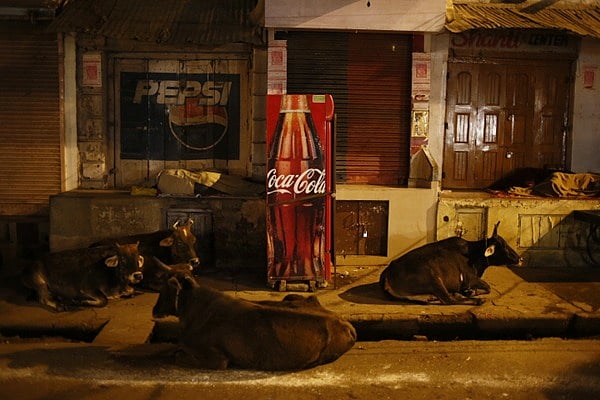
Not far from my hotel in the Assi locality of Varanasi was Pappu's chai shop – a trifling, box-shaped affair, among the hundreds of similar looking places on both sides of the bustling road which leads to Assi Ghat. During my five days' stay there in early March, I found myself spending more time at Pappu's shop than anywhere else. But – and this, I suspect, was because of the stories that I had heard, both real and apocryphal – when I first went there on the morning of my arrival in Varanasi, I had prepared myself for an anti-climax.
Even in a city with a legendary flair for milk and cannabis products in all their variants, the young Baldev Singh – who had a short stint in a lowly-position in the imperial army – didn't have to try very hard in 1948 to come up with a rather unique and unusual combo: a place which served dollops of bhang, alongside strong milk chai. The shop, now popularly referred to by his son's moniker, continues the tradition.
In his acclaimed, if somewhat controversial novel Kashi Ka Assi, Kashinath Singh captured the despair and nostalgia of Varanasi of the 1990s, from the vantage point of this shop. His work was a satire on the lethal trio of Mandalisation, Hindutvaisation and globalisation, and the havoc they unleashed on this city of Lord Shiva, where people prided themselves on their phakkarpan, or carefree life. The protagonists of his novel, most of whom were in the sunset of their lives, sat here every day without any sense of urgency. They sipped chai, gobbled a few golis (balls) of bhang, refuted history and mythology and hurled slang at one and all. The latter they did in the tradition of a true Banarasi – always with the finesse of a poet.
On the morning I arrived, the customers had devoted themselves to discussing the fate of Raja Bhaiya – a local goon-turned-politician, who had been implicated in the mob killing of a police officer. The talk, with time, shifted to the officer's wife, who was dubbed bahadur – brave – for demanding a probe into her husband's murder. "Aur kitni khoobsurat bhi hai! She is so beautiful too!" an elderly gentleman uttered innocently, in the midst of what was becoming a rather languid conversation. There he was caught: "Looks like Masterjee knows a lot about beauty!" someone mumbled. "But we heard he spent his jawaani – youth – using his right hand, didn't we?" another added with a wink. For a moment it seemed that the old man might take offence, but instead everyone laughed heartily. All their jabbering, one of them later told me, was strictly "aff the recard!"