
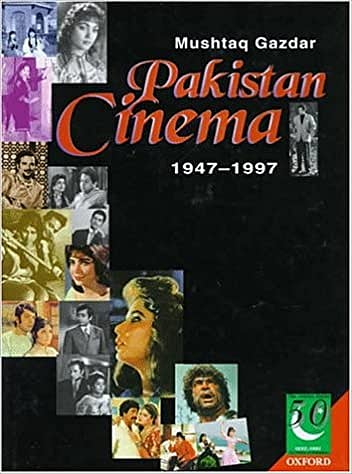
There are no history books worth the name in Pakistan. Children encounter Pakistan Studies as a compulsory subject and the text they are given m class to cover the last 50 years makes no mention of facts and personages, unpleasant and pleasant, such as Ayub Khan, the Movement for the Restoration of Democracy, or the Mohajir Quami Movement (MQM). It is in this history-starved land that this book by Mushtaq Gazdar arrives.
In writing about Pakistan cinema, documentary-filmmaker Gazdar has written a history of the lands culture and times. Reading this book, one cannot separate Pakistani cinema history from, well, history. In reading history thus, the subject is no longer the monopoly of regimes but the property of the people and their memory. Gazdar shows the cultural processes behind the major events, and tracks these processes through the work, the voice and career of the individual.
An example of the breath-giving freshness of this approach is Maula Jat, the biggest blockbuster of Punjabi cinema whose ail-too successful formula established a stranglehold on the industry for over a decade. When the film is mentioned, all polite conversation ends. But Gazdar gives a first-rate analysis of MaulaJafs advent and impact against the backdrop of Gen Zia-ul Haqs martial law and Bhuttos trial and hanging.
Potholes