
On 28 August 2018, homes of several civil-rights activists, lawyers and writers across India were raided by the Maharashtra police for having 'links' with Maoists. Of these, five were arrested, in what is seen as a highly controversial, and authoritarian, attempt to silence dissenters. The Supreme Court has halted the five activists' immediate arrest and put them under house arrest, saying that "dissent is the safety valve of democracy" and "if you don't allow the safety valve pressure cooker will burst."
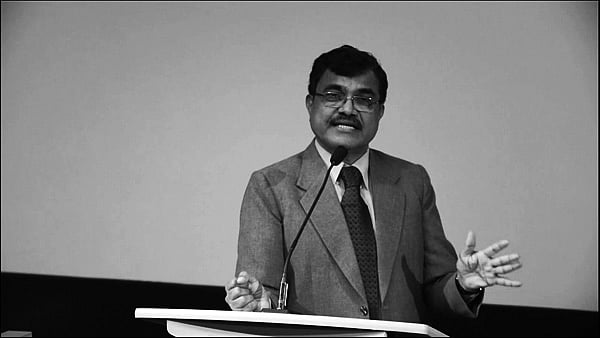
Anand Teltumbde, a public intellectual and a civil-rights activist based in Goa, was among the nine whose home was raided. He has authored many books and written numerous articles. Some of his books are: Dalits: Past, Present and Future, Mahad: The Making of the First Dalit Revolt, The Persistence of Caste: The Khairlanji Murders and India's Hidden Apartheid and most recently, Republic of Caste. In this interview, Teltumbde describes the impact of his harassment by the police, what lies behind Indian government's increasingly authoritarian moves, and why the term 'urban Naxals' has gained political currency.
Himal Southasian: Your home was raided as part of the simultaneous raids across cities in India. What in your opinion led to this action on the part of the government?
Anand Teltumbde: Frankly speaking, I cannot even imagine that such a thing could happen to me. I did know about the earlier raids and arrests of five persons, one of them, Professor Shoma Sen, being an executive member of the organisation, the Committee for Protection of Democratic Rights (CPDR), of which I am the general secretary. It is one of the civil-rights organisations that were born after the Emergency and, in its heyday, had illustrious people in Maharashtra, like the celebrated Vijay Tendulkar, associated with it. Other notable organisation that I am part of is the All India Forum for Rights to Education (AIFRTE), of which I am one of the presidium members. This nine-year-old federated organisation is struggling for the educational rights for all children through neighborhood schools. None of these organisations have any connection with violence; rather, any violence, both by the state or any organized group, is taken by us as violation of civil rights of people and is acted against.