
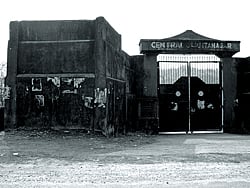
In late 2009, Arunachal Pradesh opened its first jail, five years after its construction had been completed. But little did the batch of 19 under-trial prisoners who were transferred at the time realise that they were a blessed lot. They had escaped a fate that, since the state's creation in 1987, all others in their situation had been forced to undergo, involving not only appalling lack of hygiene for prisoners but blatantly illegal judicial procedures. The opening of the new jail constitutes a silver lining of sorts in the series of untold narratives of gross human-rights violations that have constituted standard procedure for prisoners awaiting trial in the state. Until the recent change, Arunachal had been the only state in India where 'police remand' and 'judicial remand' meant the same thing. In most parts of the state, it still does.
Take the example of Hura Rari, a middle-aged businessman from Naharlagun in Arunachal. For 14 months, Rari was held in custody on kidnapping charges in a dark, dingy lock-up at a police station. At the time, Rari's situation was similar to all of those awaiting or undergoing trial in the state. Even today, many police stations have two separate cells – one for police lock-up and another for judicial lock-up. Some suspects are forced to remain in the police station for three or four years, until they are convicted or released on bail. (If convicted, prisoners are transferred to district jails in Assam.) These police cells can become so overcrowded that prisoners take turns sleeping while the rest stand. Beyond the aesthetics and physical discomforts, this is a gross violation of the Prisons Act of 1894, which clearly states that a 'prison' cannot include 'any place for the confinement of prisoners who are exclusively in the custody of the police'.
After his 14-month stint, Rari was fortunate to receive bail on health grounds. (His case is still under trial.) But he shudders today as he recalls his confinement at the Ziro police station in Lower Subansiri district. He says that an average of five to ten prisoners were held in his lock-up every day, accused of crimes from murder and rape to arson and theft. The room had no fan, mosquito net or light, and little ventilation; although there was an attached toilet, it had limited water, with a grimy toilet that was only cleaned once during his stay. 'One day, there were around 20 prisoners in the cell, and we held a strike as the food was inedible,' he says. 'Things improved for a few days, but then it was back to square one again.' Rari adds that he was lucky to get out when he did; another man in the cell, accused of murder, had been there for nine years.
Even the opening of the new jail – in Jollang, near the capital, Itanagar – is far from adequate in this massive state of more than 83,700 sq km. Sunil Mow, a lawyer with the Human Rights Law Network (HRLN), an NGO, says, 'One jail in Itanagar cannot serve the entire state. There are eight districts in eastern Arunachal and eight districts in western Arunachal. The jail is a one- to two-day journey from some of these remote districts, and in these areas those who are under trial are still being kept in inhuman conditions in police lock-ups.'