
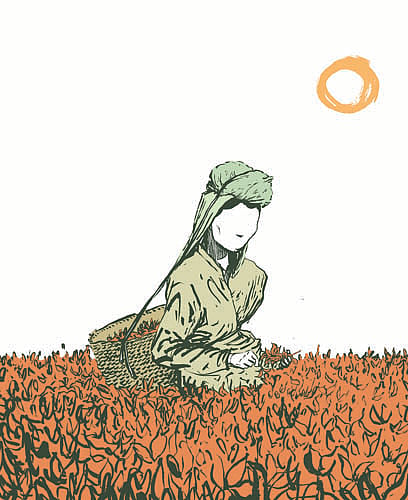
Dinanath Saura stared at me across the small room of his modest bamboo hut. "My father's first reaction was one of incredulity. 'How can a tea labourer become a tea planter? These are the hobbies of kings and emperors,'" he said, gently mocking his late father. "We have no business getting into them." Saura's face, creased by years of incessant labour under the intense Assamese sun, broke into a hesitant, questioning smile. "He would be proud today, no?"
"Indeed he would," I replied.
More likely though, Dinanath's father – a third generation tea labourer – would be astounded. The Sauras, like thousands of other families, were plucked by the British out of their native village in Odisha sometime in the early 19th century and brought to cultivate the fertile soil of upper Assam. Dinanath had achieved what his forebears could not have imagined even in their wildest dreams. Tea labourers do not get to be planters.
"Actually, we call ourselves 'growers', not planters. Small Tea Growers (STGs)." This distinction, to Saura, was more than mere semantics; it was what made him different, what marked out the new from the old. His pride is hardly misplaced. When the British began colonising the lands of Assam in the country's Northeast, they had no intention of starting a subaltern revolution. In fact, they prescribed laws to ensure quite the opposite. One of the first was that no plantation could be less than two hundred bighas. The poor, the labourers and most of the local Assamese population were immediately out of the game. Since then, the British and their allies – the landowning class – maintained a stranglehold over tea cultivation in Assam. The beautiful tea bungalows, the memsahibs in their pretty dresses, lazy afternoon parties, tennis and Bloody Marys, were all part of a cultural production designed to keep it exclusive. For two centuries, all went according to plan.