The continuing waves of history are bottled and labelled as 'Ages', 'Centuries' and 'Eras'. For a while, the political scientist Francis Fukuyama felt that
Walking down busy streets in countries outside of India, I have been questioned by strangers as to whether I knew Urdu, and by unknown persons asking me, "Dada! Aapni
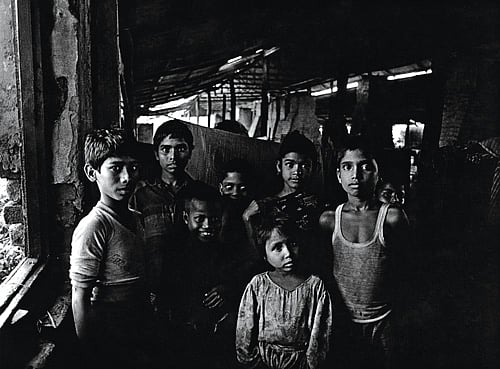
It was September 1988, and we had had the worst floods in a century. These people at Gaforgaon had not eaten for three days. A torn sari strung across the
The worldwide proliferation of politico-economic groupings, including multilateral institutions, in the aftermath of World War II has been substantial. However, only a handful of them can claim to have achieved
Discussions of any question concerning 'identity' in Southasia are always bedevilled by a failure to make one important distinction: that between identity and identification. So, when we ask
When I speak English, I am regarded as an educated Indian. When I speak Hindi, Indians always know that I am Bihari. When I use constructions such as 'hence-it-would-not-be-wrong-to-conclude&
It often seems as though the regional in the SAARC acronym is oddly devoid of a history, other than the one prescribed to it by the dominant memories of its
Some time before Partition, my father, an employee of the railways in Bombay, had opted to go to Pakistan when the time came. Many years later, as a young man
One day, members of the South Asian Student's Association (SASA) at Brown University arrived at the office of Direct Action for Rights and Equality (DARE) in Providence, Rhode
In a city where the skyline has long been defined by massive hoarding boards, there was one on Marine Drive a few years ago that captured Bombay's ethos