
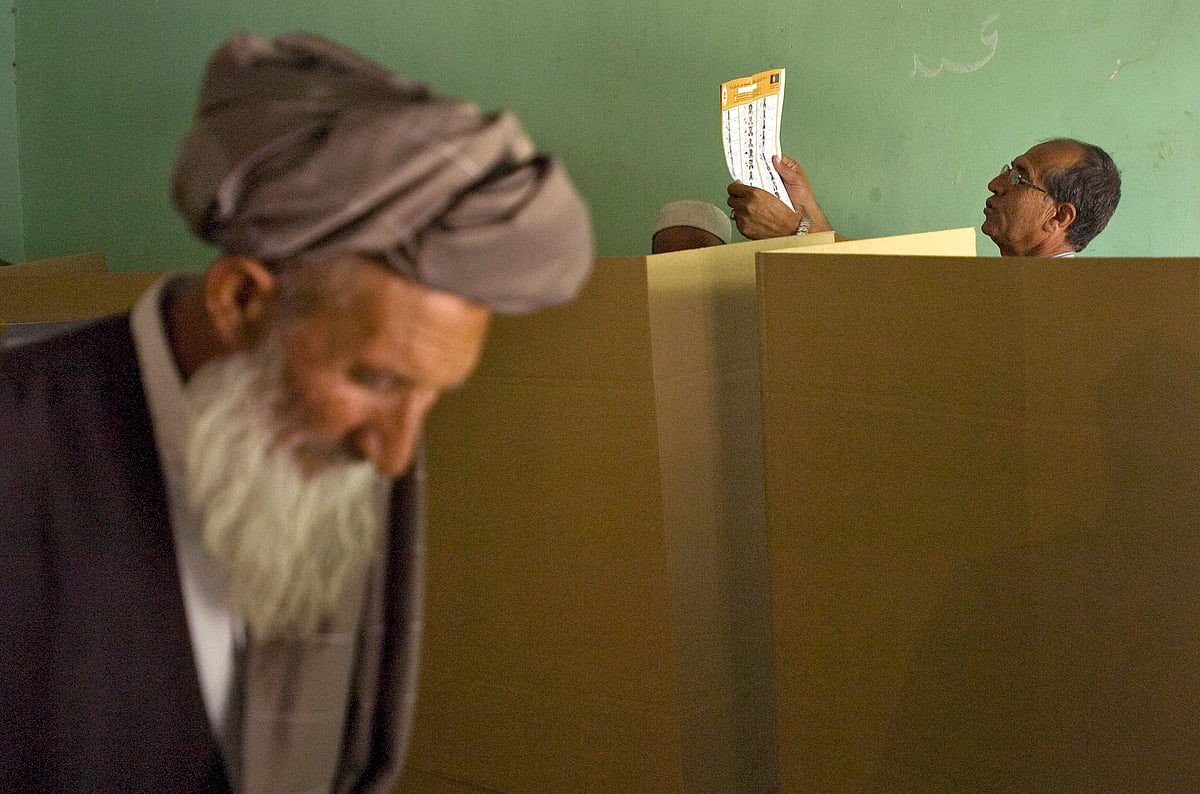
With Afghanistan's Presidential election around the corner, of the 14 original candidates, only nine remain. More are likely to withdraw in the coming days. Voting on 5 April is not likely to produce a clear winner, and the chances of a runoff between the top two aspirants is high. The following teams are the foremost contenders, given their cash resources, loyalty and patronage networks, the size of the constituency in which they are competing, and the percentage of votes each candidate with their running-mate is predicted to garner. First, Abdullah Abdullah with Mohammad Khan and Mohammad Mohaqiq; second, Ashraf Ghani Ahmadzai with Abdul Rashid Dostum and Sarwar Danish; and third, Zalmai Rassoul with Ahmed Zia Massoud and Habiba Sarobi. The candidacy of Ashraf Ghani in particular presents an interesting vantage-point from which to analyse the actors and possible outcomes of the elections.
Following the ousting of the Taliban in late 2001, Ashraf Ghani returned to Afghanistan to serve as the Special Adviser to Ambassador Lakhdar Brahimi, the UN Secretary General's special envoy to Afghanistan. In that capacity, Ghani worked on the negotiation and implementation of the Bonn Agreement. He also served as Afghanistan's Finance Minister from 2002 to 2004, the duration of the Transitional Administration. Ghani is widely credited as the architect of some of the most extensive and difficult reforms of the period. For instance, herefused to fund the army until they were able to provide a genuine roster of soldiers, suspecting that the figures were inflated to claim extra money. This put him squarely against the corruption rampant within the transitional government, and set the stage for his subsequent frustrated resignation at the end of 2004, over the Karzai Presidency's unwillingness to take on corrupt power brokers.
Ghani was educated at Columbia University, has been Chancellor of Kabul University, and worked at the World Bank for nearly a decade. He is Afghanistan's western-educated, TED-talk savvy technocrat, and has long been popular among educated urban Afghans. His corruption-free image is also seen as a huge appeal. Ghani is considered a forward-looking intellectual who can help Afghanistan transition to stable democracy. He is a Pashtun from Logar; however, some sources question his family's affiliation to the Ahmadzai tribe.
During the 2009 elections, The New York Times declared Ghani "the most educated and Westernized of Afghanistan's candidates". Yet in those elections Ghani received three percent of the vote. Following his defeat, Ghani served as the head of the Security Transition Commission, during which he strategically cultivated relationships by travelling to every province in Afghanistan, including Nooristan (a Taliban stronghold and a province difficult to reach due to poor road access). In 2009 he was little-known outside major cities; in 2014 he is a prominent candidate, even in remote areas. From attracting predominantly young voters confined to urban centres like Kabul and Mazar-e-Sharif in 2009, Ghani has now managed to create a national platform to include traditional networks in other provinces.