
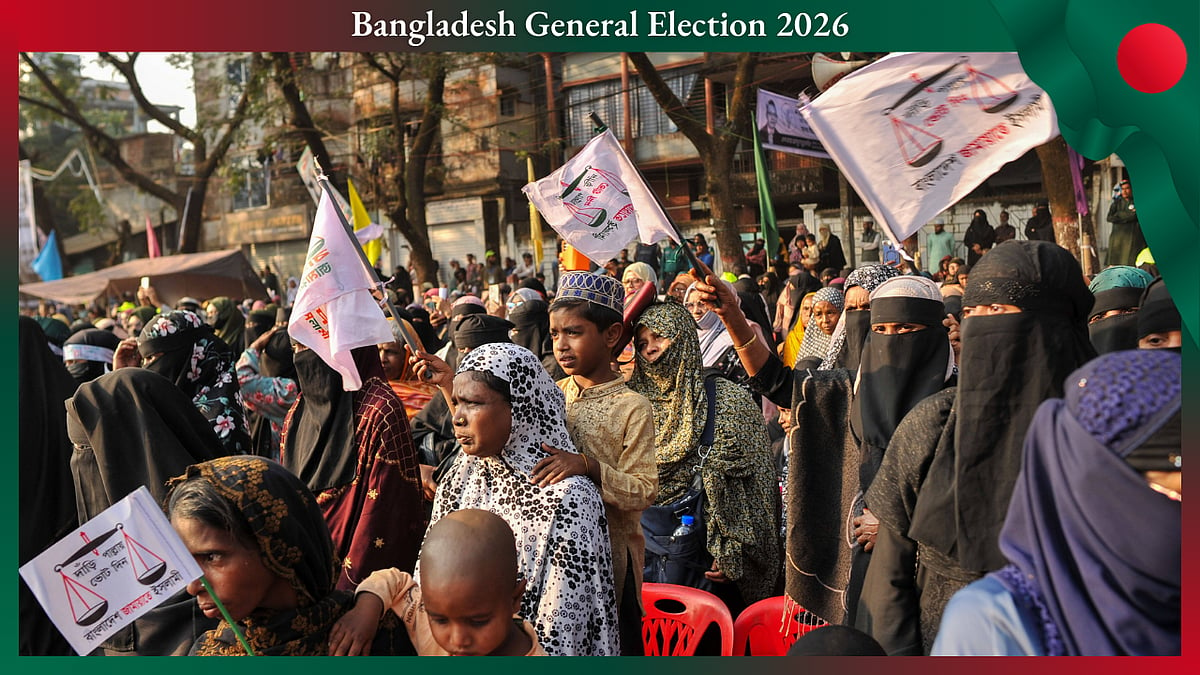
“The movement toppled the government,” said Manisha Chakraborty, who is standing for parliament in a deprived rural constituency in southern Bangladesh. “But it did not help the people.”
On Thursday, 127 million Bangladeshis will head to the polls in what Muhammad Yunus’s interim government has billed as the country’s first free elections in 17 years. But, over the last week, I found that voters in Dhaka and around the country were apprehensive about what comes next. Amid an uncertain security situation, the right-wing Islamist party Jamaat-e-Islami looks set to gain its strongest showing in history after forging an alliance with the former student revolutionaries of the National Citizen’s Party, or NCP.
Now, 18 months after the fall of Hasina’s autocratic government, women, minorities and progressives fear that social freedoms – hard-won despite the years of Hasina’s autocracy - may now be rolled back. “It’s not just a disappointment,” said the progressive politician Tajnuva Jabeen, who resigned from the NCP in December. “It’s a betrayal.”
A few days ago, the Jamaat, which was banned under Hasina, presented a detailed manifesto to an assembled crowd of diplomats and journalists. Drafted by a committee of supporters in Bangladesh and abroad, it promised ambitious economic growth and foreign direct investment but was silent about economic inequality or workers’ rights. While pledging an “inclusive” cabinet, it also showed a paternalistic concern for women’s “safety”, for example through its proposal to reduce women’s working hours with full pay. “It’s about respect and dignity,” explained Mardia Mumtaz, a civil engineer and prominent member of the Jamaat’s women’s wing.