
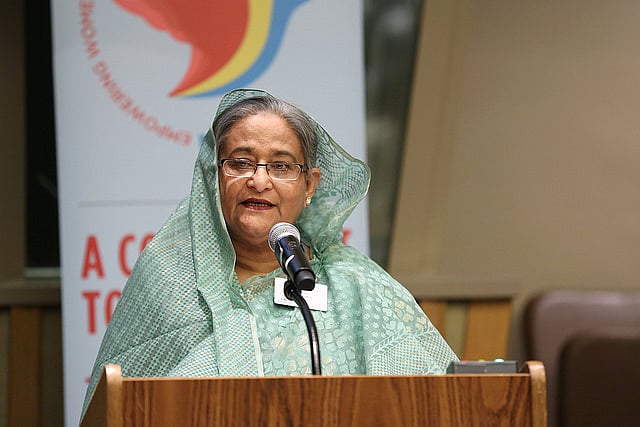
Following weeks of uncertainty, elections in Bangladesh are finally scheduled to take place on 30 December 2018. The polls in December will be the country's 11th parliamentary election and come at a time when the Bangladesh Awami League's (AL) government is facing criticism for its authoritarian moves, including the violent repression of student protestors, the attack on civil-society activists, such as the photojournalist Shahidul Alam, and a 'war on drugs' characterised by extrajudicial killings. The stakes are also high for the de facto opposition the Bangladesh Nationalist Party (BNP), which boycotted the 2014 polls and is looking to reenter the parliamentary fray after five years of absence.
Electoral process
Bangladesh's unicameral Parliament, also known as the Jatiya Sangsad, comprises of 350 seats. 300 of these MPs are elected from single-member constituencies for a five-year term through a first-past-the-post system. The 50 remaining seats, reserved for women, are populated by allocating to each party the number of seats in proportion to the number of MPs they managed to elect. Premiership is awarded to the party or alliance holding the majority in Parliament. The prime minister acts as the head of the government; Bangladesh's presidency is only a ceremonial one, elected by the Jatiya Sangsad.
The Awami League currently holds the majority in Parliament, with an overwhelming 275 seats, many of them won uncontested in the controversial 2014 elections. Founded in what was then East Pakistan in 1949, the party was traditionally considered secular and democratic in the country's political spectrum and played a key role in the country's independence movement. Officially, the opposition party in the Parliament is the Jatiya Party, a small socially conservative political party which holds 40 seats. But the AL's main political rival is the BNP. Formed in 1978 by former army general Ziaur Rahman, the party is considered to be pro-Islamic and is not represented in Parliament as it boycotted the 2014 elections.