
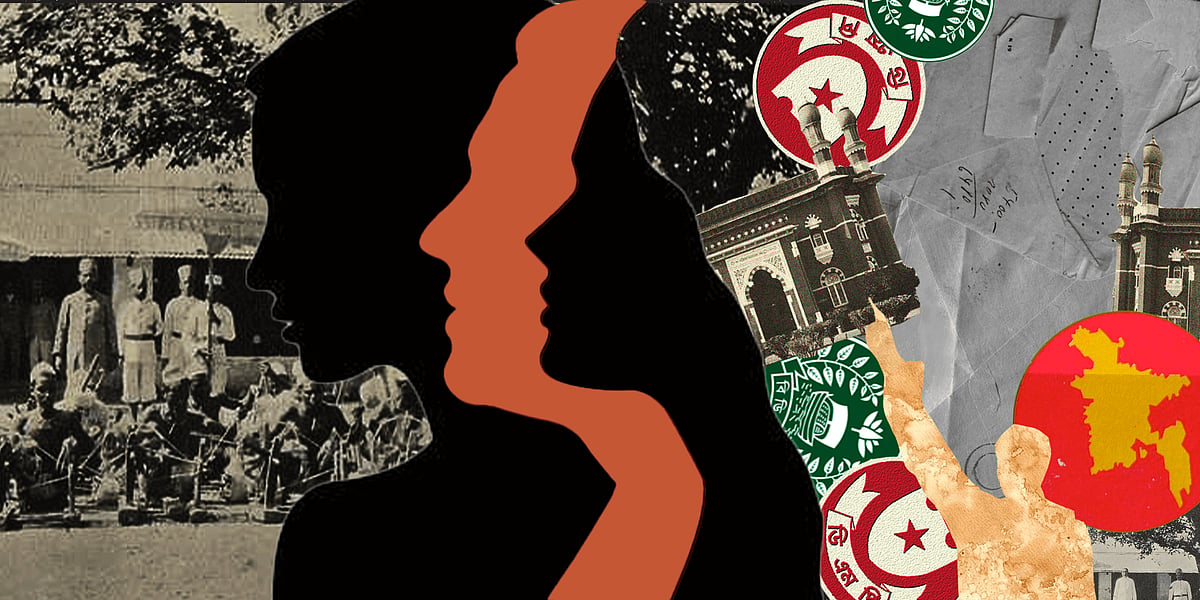
“They took me to get to my brother,” Nupur Mustafa (pseudonym) said. “Then they took my daughter to find her father.” Nupur broke down in tears several times while talking about her brother, Rehman Rabby (pseudonym). Rabby had been an outspoken leader of the Bangladesh Jatiotabadi Chatra Dal, the student wing of the Bangladesh Nationalist Party (BNP), and a popular name in Dhaka’s New Market area. But Rabby’s popularity and political leanings made him – and, eventually, many of his family members – a target.
As tensions between the ruling Awami League and the opposition BNP built in the early 2010s, Rabby was first subjected to goom – the colloquial term in Bangladesh for enforced disappearances, often at the hands of security forces or law-enforcement agencies. Nupur ran from station to station, but everyone, including the Detective Branch, a specialised unit of the Bangladesh police, denied any knowledge of her brother’s whereabouts and suggested that he had left town of his own volition.
Twenty-two days later, she saw her brother on television. Nupur says Rabby later told her that he had been coached to say that he was arrested just the previous night on vandalism charges. He was threatened with death via “crossfire” if he did not play along.
The term “crossfire” refers to supposedly unintentional deaths amid a gunfight, typically between law-enforcement agencies and suspects or detainees. Many, however, understand such deaths as staged extra-judicial executions by state forces. Allegations of extrajudicial killings by law-enforcement agencies are not a recent phenomenon in Bangladesh. It is hard to know the true extent of crossfire killings since the right of private defence, embedded in Bangladesh’s Penal Code, allows individuals to defend themselves against an unwarranted attack on a person or property, stipulating that the exercise of this right does not constitute an offence. These killings are often not part of official records.