
This week in Himal
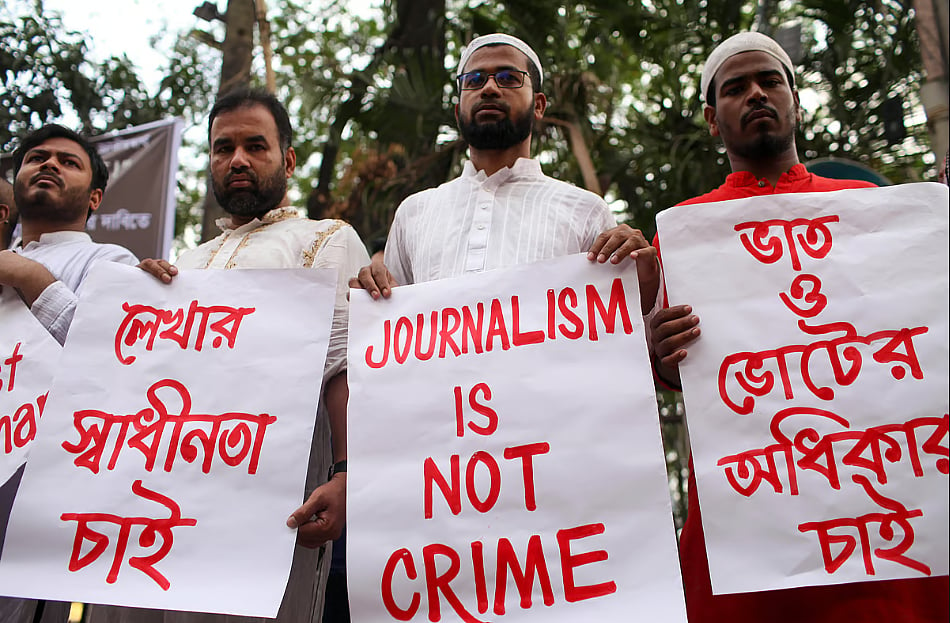
This week, Cyrus Naji writes about a Media Reform Commission set up by Bangladesh’s interim government to address press freedom, and the threats and patterns of control that remain.
For the next episode of the State of Southasia podcast, host Nayantara Narayanan speaks with writer and editor Pranaya SJB Rana about the pro-monarchy protests and public discontent around political corruption in Nepal.
This week in Southasia
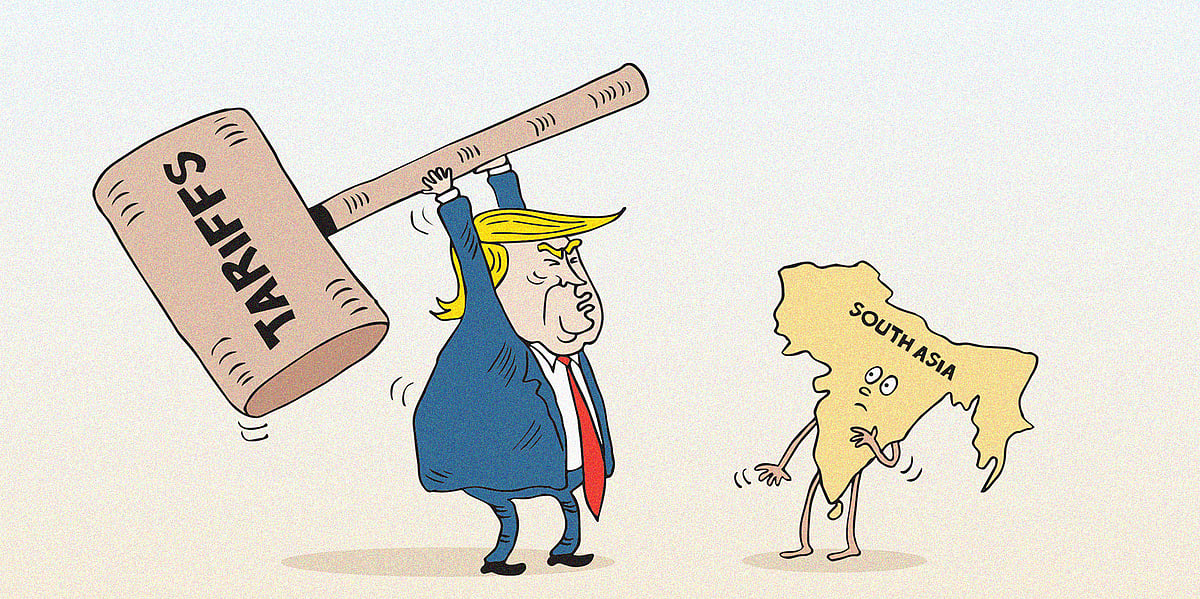
Economic volatility across Southasia after Trump administration’s tariffs
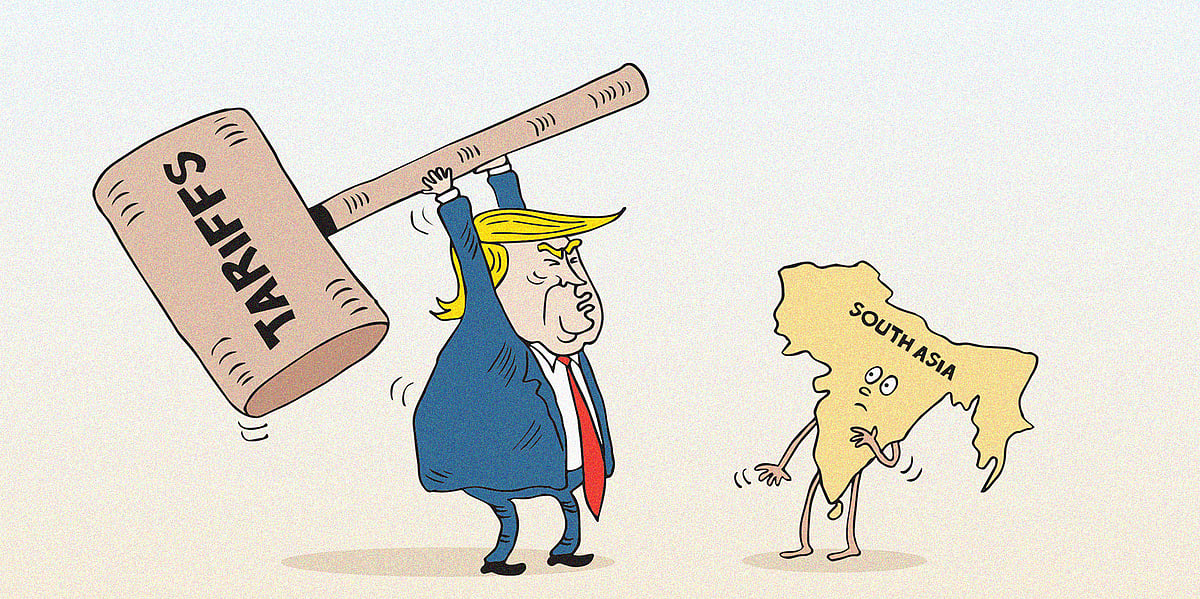
Southasia is already feeling the impact of US President Donald Trump’s global trade tariffs, despite a last-minute 90-day pause. In southern Sri Lanka, employees of a garment factory protested after they were told their annual bonus would not be granted due to the tariffs. Myanmar’s Garment Manufacturers’ Association raised concerns that the tariffs might hamper the country’s recovery from an earthquake which has taken 3649 lives, adding that the garment industry employs over 500,000 people, mostly women. Bangladesh is pledging to buy more US cotton in a bid to protect its own industry from an impending 37 percent tariff, while India is in discussions to sign a bilateral trade pact.
Across Asia, stocks plunged and then rebounded in tandem with the announcement of the tariffs. Bangladesh, Pakistan and Sri Lanka had lower trade deficits with the United States compared to India, yet received higher tariffs, due to the perception that they charged higher tariffs. The tariffs, along with the freezing of foreign aid and deportations imposed by the Trump administration may give China inroads into the region as an alternative market - tellingly, Trump increased tariffs on China to 125 percent after the country announced it would impose tariffs of 84 percent on US imports. It also opens the door to better coordination and trade within Southasia to offset the uncertainty that lies ahead.
Elsewhere in Southasia
- Tahawwur Rana, a suspect accused of facilitating the 2008 Mumbai attacks, has been extradited by the United States to India — where he faces trial following years of legal wrangling over the case
- Organisations postpone aid relief efforts citing the junta’s restrictions, despite the healthcare system being overwhelmed and many communities remaining in critical need of support after the devastating 7.7 earthquake in Myanmar
- Afghan refugees awaiting resettlement to Western countries will be deported from Pakistan if their host nations don’t relocate them by 30 April, state minister for interior Tallal Chaudry said, over 11,000 Afghan refugees deported from Pakistan since 1 April
- Durga Prasai, key figure in Nepal’s pro-monarchy movements, surrendered before police in Assam and was handed over to Nepali police. He saw a threat to his life from the current Nepali government led by K P Sharma Oli.
- India’s prime minister Narendra Modi and Bangladesh interim government head Muhammad Yunus hold first talks after 2024 student uprising on sidelines of regional summit in Thailand
- Nepali government in quandary on four Lhotshampa refugees deported from the United States to Bhutan, who then expelled them to Jhapa district, Nepal; at least 10 Lhotshampa sent to Nepal after Bhutan government confiscated their documents
- The Chin Brotherhood rebel group captured two towns in Chin state previously under the junta’s control near Myanmar’s northwestern border with India after five-month battle
- Nearly 100 people have died after heavy rain hit parts of India and Nepal, with weather officials predicting more unseasonal rain patterns for the region
- At least 72 protesters in Bangladesh detained for looting, vandalism during solidarity protests for Gaza, Sri Lankan Parliament discusses 22-year old student arrested on terror charges for pasting a pro-Palestine sticker, Sri Lankan government claims extremist links
- Sri Lanka and India signs defence and energy deals after Indian Prime Minister Narendra Modi’s state visit amid growing Chinese influence on the island nation
- Saudi Arabia temporarily suspends visa issuance to citizens from 14 countries, including India, Pakistan and Bangladesh, to curb unauthorised participation in the Hajj pilgrimage
- Sri Lanka deports foreign nationals conducting business on tourist visas, following the negative impact on the country’s revenue generation
- Bangladesh issues another arrest warrant against former prime minister Sheikh Hasina, her daughter Saima Wajed Putul and 17 others for obtaining land through ‘fraudulent’ means
Only in Southasia
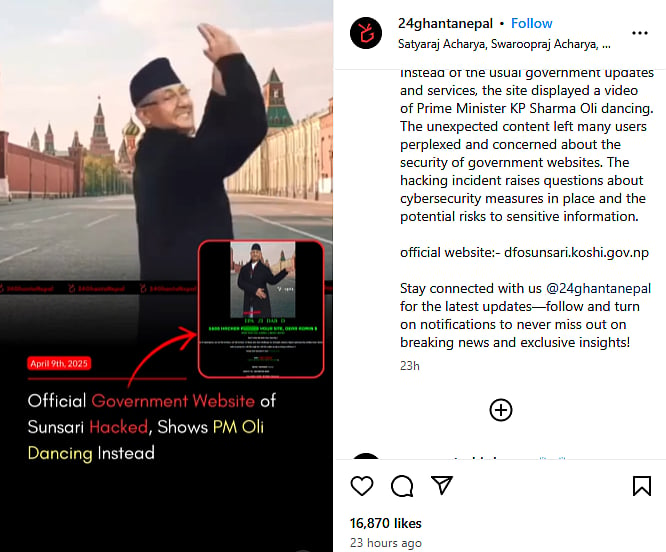
This week, the official website for the Sunsari district in Nepal was hacked. Those attempting to access the website were greeted with the unexpected sight of a video of Nepali Prime Minister K P Sharma Oli dancing to the Nepali song ‘Mero Desh’ with its sarcastic lyrics, including ‘My country is about to drown/Please build a raft’. While the incident did raise serious concerns about the Nepali government’s cybersecurity, it also drew amused commentary, including from users who said it was payback for Nepal’s draft social media bill that has been met with criticism due to its impact on freedom of expression.
From the archive
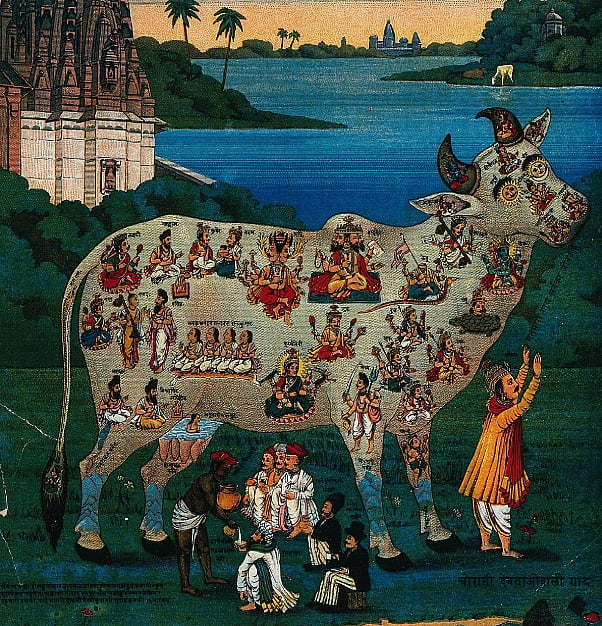
The ‘holy’ cow and ‘unholy’ dalit (November 2002)
April is Dalit History Month, and our 2002 article from Siriyavan Anand is relevant reading. Anand writes how the torture of two Dalits in Thinniam went largely unnoticed by Indian mainstream media, even as newspaper headlines touted the benefits of cow-urine therapy. Even as the cow is venerated as divine, Dalits and other oppressed castes are rendered subhuman, Anand writes.