
The Jamaat has described the Arakan Army’s brief cross‑border presence and cultural engagement with local tribes as grave violations of Bangladesh’s sovereignty. This reflects a communally motivated lens on security, in which armed Rakhine formations are cast primarily as threats to Bengali‑Muslim dominance and Bangladesh’s territorial integrity.The Jamaat has described the Arakan Army’s brief cross‑border presence and cultural engagement with local tribes as grave violations of Bangladesh’s sovereignty. This reflects a communally motivated lens on security, in which armed Rakhine formations are cast primarily as threats to Bengali‑Muslim dominance and Bangladesh’s territorial integrity.In August 2025, at a public event in Dhaka, Bangladesh’s newly appointed National Security Adviser, Khalilur Rahman, made a striking declaration. Referring to long-stalled efforts to send Rohingya refugees back to Myanmar, he said, “The Rohingya crisis is like a cancer in Bangladesh’s body. It needs long-term treatment. Until now, the issue has been in the ICU – we have started treatment. All the doctors must now work together to cure it.”
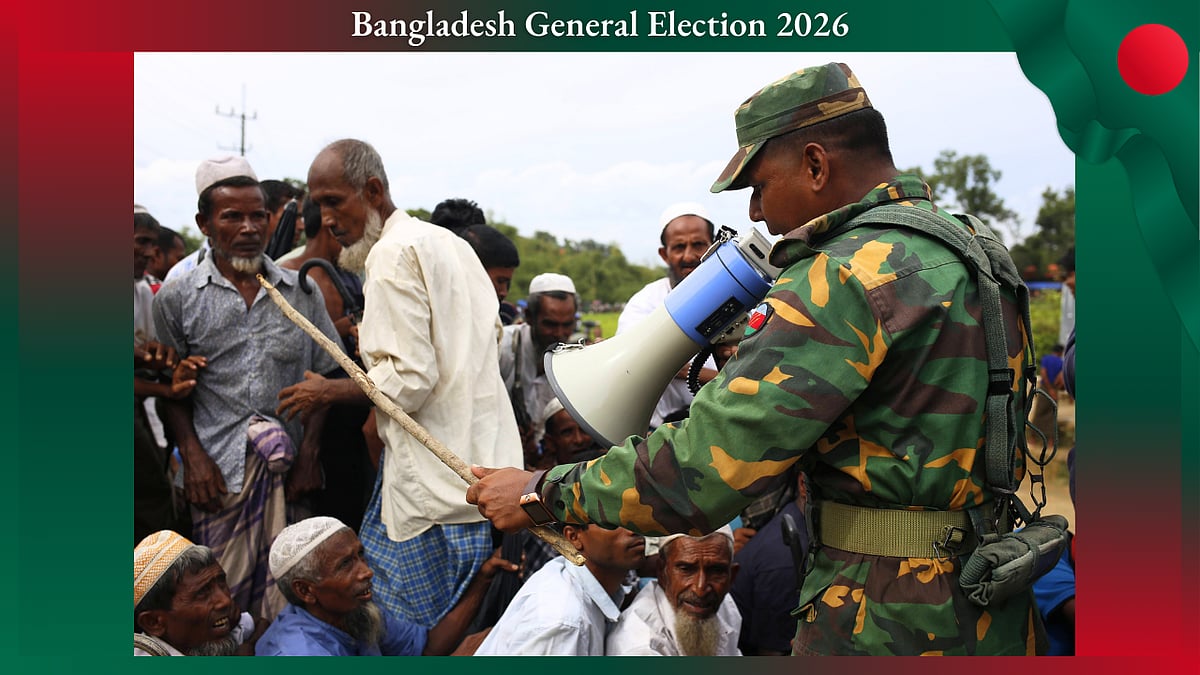
More than 1.1 million Rohingya are now confined to overcrowded camps around Cox’s Bazar in southeastern Bangladesh. International funding has been falling sharply, leaving basic services increasingly stretched. They are barred from formal work, face tight restrictions on movement and education, and are prevented from integrating into Bangladeshi society. In recent years, discrimination and harassment have intensified, while living conditions in the camps have steadily worsened.
Rahman’s choice of metaphors – cancer, intensive care and national suffering – is telling. It reimagines the Rohingya not as refugees with rights or as survivors of genocidal violence, but rather as a chronic national burden requiring clinical containment. Repatriation, in this framing, is not about justice or restoring their right to return. It is a national therapeutic programme, one that must be managed regardless of who governs.
This framing – deeper and more enduring than policy – captures how repatriation has come to function as a tool of governance in Bangladesh. Since 2017, in the wake of the Rohingya’s forced expulsion from Myanmar, calls for their return have served multiple purposes for Bangladesh’s leadership: to project moral leadership to international audiences, shape regional diplomacy, deflect domestic frustrations, assert sovereignty against international humanitarian agencies and other actors, and to discipline the Rohingya population within the boundaries of containment camps. All major political forces in Bangladesh – past, present and emerging – have used the promise of repatriation not as the fulfilment of a humanitarian obligation but as political performance for their own benefit.