
The village of Tula Toli was the site of one of the worst massacres of the Rohingya people that took place in Myanmar’s Rakhine state in 2017. On 30 August that year, the Myanmar military marched into the village. Survivor accounts detail how soldiers shot the men dead, threw babies onto burning pyres, raped women and locked them inside houses that they then set ablaze. The survivors who staggered away from that nightmare lost everything – their families, their homes, their land – and made their way across the nearby international border into Bangladesh. But that was just the beginning of their suffering.
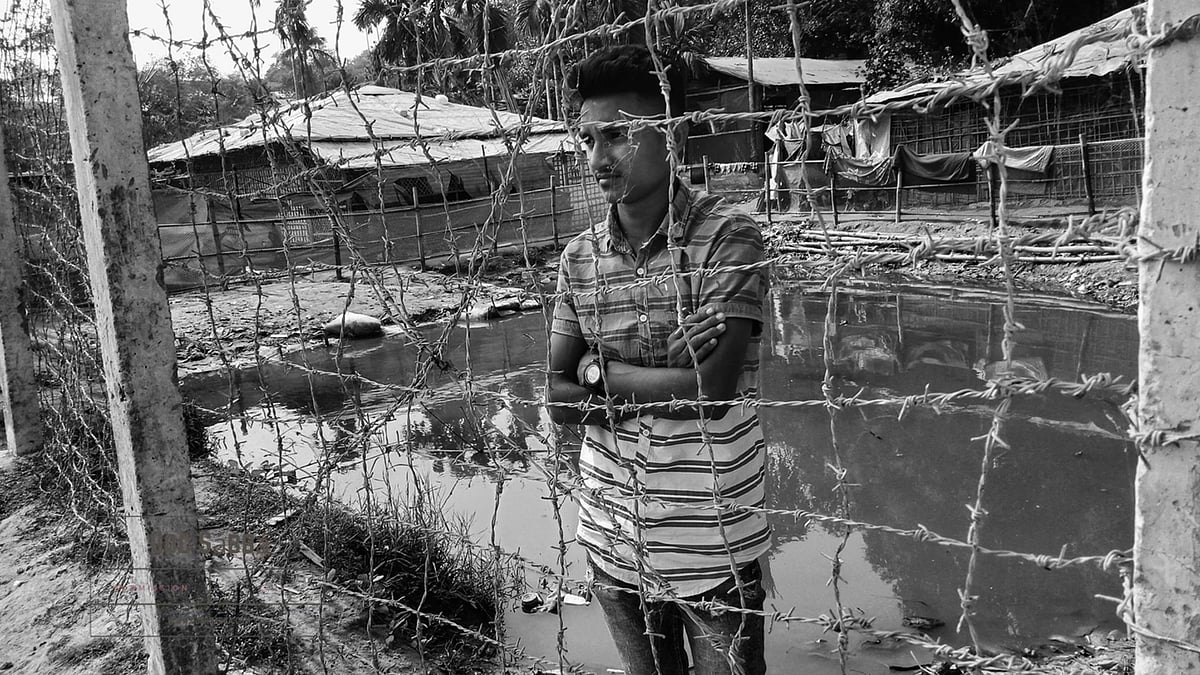
The Tula Toli massacre was over in hours. In the years since, the survivors have faced an unrelenting sequence of crises that have stripped away their dignity, security and any illusion of safety. In Bangladesh’s refugee camps, they have been trapped behind barbed wire, banned from working and forced to beg for aid that is fast disappearing. Fires have gutted their shelters. Gangs have kidnapped their sons. Traffickers have lured away their daughters. Their food rations have been slashed to such levels that they face starvation. They have no legal rights and nowhere to go. They have been left to endure an existence of permanent insecurity.
When Myanmar’s brutal campaign against them forced the Rohingya out of the country in 2017, Bangladesh opened its borders and offered them shelter – a gesture that earned Dhaka international praise as a compassionate host. Over a million Rohingya refugees now live in southeastern Bangladesh. However, they are under severe restrictions and exist in conditions of great deprivation. The complicated reality is that Bangladesh’s management of the Rohingya is not only about humanitarian goodwill but also a reflection of the way modern capitalist systems create and exploit certain groups of people. Bangladesh has treated the Rohingya not as human beings deserving of refuge but as a disposable population to be contained, controlled, exploited and ultimately abandoned.
The exploitation of Rohingya labour, the commercialisation of their misfortune and their treatment as an “excess” or “surplus” population mirror the methods many states employ to handle forced migration. These include keeping refugees on the edges of society and transforming them into pawns in negotiations for aid. Local policies, regional interests and international players – from the global aid industry to powerful and wealthy nations pursuing containment – collectively enable this unfair system. All of these forces help preserve the structural inequalities at the heart of the Rohingya crisis.