
During a press conference on 14 July, Sheikh Hasina, the prime minister of Bangladesh, was asked about the peaceful protests that had been on across the country’s university campuses for a week, with students demanding an end to a quota system for government jobs. “Why are they opposing the freedom fighter quota?” she asked in response. “Do they want the descendants of the Razakars to get all the facilities?”
Hasina was trying to discredit the protesters, but instead her use of the term “razakars” offended students and further fuelled their protests. Razakar is a pejorative used for people who collaborated with the Pakistan army during Bangladesh’s war for liberation in 1971. In reaction to the remark, students carried out marches late the same night, using “razakar” satirically in their slogans and accusing Hasina of labelling them as such for simply demanding their rights. Ministers and leaders of the ruling Awami League made remarks distorting the protesters’ slogans, again aiming to politically ostracise them.
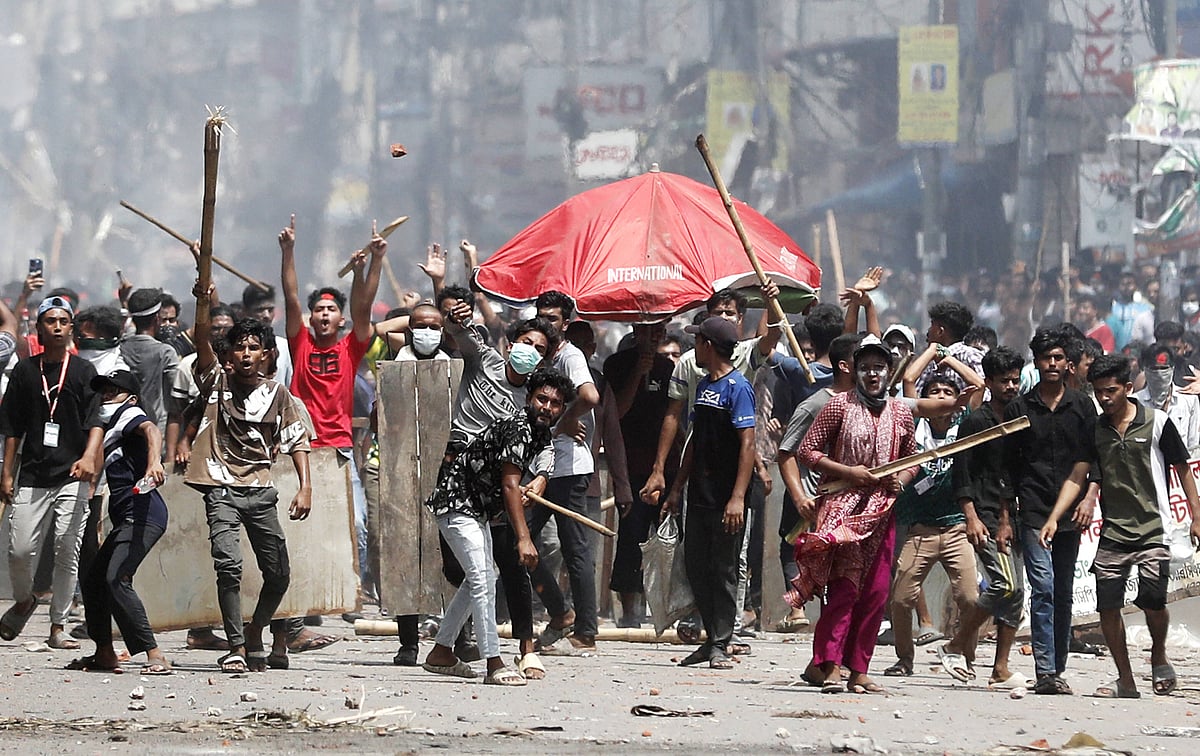
The situation escalated dramatically when the party’s general secretary announced that its student wing, the Chhatra League, was ready to respond to perceived insults to the spirit of the Liberation War. Members of the Chhatra League and Jubo League, the youth wing of the Awami League, carried out armed attacks on protesters at various universities, including Dhaka University, which resulted in hundreds of injuries and at least six deaths. These clashes, streamed live on social media, fueled nationwide outrage and resistance.
For nearly a week now, protesters have continued and escalated their demonstrations despite attacks from ruling-party factions and supporters. The government’s response, involving both law-enforcement forces and party men to suppress the growing rebellion, has included indiscriminate use of live ammunition and brute force. Although there is no official casualty count, the news agency AFP reported over 100 dead and thousands injured up to 19 July, Friday. The unrest has resulted in a nationwide implosion of order, with reports of prison breaks, a prolonged silence from the state-owned television station after its headquarters was set on fire, failure to protect key installations and widespread disruptions to railway and commercial flight services, illustrating the authorities’ struggle to maintain control. The government’s initial resistance to addressing the protesters’ grievances and its strategy of using deadly force has backfired, with discontent spreading and new participants joining the protests.