
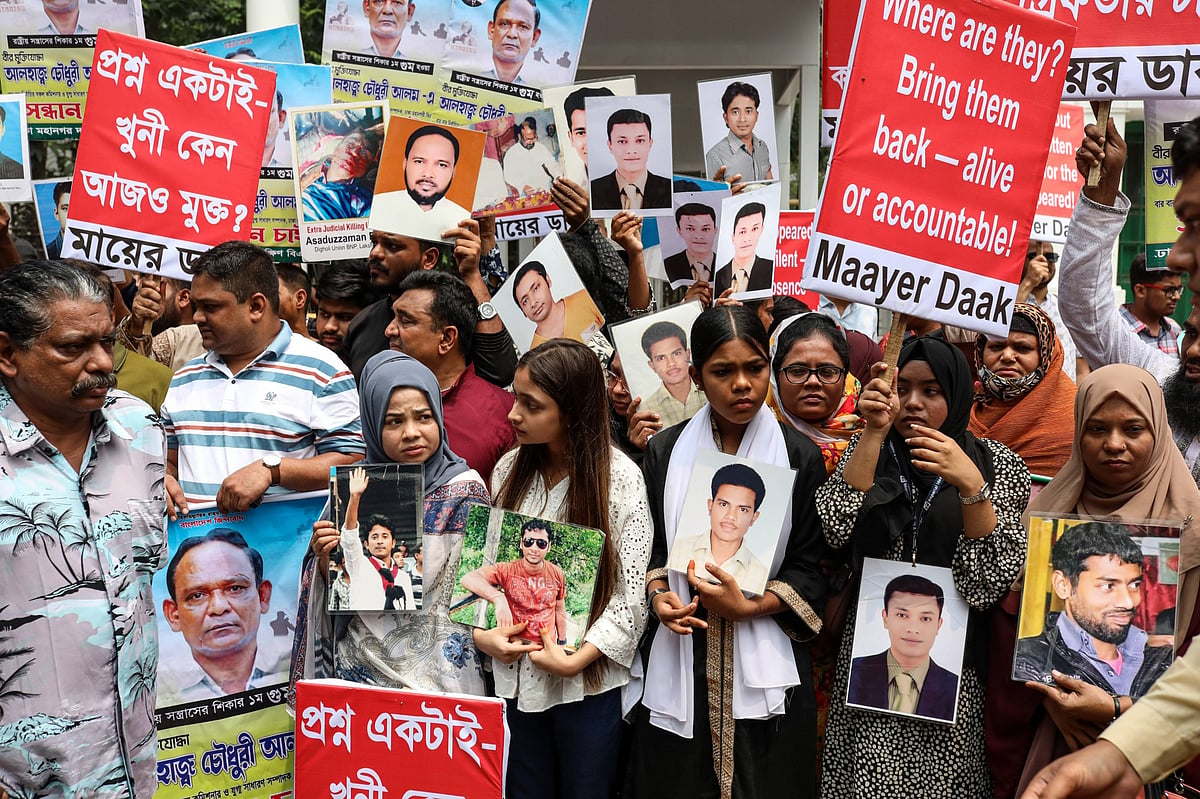
“I WANT THEM TO BE HANGED,” said Umama Fatema, one of the students who brought down the government of Bangladesh last summer. “But I think we have to send them to the International Criminal Court.”
I had asked her about a few dozen figures of the old regime currently in jail in Dhaka, men and women who had enjoyed unassailable authority over 180 million Bangladeshis under the former prime minister Sheikh Hasina. In August 2024, that came to a dramatic end after Umama and her fellow protesters spent three weeks on the streets of Dhaka, defiant in the face of Hasina’s brutal but unsuccessful crackdown.
The interim government of Bangladesh under Muhammad Yunus, which now holds power in Dhaka, has put accountability and justice at the forefront of its agenda. However, it faces challenges on multiple fronts: a volatile political climate, its own lack of capacity, and the complexity of legal cases spanning multiple jurisdictions. And it is working against the clock as, every day, changing political circumstances constrain it further. While wishing to strengthen the rule of law and the country’s institutions, it has presided over a system of continuing legal abuses.
Under Hasina, tens of thousands of people were arrested on false charges for political reasons, thousands were forcibly disappeared, and,finally, over a thousand were killed in the three weeks of the revolution. The interim government is committed to hold these alleged perpetrators accountable for their actions. But, in today’s Bangladesh, justice might be hard to come by. Passions are running high. The country’s institutions are in disarray and some may be actively opposed to accountability. Perhaps most worryingly, the interim government has failed to clean up the administration of justice, and instead continued the abusive habits of its predecessor. Ten months after the Monsoon Revolution, it has banned Hasina’s party, the Awami League, but no credible judicial proceedings have taken place.