
This week at Himal
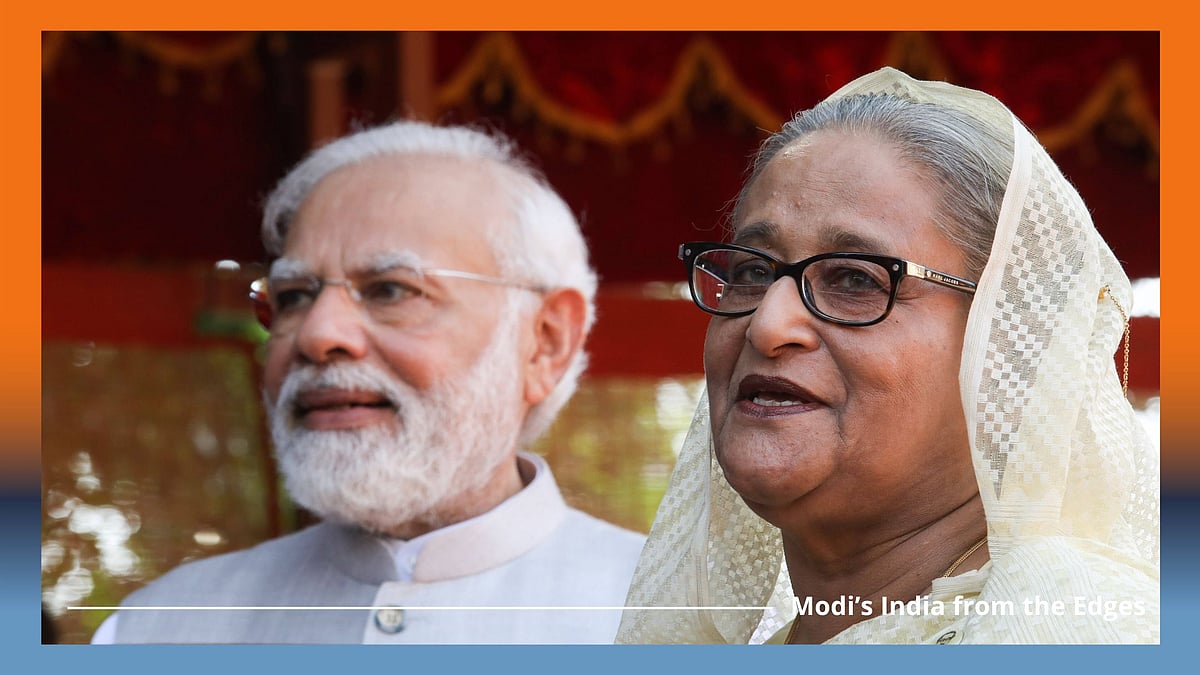
In the latest story from our special series, ‘Modi’s India from the Edges’, Kamal Ahmed writes that Bangladesh remains wary about Indian prime minister Narendra Modi’s steadfast support of the ruling Awami League’s Sheikh Hasina, despite a one-sided election and a lack of mutual respect in the India-Bangladesh relationship.
As 18 May marks the end of Sri Lanka’s civil war, Frances Harrison writes about the devastating Tamil poetry written by women who fought in the war, who have found a way to protest, mourn and heal. Also from Sri Lanka, Shiran Illanperuma discusses Asoka Bandarage's 'Crisis in Sri Lanka and the World', which counters narrowly focused analyses of the roots of Sri Lanka's political and economic crises.
Independent newsrooms like Himal’s need your support to bring out underrepresented perspectives and underreported stories.
Himal does not depend on advertising, corporate support or a restrictive paywall. We need your support as a reader to keep bringing out underrepresented perspectives and underreported stories, and to keep our in-depth, independent journalism open-access and free to read for all. Please contribute to Himal’s fund for the ‘Modi’s India from the Edges’ series – we cannot do this without you!
Also read: Bangladesh is vexed by and wary of Modi’s unstinting support to Sheikh Hasina
Also read: The devastating poetry of Tamil women who fought in Sri Lanka’s civil war
Also read: The deep roots of Sri Lanka’s economic crisis
This week in Southasia
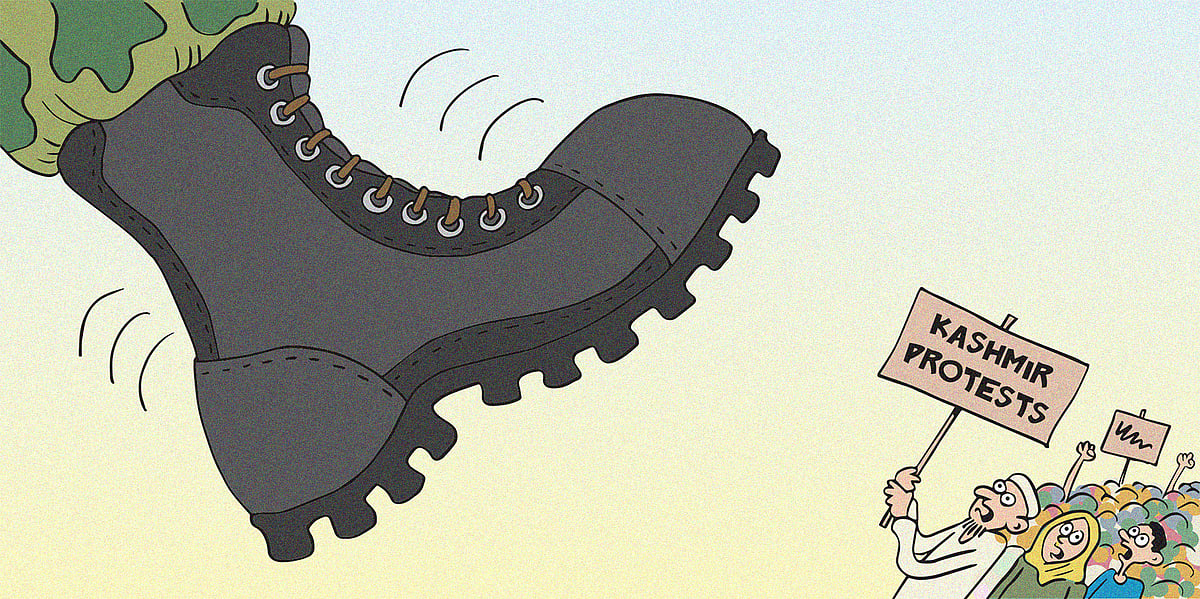
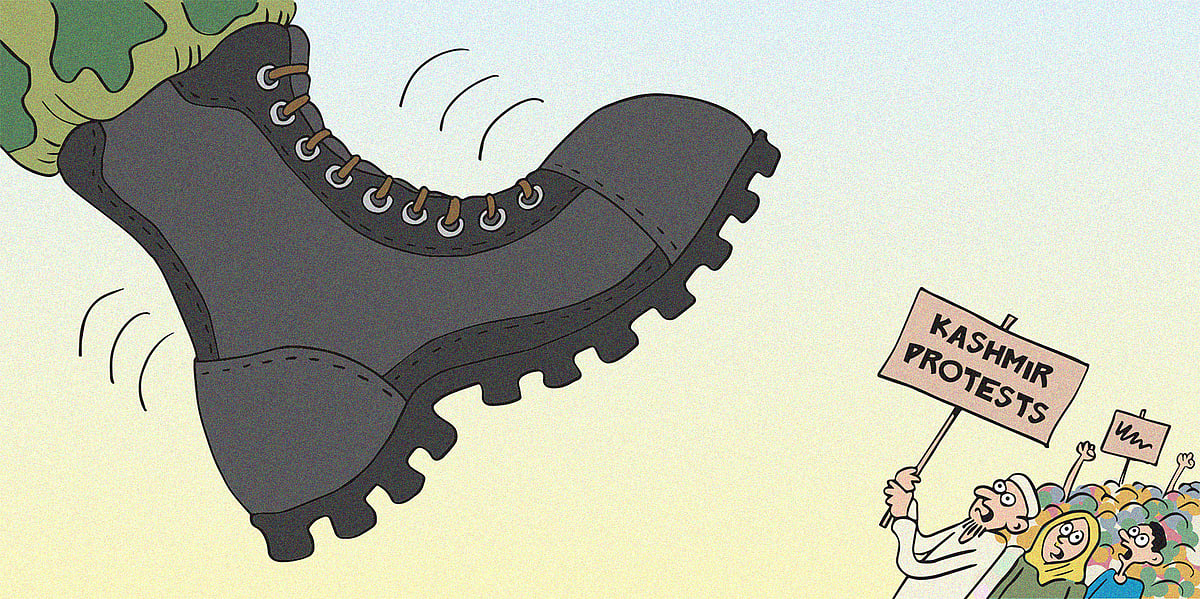
Protesters clash with paramilitary in Pakistan-administered Kashmir
On 13 May, protests in Pakistan-administered Azad Jammu and Kashmir came to a head with three people killed and several others injured in clashes with paramilitary forces. The protesters have been demanding relief from the high prices of flour and electricity tariffs, and calling for less spending on officials. Pakistani Prime Minister Shehbaz Sharif hastily approved a PKR 23 billion (USD 82 million) subsidy programme on 13 May as the protesters marched towards Muzaffarabad. While the protesters initially celebrated, there was later a violent confrontation with Pakistan’s paramilitary forces. The Azad Jammi and Kashmir government ordered the closure of government and educational institutions, with reports of mobile internet services partly suspended.
The Jammu Kashmir Joint Awami Action Committee (JAAC), a group comprising traders, labour leaders and activists, said it plans to continue the protests, this time against the killings. The protesters' demands date back to May 2023, as Pakistan grappled with the impacts of continued political and economic instability. The protesters also say that water resources in their region are primarily being used for hydropower, and they should receive preferential rates as a result, particularly given limited economic opportunities. Apart from lower flour and electricity prices, protesters put forward ten demands including for better financial integration with the rest of Pakistan. But despite verbal commitments, the Pakistan government failed to deliver on their promises.

Elsewhere in Southasia 📡
- The Editors Guild of India and the Network of Women in Media, India have released statements expressing concerns, condemnation on attacks on journalists covering India’s election, including the killing of journalist Ashutosh Srivastava and assault of Raghav Trivedi in Uttar Pradesh
- At least 300 people die in flash flooding in Afghanistan, and Taliban government declares a state of emergency as the country struggles to mitigate climate change impacts
- Junta air force chief Tun Aung meets with Indian Air Force representatives in Naypyitaw on 15 May as the junta intensifies aerial attacks on civilians in Myanmar
- India’s Supreme Court rules Prabir Purkayastha’s arrest under antiterrorism law illegal, orders release on bail
- Following visit to Cox’s Bazar, over USD 8.2 million pledged to support Rohingyas, after Joint Response Plan reports funding gap of USD 301 million, leading to food insecurity among the Rohingya
- Maldives admits they don’t have pilots capable of operating aircraft donated by India after Indian personnel leave the country as part of President Mohamed Muizzu’s ‘India Out’ campaign
- New Amnesty International report finds Nepal state response to caste discrimination inadequate, calls for state to provide access to justice, reparations for Dalits, particularly Dalit women and girls
- India backs Chabahar port deal with Iran despite US warning of potential sanctions
- Singapore-based couple donates 400-year-old Buddha statue back to Kingdom of Bhutan after acquiring it in 2016, raising questions around provenance
- Army whistleblower who exposed alleged Australian war crimes in Afghanistan receives six year prison sentence
- Nepal bans Indian spice brands MDH and Everest amidst growing concerns around contamination
- 1000 Rohingya forcibly conscripted by Myanmar military junta since February, raising fears some are being used as human shields
Only in Southasia
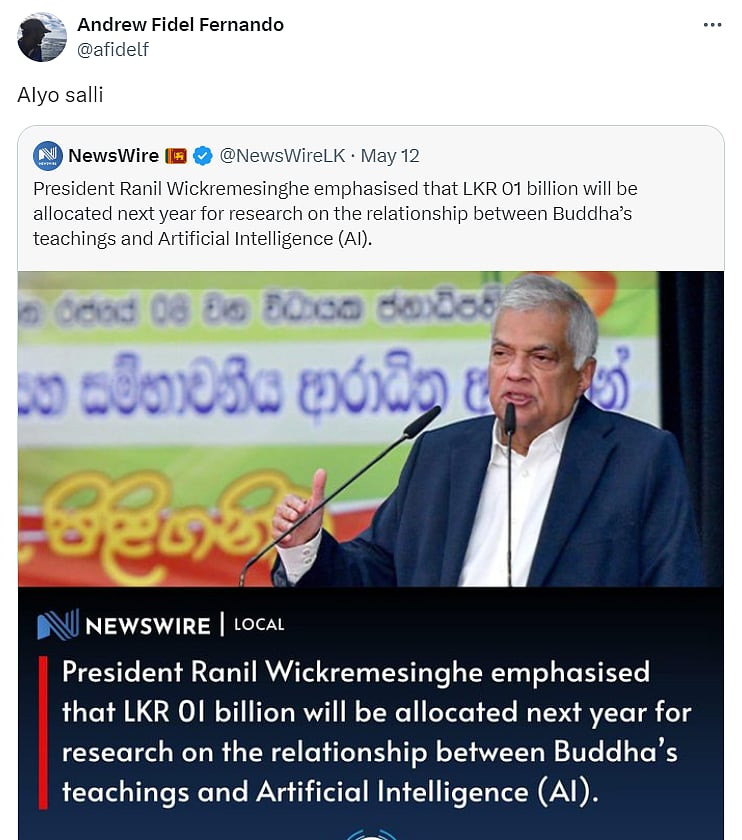
Sri Lanka’s President Ranil Wickremesinghe raised a few eyebrows when speaking at a centenary event for the Sri Lanka Buddhist society in Moratuwa, when he unveiled a brand new initiative - a research project to discern the relationship between the Buddha’s teachings and Artificial Intelligence. Wickremesinghe said that around LKR 1 billion (over USD 3.3 million) was to be set aside for the project. During his speech, Wickremesinghe also revealed his inability to grasp the subject matter, asking whether AI would remain neutral and worrying that it ‘might deviate from its original purpose’. Social media pundits were quick to ask whether the LKR 1 billion couldn’t be better spent elsewhere, given Sri Lanka’s ongoing economic crisis. You could say that this entire project smacks of Artificial Intelligence.
From the archive
The long wait for justice (August 2020)
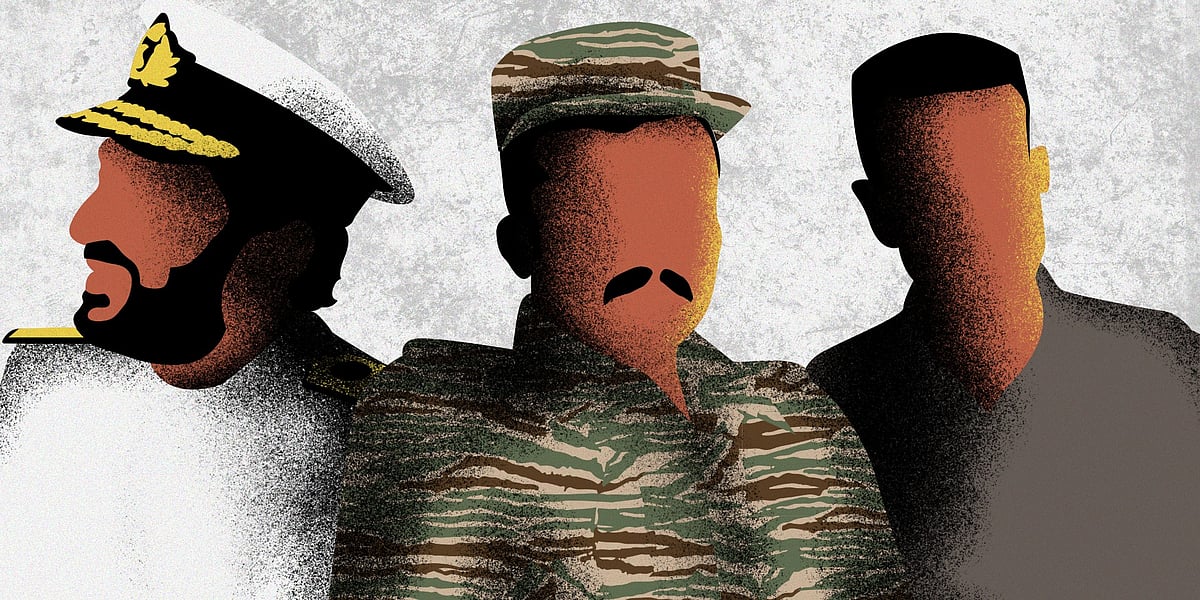
As Sri Lanka marks 15 years since the end of its civil war this week, Bhavani Fonseka's piece on the chronic failures of criminal justice in Sri Lanka remains relevant. Fonseka revisits three cases that reveal Sri Lanka's legacy of past abuses, its challenges with accountability and entrenched culture of impunity. From 2013, Tisaranee Gunasekara's article examining how violence has become normalised in post-war Sri Lanka, particularly through cases of child sexual abuse, is also worth a re-read. And Namini Wijedasa, in an article from 2012, revisits the Rajapaksa government's response to the US-led UN Human Rights Council resolution, underscoring the government's unwillingness to address the question of accountability for rights violations during Sri Lanka's civil war.