
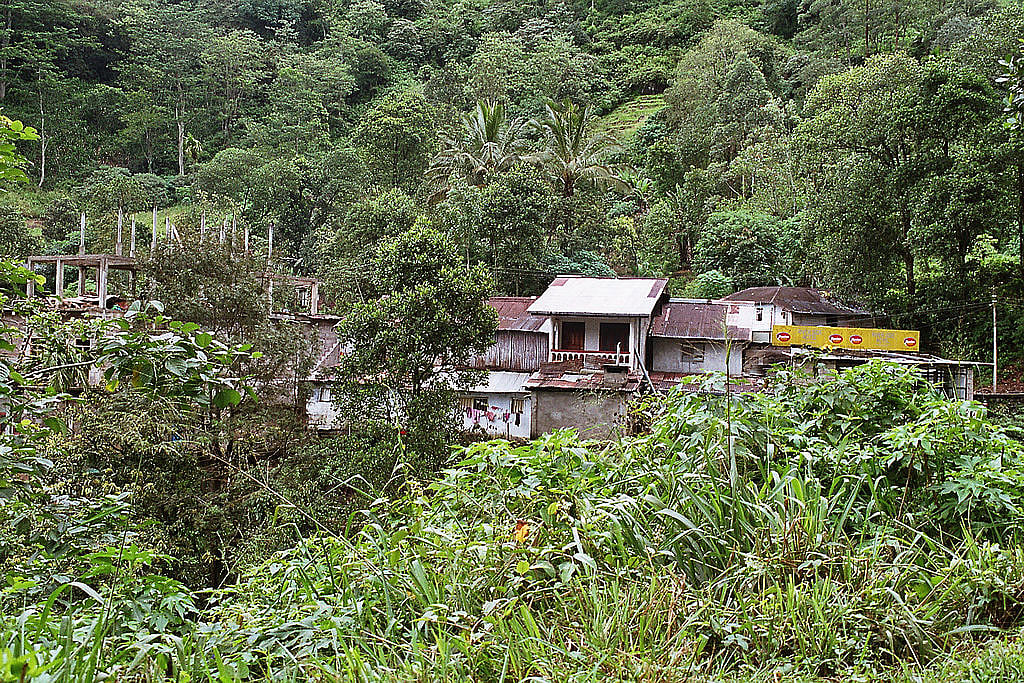
In September 2009, three estate trade unions and the Employers' Federation of Ceylon (EFC) signed a collective wage agreement with representative of tea- and rubber-plantation workers that raised their daily wage from 290 to 405 rupees (roughly USD 3.5). Despite this increase, however, the new wage is still unable to meet cost-of-living demands, thus continuing the chronic poverty and socioeconomic stagnation that the Up-country Tamil estate workers have long experienced. The reason for all of this is, of course, political marginalisation.
Post-Independence nationalist movements and the subsequent conflict between the government and LTTE have continually overshadowed the historical subjugation and disenfranchisement of the Up-country Tamils (those descended from South Indian migrant labourers). Consequently, this group has been unable to effect any sustained political change in support of its power-sharing rights, and its members are often marginalised within the debates of nationalist ideologies. In fact, Up-country Tamil political parties are often perceived as minority 'wild cards', because they work within a system of political patronage that forces them to shift allegiances between the majoritarian Sri Lankan state and various nationalist parties. With tenuous political traction, Up-country Tamil leaders must reflect on the historical reasons for their marginality and strategise beyond the presently missed opportunities, in order to secure a firm place for their constituencies in post-war Sri Lanka.
The Upcountry Tamils are descendents of labourers who came to Ceylon under British rule and worked during the industrial boom as 'coolies' during the early 1800s. Beginning as labourers on the roads and railroads and, later, on the coffee plantations, this minority group became a permanent work force with the cultivation of tea. In 1948, the first government of independent Ceylon disenfranchised so-called Indian-Origin Tamils, leaving a majority of Up-country Tamils stateless and without citizenship rights. In 1964, President Srimavo Bandaranaike and India's then-Prime Minister Lal Bahadur Shastri completed the arbitrary exercise of dividing 975,000 stateless Indian-Origin Tamils into three entities: 525,000 Indian-resident repatriates; 300,000 to be entitled to Ceylonese citizenship by application; and a remaining 150,000 residents, whose statelessness would be addressed at a later date.
Because the government of Ceylon became preoccupied with nationalisation debates and the subsequent rise of political violence, the remaining stateless persons became obsolete. As tensions between nationalist groups grew during the 1970s and 1980s, the question of Up-country Tamils' citizenship was largely forgotten, and repatriation efforts between Sri Lanka and India officially ceased in 1984. Desperate to prevent Up-country Tamil militancy and further support to the LTTE, President Chandrika Kumaratunga granted all stateless persons in Sri Lanka citizenship, and all Up-country Tamils finally became citizens in 2003. Nevertheless, a large number of Up-country Tamils still do not have legal documentation of Sri Lankan citizenship; it is estimated that nearly 100,000 Up-country Tamils in Nuwara Eliya District did not possess National Identity Cards during the February 2009 Central Province elections, and thus were unable to vote.