
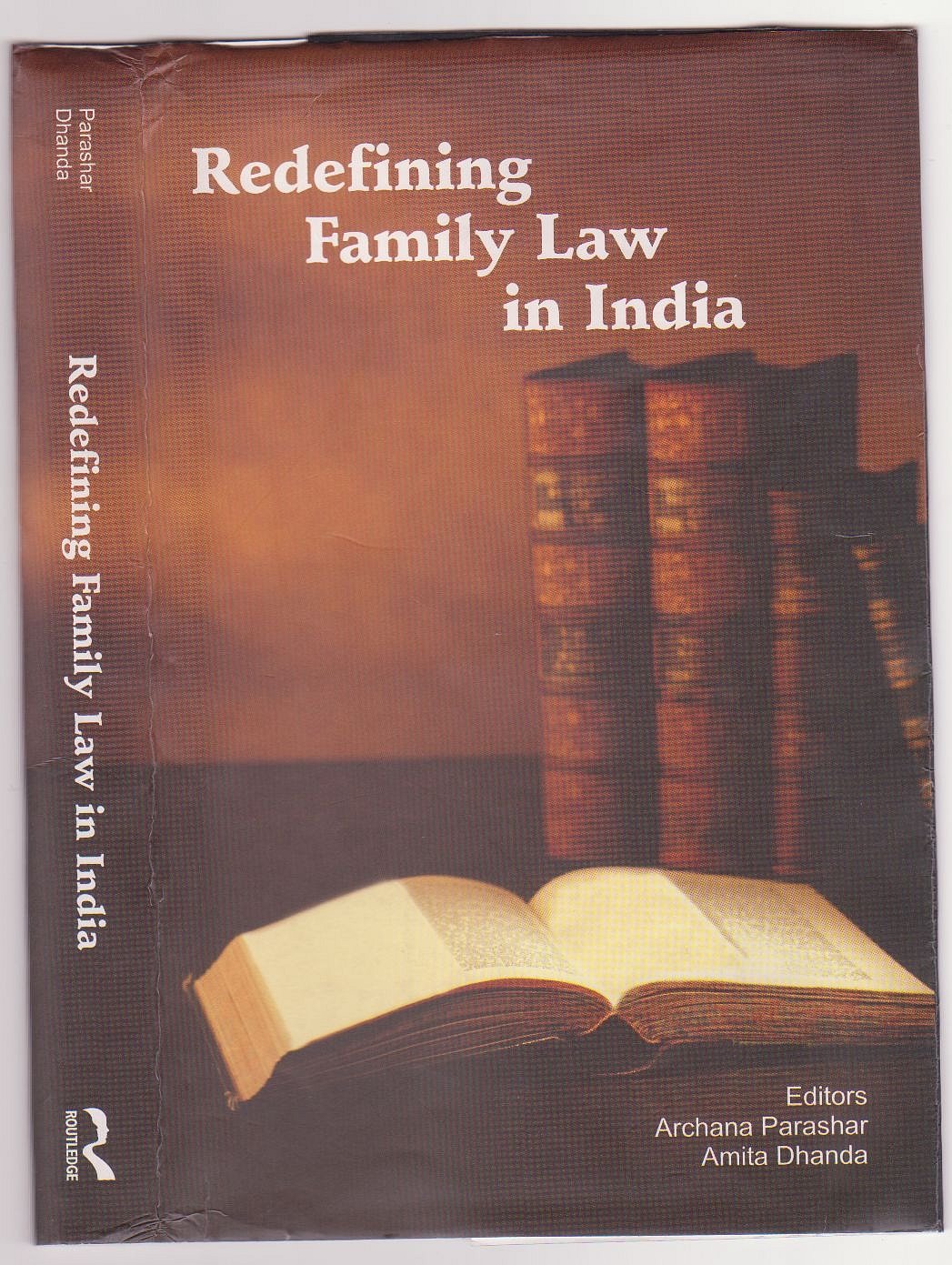
The realm of family law inherently carries with it a huge burden of history, given that it essentially covers interpersonal relationships within a family unit, and the influence this has on the experiences of larger communities. However, in recent years any discussion or debate on family law has largely focused almost completely on women's rights, a change that has led to a handful of crucial acknowledgements of women's rights in India.
Historically, women's rights – whether over their own bodies, or to property, maintenance, guardianship or custody of their children – have been determined by patriarchal laws handed down through the centuries (Manu's codification of conduct has perhaps been the most influential body of work), and have been further hardened by rigid social customs. Postcolonial India, with its modern constitutional system founded on principles of equity, was expected to dispel the cobwebs of a patriarchal mindset, and look at women's rights from a more equitable perspective.
For years this did not happen, largely due to the hangover of the colonial preference for retaining a community's so-called 'religious personal laws', or RPLs, over the creation of an independent and uniform set of laws. The result of this was that family laws continued to remain discriminatory towards women. Even as Indian lawmakers were reluctant to interfere in what they saw as a personal sphere, archaic medieval English laws such as the Restitution of Conjugal Rights, which turned a woman into her husband's property, found their way into the post-Independence legal system. Significantly, this in particular was a law that had been contested during colonial times, but was eventually codified in Hindu Family Law.
In recent years, largely due to decades of struggle, the courts have started to acknowledge that there are gender inequities inherent in the legal and judicial system. Much of these decisions have come about under the auspices of family law, including in awarding guardianship rights to mothers, something that was previously considered unthinkable. This judicial acknowledgement has been crucial, given that Indian society at large persistently refuses to accept a mother as a child's guardian in crucial matters such as school-admission applications or bank forms, if the father is living. In parallel, in 2005 lawmakers granted the right to women to become heir to a portion of their family's property. Today, through a court order, it is possible for a married daughter to initiate a suit to claim part of her father's house.