
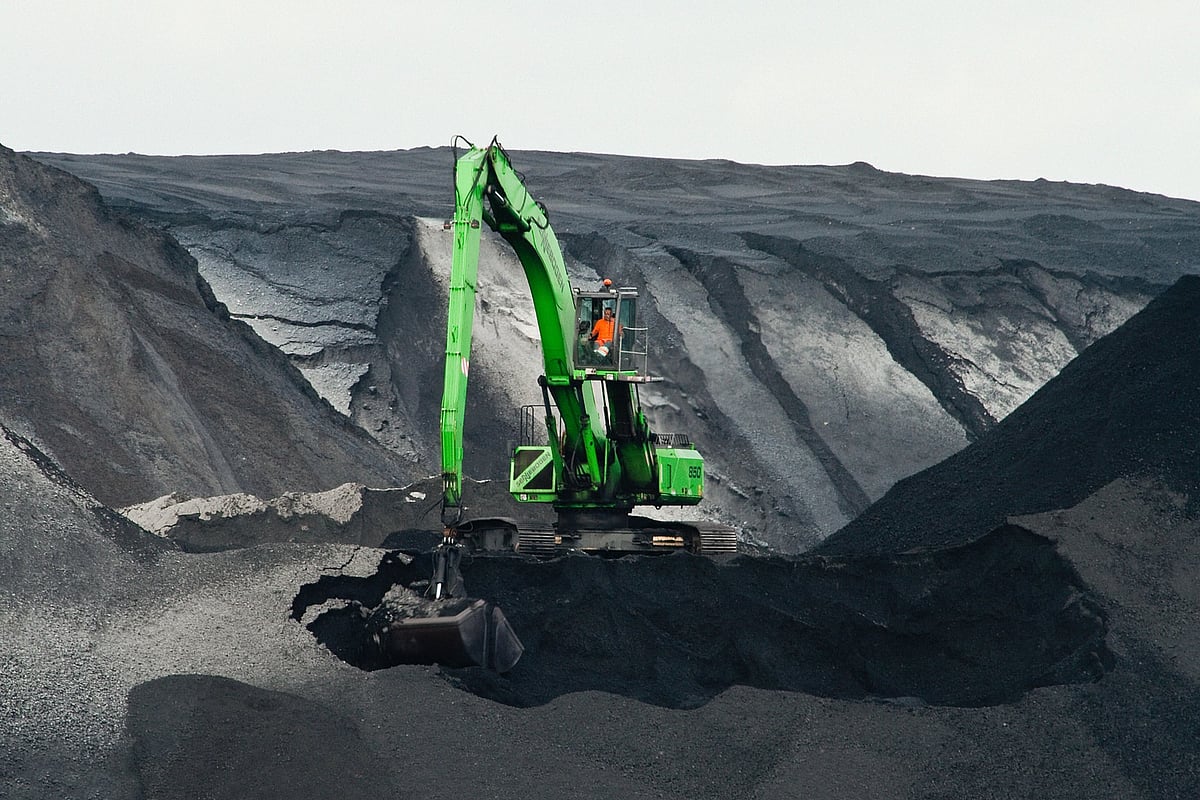
"With Coal, we have light, strength, power, wealth, and civilization," W J Nicolls, a 20th-century American writer, once marvelled. "Without Coal we have darkness, weakness, poverty, and barbarism." A century later, civilisation itself seems to be threatened by the 'black diamond'. Although breathing coal's sulphurous smoke was once considered healthy in England, it soon became clear that inhaling these vapours was far from good for the human body. Moreover, it is not just the coal fumes that are dangerous to human health. It is the invisible, odourless carbon-dioxide (CO2) gas that results from burning coal that is now threatening the world – not just human beings, but the entire climatic system.
Coal, whose reserves are widespread across the globe, today provides about 40 percent of the globe's electricity, but it has also become something of a black albatross. Similarly, refined crude oil has given us diesel and gasoline – the most energy-dense of liquid fuels – giving humanity the freedom to drive and fly across the globe. Yet, it has become increasingly obvious that our collective addiction to oil has become a geopolitical and environmental nightmare. While fossil fuels have irrefutably defined the modern way of life, countries around the world are now struggling to maintain a certain lifestyle – one made possible by fossil fuels – while not relying on the dirty sources.
Southasia has been no different than the rest of the world in imbibing the fossil-fuel-driven benefits. Commercial coal mining in India began in 1774, led by the British, and the coal-powered railway system built in the region during the colonial era transported goods, people and dreams. The British brought along automobiles with the railways, and Indians quickly fell in love with them in spite of the poor road infrastructure. Although today more Southasians have two-wheelers than cars, the new Tata Nano offers the possibility of making the car more affordable than ever. Yet industrial-scale environmental problems are becoming increasingly apparent to all. Jharkhandis are revolting against the continued coal mining, which has given them little more than lost livelihoods and destroyed forests; dense smog perennially envelopes the Indian capital; children breathe diesel smoke and dust in all large Southasian cities; rapidly receding snowlines are threatening the lives of the hundreds of millions who depend on glacial runoff; and a rising sea is likely to submerge large tracts of Bangladesh.
One of the most significant problems today is the continued reliance on dirty coal-fired power plants, which dominate the Indian power sector. Direct impacts resulting from the construction and ongoing operation of coal power plants include emissions of particulates and hazardous chemicals, pollution of local waterways, and degradation of land used for storing the by-product of burned coal, known as fly ash. The indirect impacts result mainly from coal mining, which includes degradation and destruction of land, water, forests, habitats and societies in general.