
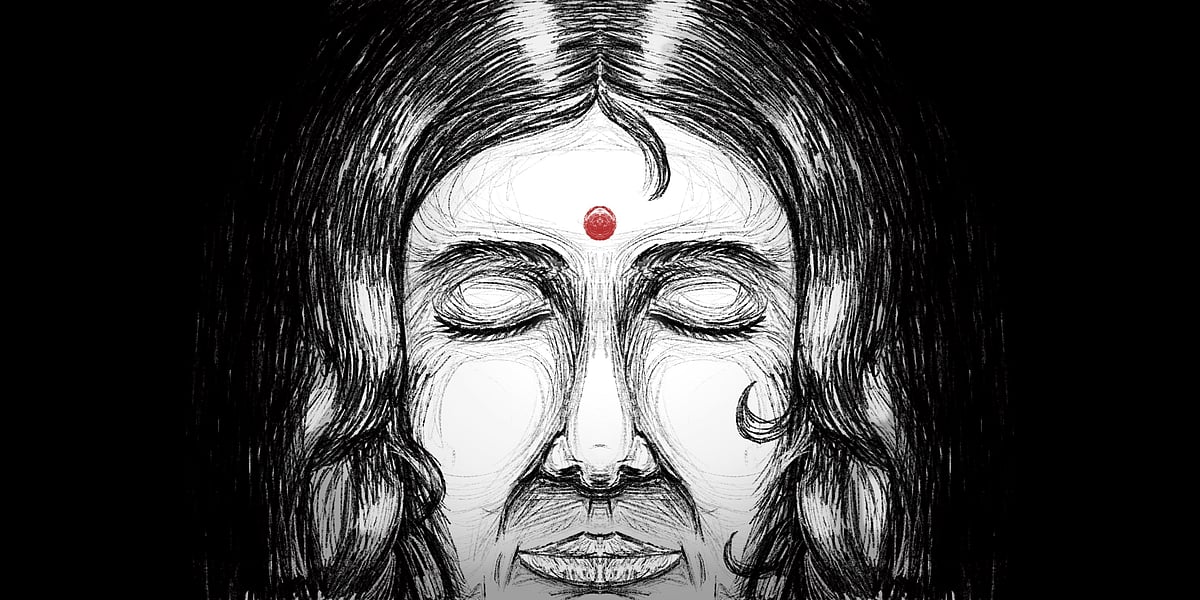
A few years ago, when I was getting dressed to meet my friends for coffee, I decided to put on a black bindi to go with my black Ramones halter-top, white ankle-length pajamas, and black sliders. I had just got my hair trimmed, and the hairdresser had cut my bangs a tad too short so as to reveal a portion of my forehead. And I did not like my forehead bare.
As I was about to step out the door, my mother frowned and asked me to remove the bindi. I took it off, and as soon as I was out of the house, I put it back on – to me it was a delineation of post-liberalisation Indo-Western fashion and therefore 'cool', even if she seemed put off by it.
In the 1990s, white celebrities like Gwen Stefani and Madonna were often spotted wearing bindis in music videos and live concerts. Many in the MTV generation viewed this symbol of Hindu womanhood as a flat representation of "Indian culture". Ironically, though, the bindi itself is a gendered marker, sometimes with different bindis for married and unmarried women. Soon, Westerners assumed that the bindi was, homogeneously, a part of all Indian or Hindu traditions. But for me, even though I was born in India into a Hindu family, the bindi was unfamiliar, as I had never seen any women in my family wear one.
The reason my mother frowned at my bindi was because Sindhi Hindu women – married or unmarried – did not traditionally wear bindis. She viewed the bindi on my forehead as a performative act of conformity, and therefore insisted I remove it. She has never worn one and neither had her mother. On the other hand, because the bindi is not part of our community's tradition, I had exoticised it, much like the white girls who saw it as a symbol of fashionable pop culture.