
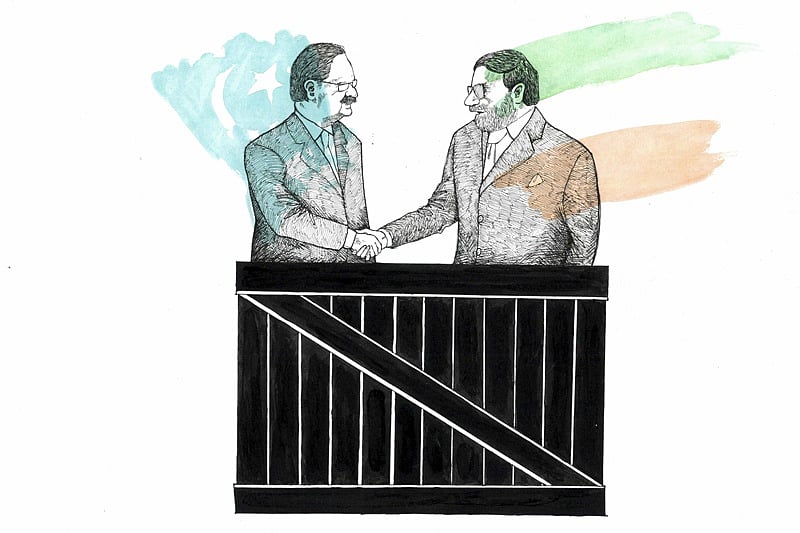
The landmark approval by Pakistan's federal cabinet on 23 February to phase out the negative list of tradable commodities by December of this year is no small development. The country's current 'negative list' prohibits the import of certain food items, agricultural inputs, ceramics, chemicals and domestic appliances in order to protect sectors of Pakistani production that officials worry would not be able to compete against Indian goods. Currently, Pakistan maintains a positive list of only 1963 items that it allows India to export into its territory. Now, however, the cabinet has done away with the existence of a positive list entirely; instead, the country will move to a negative list of only 1200 items covering sectors such as textiles, pharmaceuticals and automotive transport – and even this list will be phased out by year's end. Under the revised provisions, Indian traders will soon be able to sell more than 6800 items to Pakistan. Taken as a whole, it's a major step by Pakistan towards granting Most Favoured Nation (MFN) status to India almost 16 years after India did so for Pakistan.
In 2010-11, Pakistan's imports from India stood at USD 2.33 billion, while its exports to India were just USD 332 million. Bilateral trade is now expected to grow threefold, if government hurdles are removed. Indeed, the volume of informal trade between India and Pakistan via third countries already far overshadows the volume of formal trade. Once this aspect of the relationship normalises, many are hoping that the informal trade will also be formalised, resulting in lower transportation costs and higher revenues for both sides.
Though both Islamabad and New Delhi are currently celebrating this latest move, Pakistani businesses are not entirely convinced that the deal will prove fruitful. They believe India, which has a huge market and a massive economy of scale, holds a significant cost advantage over its neighbours. Pakistan's business community does support the enhancement of regional trade but wants the process to be beneficial to both countries. Some sectors of the Pakistani economy – including the automotive, steel, textile, pharmaceutical and agricultural industries – fear tough competition from Indian imports, and oppose the new deal on the pretext of safeguarding local industry and jobs. Pakistani industrialists complain that they have not benefited much from the MFN status enjoyed by Pakistan. They also allege that non-tariff barriers (NTBs) imposed by India are so tough that MFN status threatens to become meaningless.
As India now seeks access to the Pakistani market for its own finished products, critics say, it must ensure equal access and opportunity for Pakistani goods and businesses in the Indian market. Such worries have been exacerbated by Pakistan's experience of trade malpractice with China; as such, many local industries are not convinced by Islamabad's assurances of improved customs procedures, valuation and standards.