
Reporting for this story was supported by Internews’ Earth Journalism Network.
THE FIRST DAY of the month of Vrishchikam, in the year 1199 of the Malayalam Era – corresponding to 16 November 2023 – marked the start of a new Mandala-Makaravilakku pilgrimage season. Hundreds of thousands of devotees, most of them men, gathered at the Sannidhanam of Sabarimala, a revered Hindu temple in the southern Indian state of Kerala. They had come to receive blessings from the presiding deity, Lord Ayyappa, in the form of the temple’s famed holy offering, or aravana, a fragrant sweet made of coconut milk, rice, jaggery and spices.
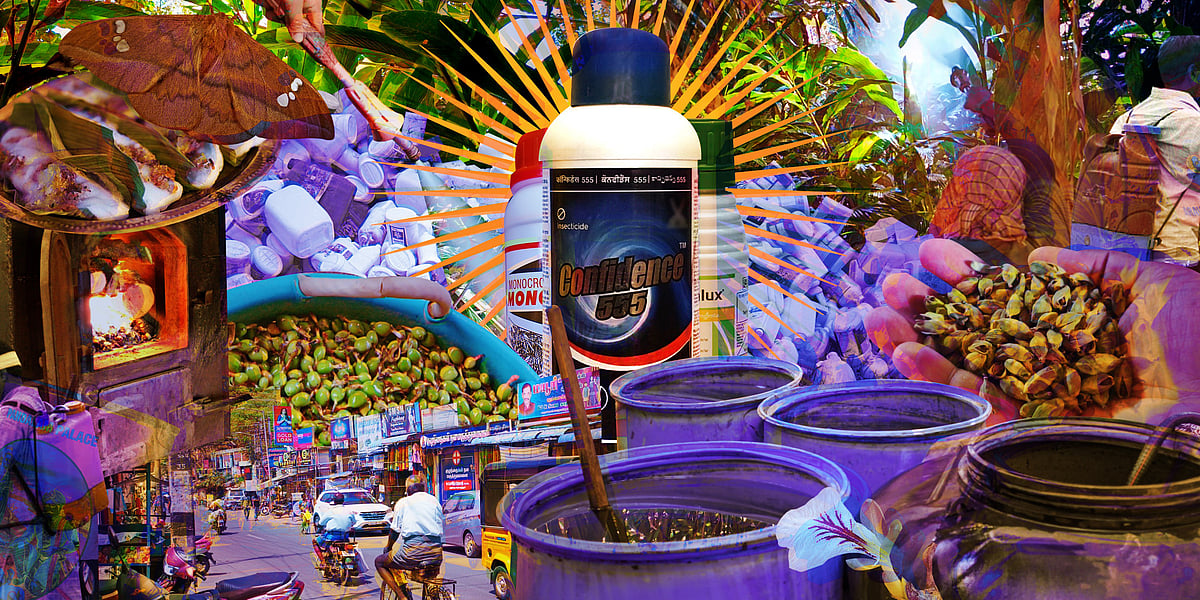
But this pilgrimage season, the aravana they got was missing an ingredient – cardamom. In January 2023, the Kerala High Court had stated the sale of Sabarimala aravana containing the spice as the cardamom used in its preparation was found to have a dangerously high level of pesticide residue.
“I didn’t intend for it to become a controversy,” 53-year-old Prakash S, a cardamom grower and trader, told me in Rajakumari, his hometown in the hills of Idukki, a Kerala district known for its tea and spice plantations. “I am a believer. I didn’t want to cause any problems.”