
Bangladesh confirmed its first case of COVID-19 on 8 March 2020. In the span of a little over a hundred days, the number of positive cases crossed the 100,000 mark with more than 1300 dead. The country imposed a nationwide lockdown on 26 March and extended it several times. As the lockdown was lifted on 31 May, the number of cases began to surge. Yet, Bangladesh's testing rate has been cut despite the rise in fatalities, with just 13,500 fresh tests conducted by July 10. Bangladesh's mayors have been asked to transition to zone-based lockdowns, with those identified as red zones given a public holiday and asked to curtail non-essential movement, though the decision is yet to be implemented. Within Dhaka, 60 COVID-19 confirmed cases per 100,000 people would qualify as a red zone; everywhere else, red zones will be declared for 10 confirmed cases per 100,000 people.
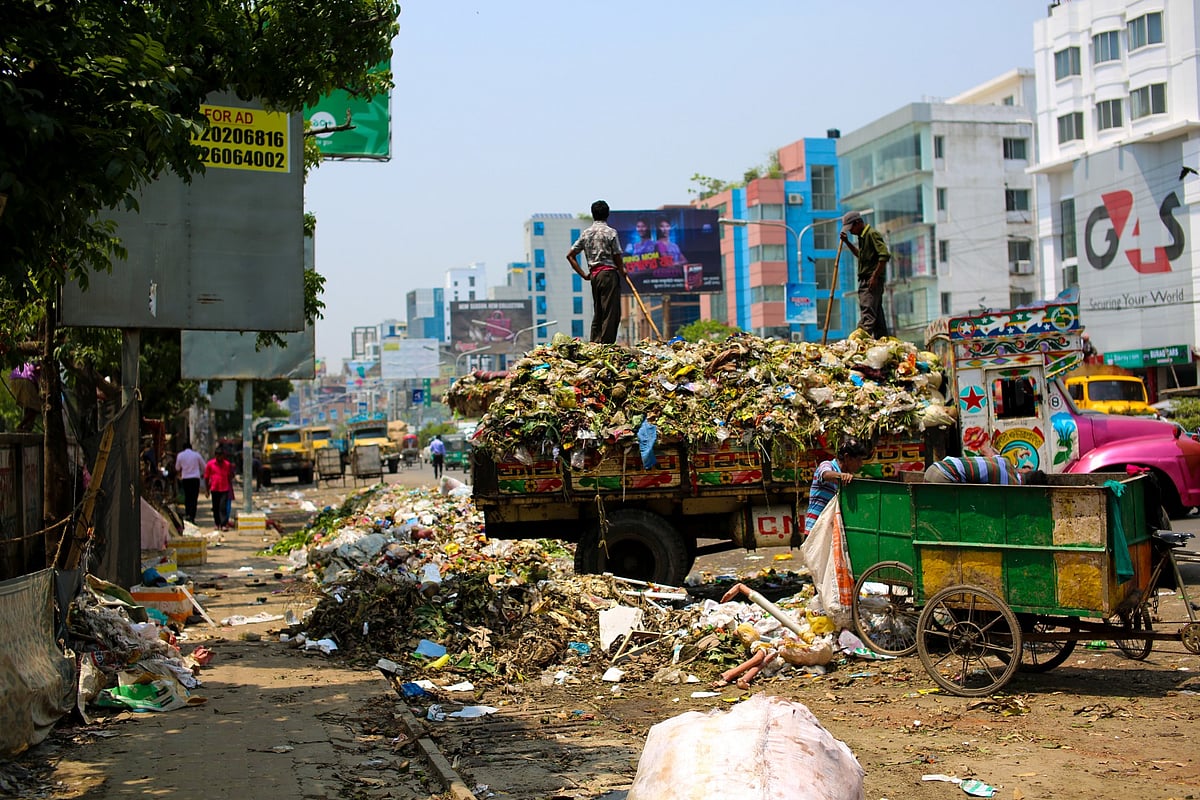
In this atmosphere of uncertainty, Dhaka's street cleaners are among those most at risk of contracting COVID-19, as many of them continue to work without adequate safety gear.
Air Commodore Badrul Amin, Dhaka South City Corporation's (DSCC) chief waste management officer, said it had provided masks and gloves to all 5400 of their employees and would be distributing Personal Protective Equipment (PPE) to them soon, according to a report by The Daily Star published in May. Commodore M Monzur Hossain, Dhaka North City Corporation's (DNCC) chief waste management officer, said two-thirds of their 2500 waste management workers have already been given PPE. Other protective gear such as gloves and masks were distributed to all employees and gumboots were given to those who were directly involved in waste collection, he added.
However, despite directives both from the central government and the city corporations to ensure proper protective equipment for the street-cleaners, there is no tangible evidence that they have been implemented. For instance, Alauddin, a cleaner working at the DSCC, said he had received masks and gloves of inferior quality, only meant for one-time use. Cleaners like him have to often rely on themselves for safety equipment.