
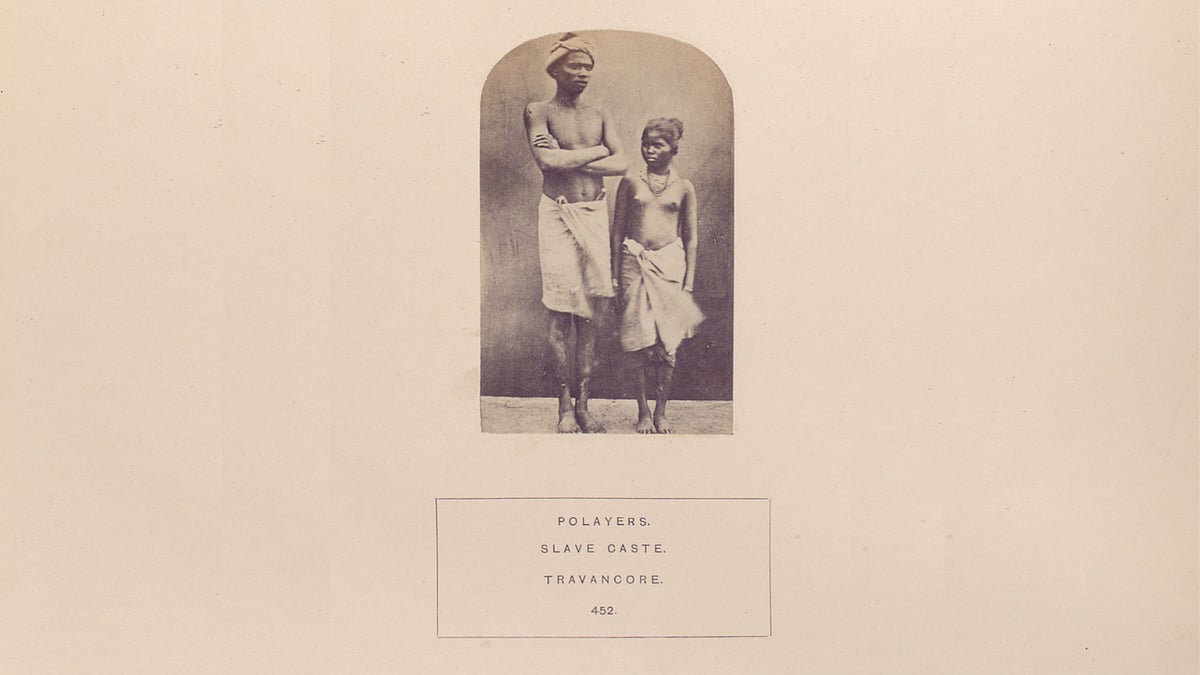
IN FEBRUARY 1841, Islamic clerics in Madras appointed by the East India Company to serve in the Faujdari Adalat – the Madras Presidency’s highest criminal court – issued a fatwa that, though forgotten by history, changed the face of slavery in Southasia. For what was possibly the first time in modern Southasian history, a legal judgment abolished an entire, oft-overlooked system of slavery: slavery predicated entirely upon caste.
The case before the clerics concerned an escaped woman, one of millions of hereditary slaves who laboured the fields of South India in accordance with a supposedly timeless caste tradition. Her name was Eesoo. She hailed from a caste that we would today call Dalit. Four months earlier, Eesoo had walked out of her master’s house in North Canara – Uttara Kannada in modern-day Karnataka – and refused to go back.
The outlook for Eesoo was not good. British courts in colonial India had a history of upholding slavery, and even ordered slave auctions themselves. Despite pressure from British Abolitionists, the East India Company was unambiguous in its desire to preserve Indian slavery. Even as Eesoo’s case was being heard, a 595-page report was being submitted before the British parliament in London recommending against abolishing slavery. But things were about to change, starting with the judgment in Eesoo’s case. The fatwa declared that Eesoo was not, and never had been, a slave. Neither was anyone else who had been enslaved on the basis of caste.
Slavery is not a word that one finds very often in histories of Southasia. If mentioned, it is usually with reference to “Islamic slavery”, and particularly the mamluks, or warrior-slaves, employed by medieval Islamic states, most famous in Southasia for founding the Delhi Sultanate. However, Muslims had not brought slavery to Southasia: it had existed here since ancient times. As enumerated in the collected volume Slavery and South Asian History, there were captive slave women in the ancient Chola courts, slave concubines and dancing girls of fifteenth-century Rajput princes, thousands of battle captives who laboured for the Maratha kingdoms, and their counterparts who cleared forests for cultivation in Manipur, Tripura and Assam. Southasian merchants long plied the slave-trading routes of the Indian Ocean. But there was another, more widespread form of slavery that even this collection omits.