
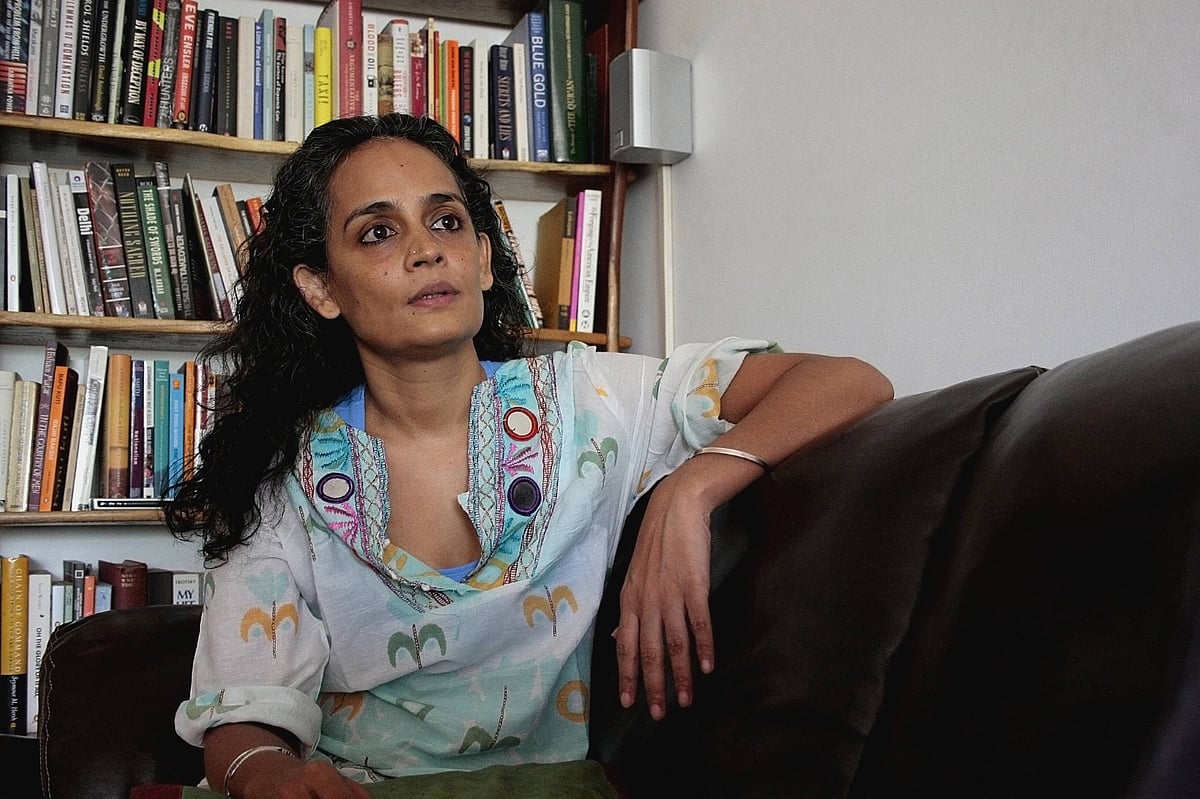
Arundhati Roy's 'field notes' pose an unpretentious yet thorny question: What happens once democracy has been 'used up'? With apologies to the Booker Prize winner, this spiky inquiry could do well to be reworded with something a bit more commonplace, perhaps: At this point, does it make sense to visualise and strive for an alternative worldview that, simply put, respects life? This new work is a collection of previously published essays on the moral, economic and political causes for a variety of anti-democratic happenings in India of recent years, from the attack on the Indian Parliament in 2001 to the assault on Bombay of 2008. Traversing these events, which have inerasably punctured the first decade of India's 21st century, Roy's poser is neither why nor how such incidents are taking place. Rather, she is wondering how long these will continue, and how long the rest of us are to remain mere lookers-on.
"In a time of universal deceit," George Orwell famously wrote, "telling the truth becomes a revolutionary act." In Roy's case, such a sentiment provokes her to place into the current politico-economic context, the various acts of violence to which India has been a witness. Similarly, her attempts to bring to light lesser-known (and often shrouded) details of events such as the Gujarat pogrom of 2002, or the 2005 judgment in the trial of Mohammed Afzal, prime accused in the Parliament attack case, need not be viewed only as courageous writing.
Certainly, the spirit behind her undertaking is beyond reproach, but such catharsis has been habitually practiced by the self-assured sections of the elite who dangle between a make-believe world of activism and insular dormancy.
Yet, Roy's disdainful tone and moralistic stance is inherent in her writings. For instance, she writes: "Our inability to live entirely in the present (like most animals do) combined with our inability to see very far into the future makes us strange in-between creatures, neither beast not prophet." At another level, a particular reading of Roy's book would suggest the humanities scholar Sundar Sarukkai's concept of theorising as a sort of 'distribution of guilt', as in this excerpt from Grasshoppers: "It is not in our power to stop Bush's visit. It is in our power to protest it, and we will. The government, the police and the corporate press will do everything they can to minimize the extent of our outrage."