
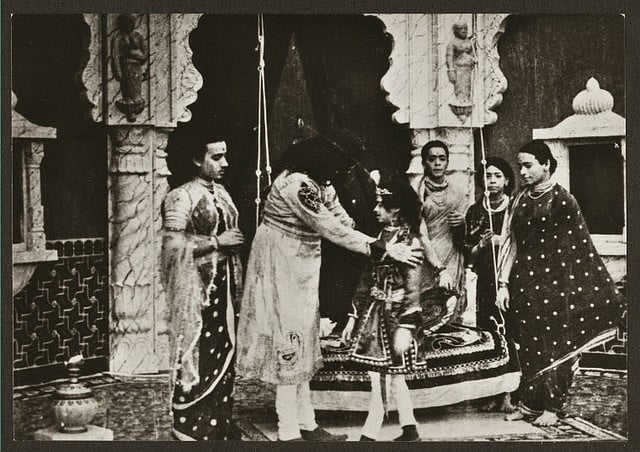
If you were to take a tour of the Film and Television Institute of India (FTII) campus in Pune, this was the building you would most likely have missed. In the heart of the campus, nestled among the eucalypti, it seemed to be sleeping, seemingly forgotten. Well, not anymore after it literally exploded into the news early January this year. Now, that building cannot be found even if you went looking for it.
On 8 January this year, the students were milling about just near this unassuming building, busy with year-end project submissions. The production department was taking its usual early lunch. All seemed to be as usual when smoke and strange orange fumes began emanating from the building. Everybody guessed what was up, and people started running away from the structure, warning others on the way. It was a matter of moments before the orange fumes, all of a sudden, combusted. The ground shook with the explosion. A cloud of smoke and dust rose from the structure and angry flames leapt out of the two ventilator shafts. The gases trapped inside the structure under extreme pressure started to billow out of the shafts and the blaze looked like it was coming from a flamethrower, reaching as high as 20 metres. The trees on the north side and the production department protected Studio 1 to some extent. But within a few minutes the production department was charred, as were four scooters parked in the vicinity. On the south side, the flames reached the TV building, crossing a lawn and a fountain that now have ceased to exist. All the trees around the structure are gone too. Had it not been for the trees, the damage would have been even more extensive. The fire tenders, seven in all, arrived within 10 minutes and actually did a good job of containing the fire. But by then, a heritage had been lost.
No one really knows what caused the fire. Did the cooling system malfunction, was it poor maintenance, or was it an electrical short circuit, as the authorities claim? A maintenance crew had been sighted coming out of the building that very morning. Now that the damage has been done, the speculation is merely academic and technical. What we can say for sure, however, is that about 3000 cans of film were destroyed, and of these at least 250 films were original prints. The originals included such masterpieces as Eisenstein's 1925 classic, Battleship Potemkin; Raja Harishchandra (1913), India's first indigenous silent feature film; Ayodhyecha Raja (1932), the first Marathi talkie; Ballet Mechanique (1924) by the French Dadaist painter, Fernand Léger; the speeches by Gandhi and Nehru at the 1942 session of the All India Congress Committee; and footage from the last world war. Among other prominent losses were some of the great films produced under the Bombay Talkies banner: Achhut Kanya, Bhabhi, Durga, Kangan, Izzat, Navjeevan and Kismet; and films such as Amrit Manthan, Sant Tukaram, Dada Saheb Phalke's Kalia Mardan and Sohrab Modi's Pukar. Also lost was original film footage from the freedom struggle – of Gandhi in Delhi, Jinnah with C Rajagopalachari, Vallabhbhai Patel, and Subhash Bose.
The building, a nameless nondescript structure in the heart of India's premier film training institute, was where the National Film Archives of India (NFAI) housed some of its collection, the rest of which is across the road from FTII, on the NFAI premises. FTII occupies grounds that once belonged to Prabhat Studios where many regional language movies were filmed. It is therefore ironic that most of the films lost that afternoon were regional films, which had been archived on the FTII campus.