
Sitting next to me on the one bench available for travellers at the waiting area in the airport in Simikot, the headquarters of Humla district in western Nepal, was a young man who unbeknownst at that time, would die within the next 15 minutes. Short, thin, and with only a hint of facial hair, he looked at me curiously. He was, I presume, making sure I was a Nepali. He then turned to his friends and said something in broken Hindi. It was his attempt at a wisecrack directed at the group of geriatric Indian tourists returning from their pilgrimage to Mansarovar in the Tibetan Autonomous Region. Then things happened quickly: the young man began choking, shook uncontrollably, frothed at the mouth, and then collapsed on the ground. Someone shouted, "It's mirgi (epilepsy)." Those of us right next to him loosened his shirt buttons, put his bag under his head, and someone took off his shoes. A nearby police officer was asked to call the doctor. "It will be fine. I have seen this before. Let him be like this for 10 minutes; he'll wake up. I am sure this guy takes drugs." Unsure but pacified, we continued to talk to each other. The young man continued to lie on the floor, his friends anxiously hovering over him. After five minutes when his brother, no more than 15-years-old, checked for his heartbeat, he couldn't find one. The police arranged for a stretcher to carry the body away. No doctor was called.
These men were farmers from the neighbouring district of Bajhang, who, after the 2015-2016 drought that hit Nepal's mid-west region had decided to migrate to Simikot to look for work. It was a fatal end to the tragedy of continuing food insecurity and poverty in the region. According to government, the drought – the worst in 40 years – has exacerbated the region's economic vulnerability. But there is only a half-hearted attempt to understand the causes of this insecurity, and more immediately, that of the drought itself.
Far-Western districts like Bajhang and Bajura and mid-Western districts in the Karnali zone – Humla, Jumla, Mugu, Dolpo, Kalikot – have remained in the grip of persistent poverty. In 2011, Humla ranked highest in Nepal on the index to measure multi-dimensional poverty, a position it held even in 2001. According to the UNDP's Human Development Report 2014, the latest such report which provides disaggregated data, it was also among the lowest five districts in terms of education, and child nutrition and the overall Human Development Index.
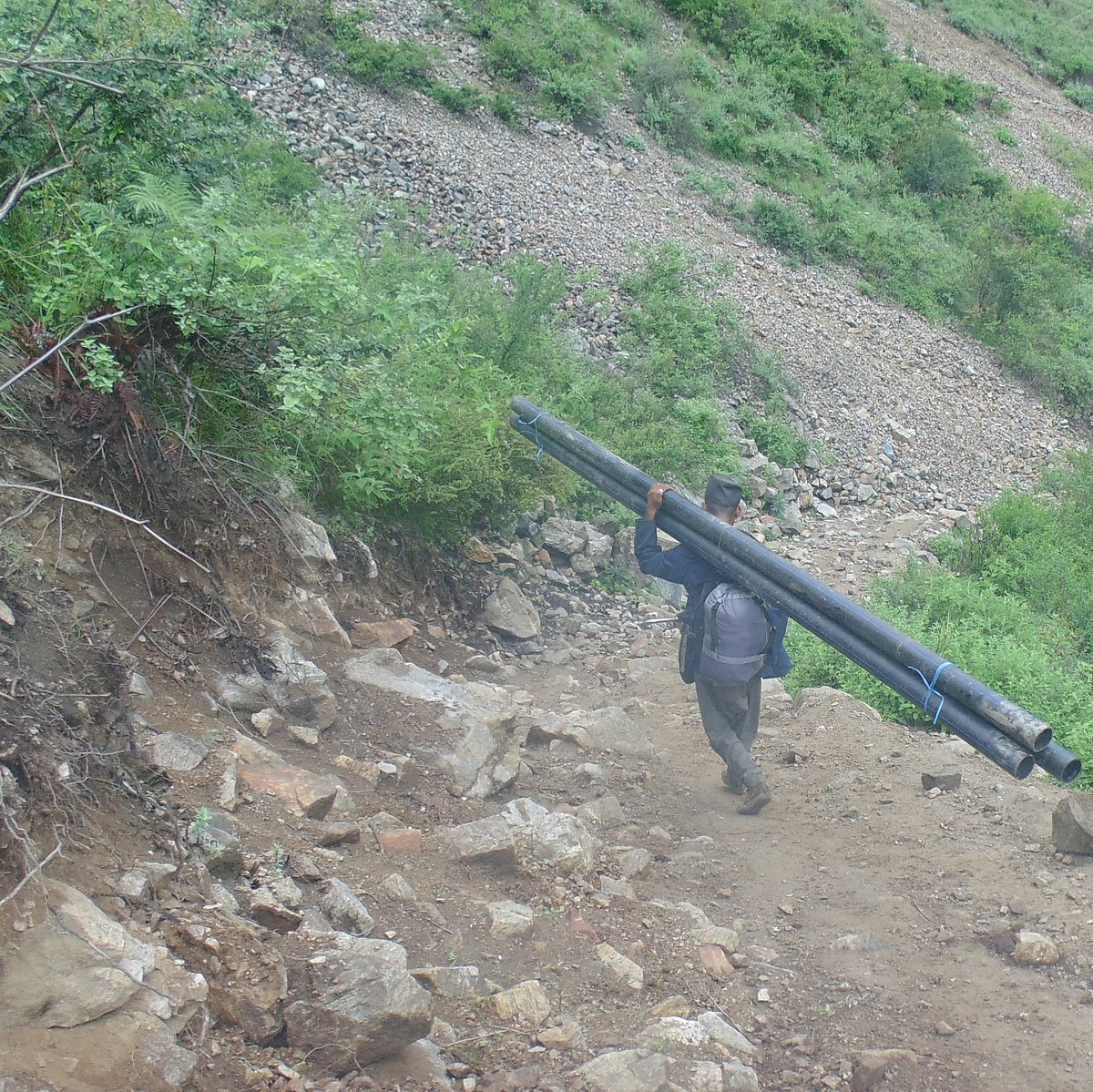
A reason for this stubborn economic vulnerability is the vertiginous terrain and the corollary lack of roads, making it difficult for the state, the market, and non-government organisations to access the area to provide services and goods. For instance, some villagers in Humla walk for four days to reach the district headquarter which has the only airport in the region – to collect a sack of rice or buy a piece of corrugated tin to carry back home. The aridity and the terrain make it impossible for even subsistence agriculture and the area's remoteness from the seat of power in Kathmandu has led to political neglect. But besides these political and social reasons, new research on the ecosystem of the region suggests that the causes might be more complicated.