
IN APRIL of this year, the United States, seemingly no longer content to uphold the status quo of global trade and power, unleashed a barrage of tariffs against every single country in the world. The new policies set a baseline tariff of 10 percent on all goods coming into the United States, with some countries (along with uninhabited territories) facing even higher tariff rates. Though US president Donald Trump temporarily put most of these tariffs on halt after days of precipitous stock-index drops and ominous bond-market rumblings, the damage was done: It was lost on no one that the United States had effectively threatened to end the global free-trade regime it had played a leading role in establishing, fostering and defending for decades.
It is no exaggeration to say that globalisation is, and has been for some time now, at the precipice. While the US tariffs were the latest salvo against an established international consensus, they were hardly the first. The supply-chain aftershocks of the Covid-19 pandemic – fluctuating gas prices, shipping delays, vicious inflation – laid bare the fragility of a system in which a single cargo ship stuck in the Suez Canal could bring much of global trade to a halt, as happened in March 2021. In democratic elections in 2024, in country after country, incumbent parties either lost or saw significant drops in vote share, in no small part due to widespread anger over the economy.
The geopolitical shibboleths of the global free trade era are also crumbling. Globalisation’s apologists once argued that increased economic interdependence would deter wars, given that no aggressor country would risk the cost of disrupting its place in the global market. But tightly interconnected transnational financial networks have not been enough to deter Russia from marching into Ukraine, nor China from militarising its coast guard to assert disputed territorial claims in the South China Sea.
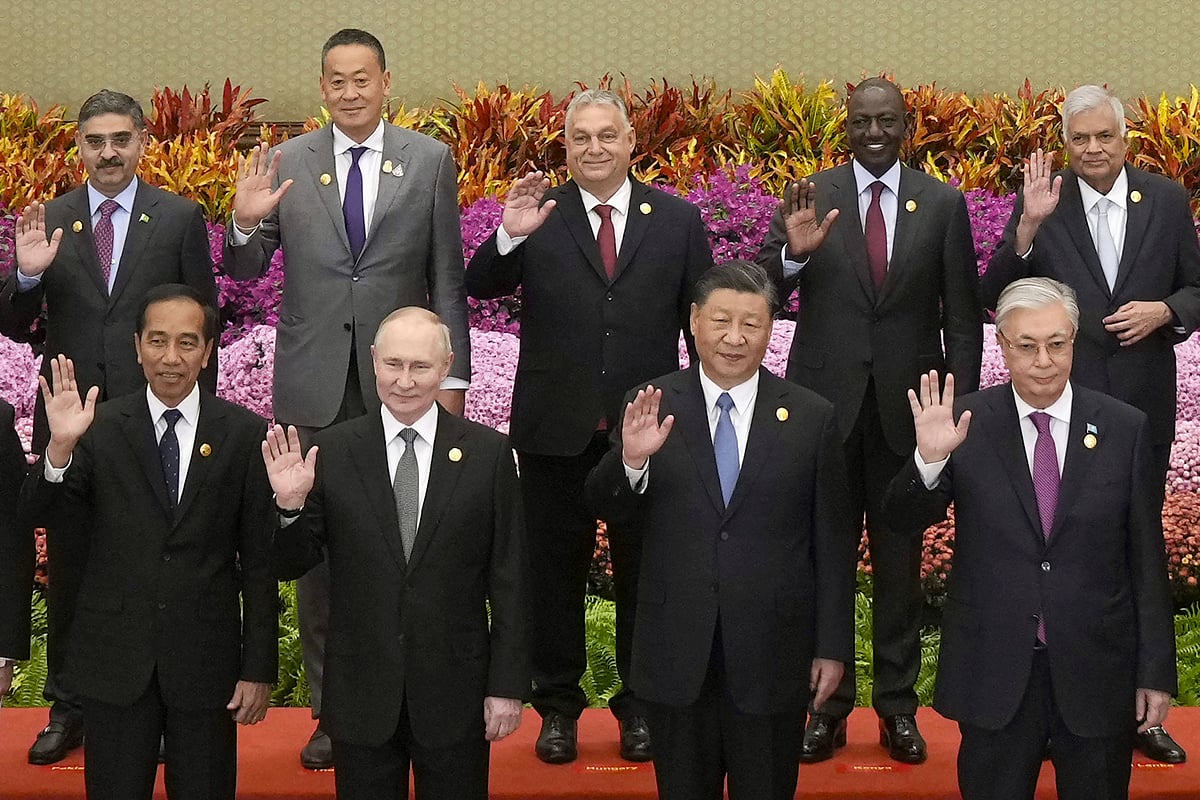
Small wonder, then, that China has been increasingly emboldened to view the present moment as an opportunity to shift, if not entirely supplant, this besieged global order in its own favour. Gone are the days when Deng Xiaoping, China’s paramount leader throughout most of the 1980s, urged his country to “hide your strength and bide your time” on the international stage. In 2013, China’s current paramount leader, Xi Jinping, announced the Belt and Road Initiative (BRI), a decades-long undertaking to invest trillions of dollars in infrastructure projects across the world – and, in doing so, to reshape the ideological realities underpinning the international order.