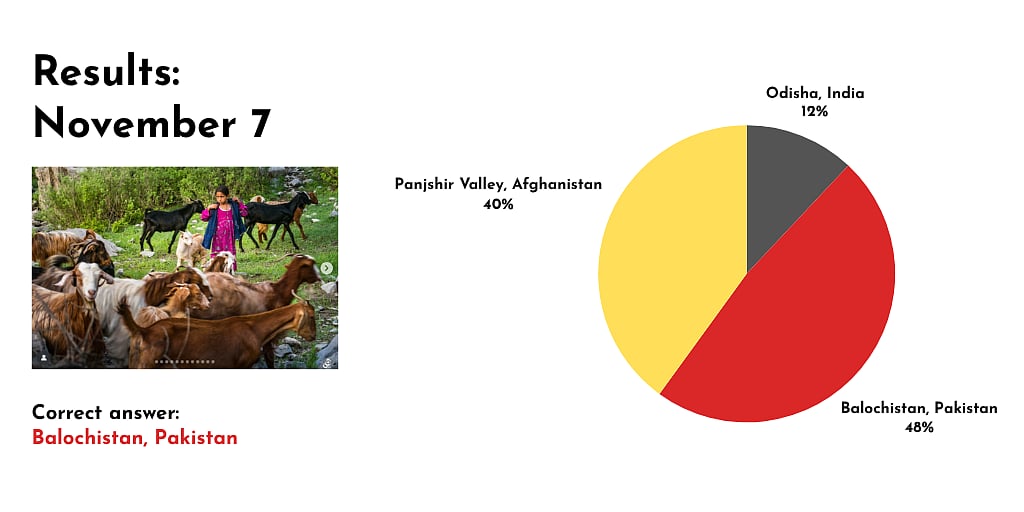
On Monday night, a WhatsApp group I’m on lit up with messages from journalists in Pakistan, checking on friends based in Delhi. The next day, the group chats lit up again – this time with journalists from across the region checking on friends in Islamabad, where there had been an explosion near the city’s High Court. This week, mainstream media in India and Pakistan have led with news of the explosions and subsequent investigations. In the frenzy of updates, news of the Bihar Assembly elections barely made a blip on people’s social media feeds.
But as we discussed during our editorial meeting, that’s exactly why it’s important to focus on it, particularly given the recent electoral roll revisions. At Himal, we’re always trying to cut through the noise to bring you news updates from the region that matter. That’s why I hope you can support our work – so we can keep bringing you stories that matter from across Southasia.
This week in Himal

Salman Rafi Sheikh asks if a new Southasian bloc is possible as China and Saudi Arabia attempt to rework Southasian politics – with economic fragility, militancy and India-Pakistan tensions proving to be stumbling blocks.
On the Saffron Siege podcast series in collaboration with Karwan-e-Mohabbat, author and activist Bhanwar Meghwanshi speaks to Harsh Mander about his journey from RSS preacher to Dalit activist, revealing how the RSS has deepened caste divisions even among oppressed castes.
Coming up on the Southasia Review of Books podcast hosted by Shwetha Srikanthan, a conversation with fiction writer Dur e Aziz Amna on her new novel, A Splintering, which traces the class struggles of a woman caught between the province and the metropolis, and between motherhood and ambition, in Pakistan.
Also read: After 28 years, ‘Indus Echoes’ spotlights Sindhi cinema in Pakistan
Also read: Podcast: Bhanwar Meghwanshi & Harsh Mander on Dalits and the RSS
Also read: China and Saudi Arabia are walking the tightrope over Southasia’s schisms
This week in Southasia
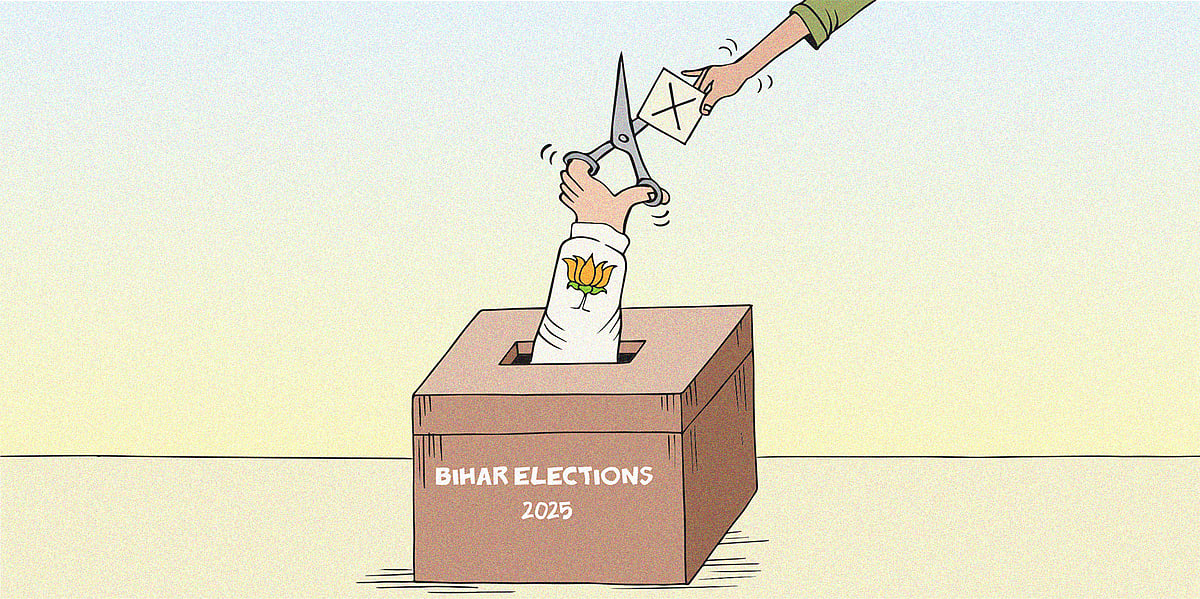
Bihar’s voter roll revisions raises crucial questions around electoral integrity
As of 4 pm on 14 November, the ruling National Democratic Alliance, which includes the Bharatiya Janata Party, is headed for a landslide win in Bihar’s assembly election, with the NDA securing over 200 of 243 seats. The election saw a record turnout, and was widely reported as a crucial test of prime minister Narendra Modi’s popularity, even as the BJP has in the past relied on political alliances to come to power in the state. Key discussion points included youth frustration around jobs and education, given that Bihar often languishes at the bottom of most of India’s multidimensional human development indices.
Nearly absent from these discussions were electoral roll revisions rolled out in Bihar which required voters to provide proof of their place of birth and in some cases, of parent’s citizenship. Over 300,000 voters deemed ineligible were struck off the Bihar voters list as of 30 September, with the updated list not yet publicly available. Despite political opposition raising concerns around disenfranchisement and a lack of transparency and practicality in the process, the Election Commission has begun revising voter rolls in 12 states. Several petitions have also been filed challenging the revisions in India’s Supreme Court, including from other states. These developments raise serious questions about the integrity of the election result, with ramifications for other Indian states set to go to the ballot next year. Scroll down to the archive section to listen to an episode of State of Southasia with political commentator Aakar Patel on the unprecedented threats to India's 2024 general election.
Elsewhere in Southasia
- India using stringent antiterror laws to investigate Kashmir link to Delhi Red Fort blast, Pakistan’s prime minister says blast in Islamabad a day later ‘backed by India’ on Afghan soil’, raising regional tensions
- Afghanistan-Pakistan peace talks collapse, ceasefire under strain after Islamabad blast
- Member of student wing of Bangladesh’s Awami League arrested in connection with crude bomb attacks across Dhaka, targeting Christian community, Grameen Bank
- At least 21 deaths reported as boat carrying Rohingya refugees fleeing Myanmar sinks
- Pakistan’s Senate approves constitutional amendment reshaping the country’s judicial system and allowing immunity for military top leaders despite pushback
- Bangladesh set to hold national referendum on July charter for political reforms ahead of elections after 2024 student-led protests
- Maldives’ environment minister fast-tracks approval for Addu wetlands reclamation project despite public protests
- Madhesh province head removed from post after appointing CPN-UML leader Saroj Kumar Yadav as chief minister, Nepal’s Supreme Court issues interim order barring Yadav from taking ‘long term decisions’
- India extends USD 455 million credit line, inaugurates new hydroelectric project in Bhutan during visit from prime minister Modi
Revisit the below archival stories from Himal adding more context to this week's news updates from India and Myanmar
Also read: State of Southasia #03: Aakar Patel on the unprecedented threats to India’s election
Also read: How Thailand and India continue to fail Myanmar refugees
Snap Southasia
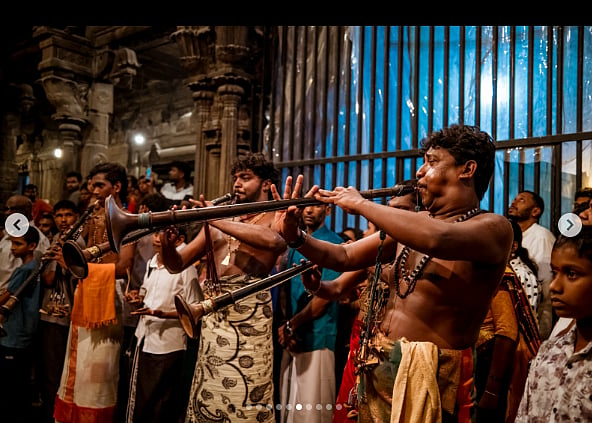
Where in Southasia was this photo taken? Click on your guess below (and check in next week to see if you guessed right!)
Kanchipuram, India
Kathmandu, Nepal
Kochchikade, Sri Lanka