
This week at Himal
We launched the Southasia Review of Books podcast, where we’ll be speaking regularly to celebrated authors and emerging literary voices from across Southasia. In our very first episode, the novelist V V Ganeshananthan joins host Shwetha Srikanthan to talk about the books that define her latest novel, Brotherless Night, and about women’s writing on Sri Lanka’s long history of anti-Tamil violence.
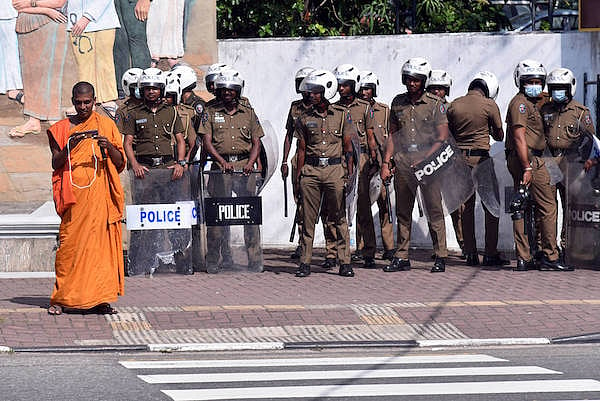
Also from Sri Lanka, Tisaranee Gunasekara unpacks the recently passed Online Safety Act and how it might be weaponised by political monks who have been clamouring for a blasphemy law. Gunasekara writes that the nebulous language of the Official Safety Act leaves the door wide open for official excesses and abuses.
Aneka Rebecca Rajbhandari and Raunab Singh Khatri discuss China’s long but stuttering history of studying Southasia. They write about a lack of primary research and fieldwork, particularly beyond India, that has hindered China’s understanding of the region.
This weekend we’re streaming Come over for a drink, kanchhi, a documentary directed by Sikuma Rai, as part of our monthly series of documentary screenings in collaboration with Film Southasia. The film shows the director’s confrontation with the popular narrative in Nepal that alcoholism is the leading cause of the Rai community's backwardness. Sign up here to receive the streaming link and updates on future editions of the Screen Southasia series. And please join us for a Q and A with Sikuma Rai on 6 March at 7 pm IST!
Also read: China’s long but stuttering history of studying Southasia
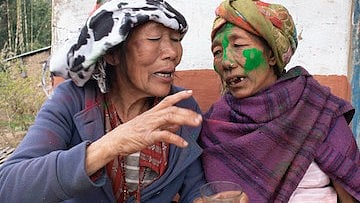
THIS WEEKEND: Watch Come over for a drink, kanchhi
From 1-6 March, tune in for an exclusive online screening of Come over for a drink, kanchhi , where filmmaker Sikuma Rai confronts popular narratives surrounding the Rai community and alcoholism in Nepal. Featuring a Q and A with the director on 6 March. Sign up here!
This week in Southasia
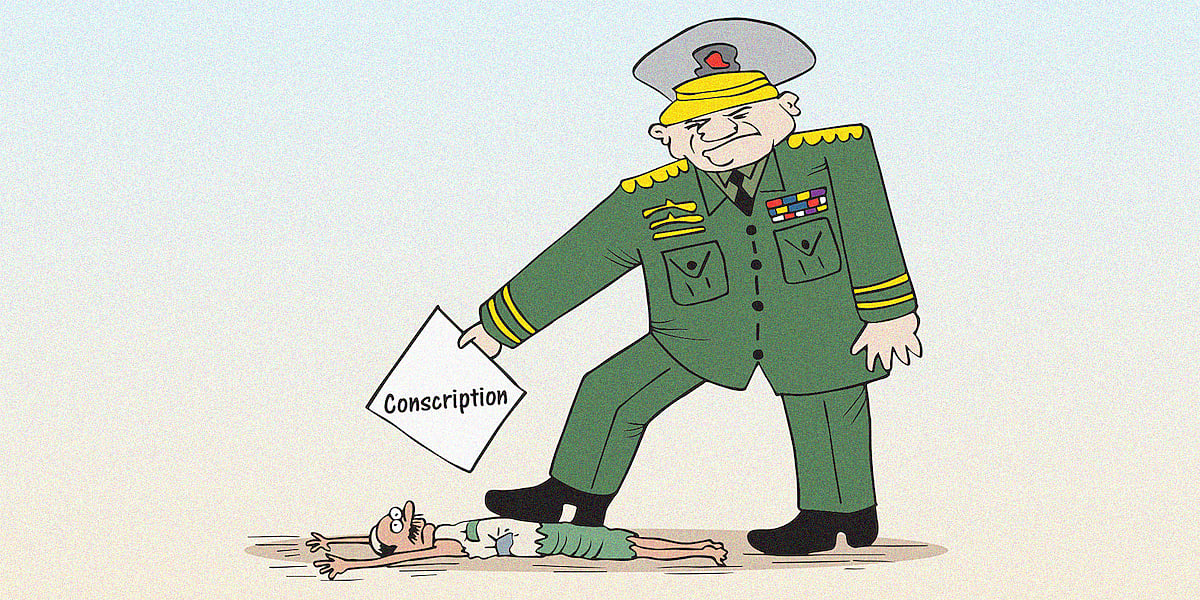
Myanmar military forcibly recruits Rohingya to fight anti junta forces
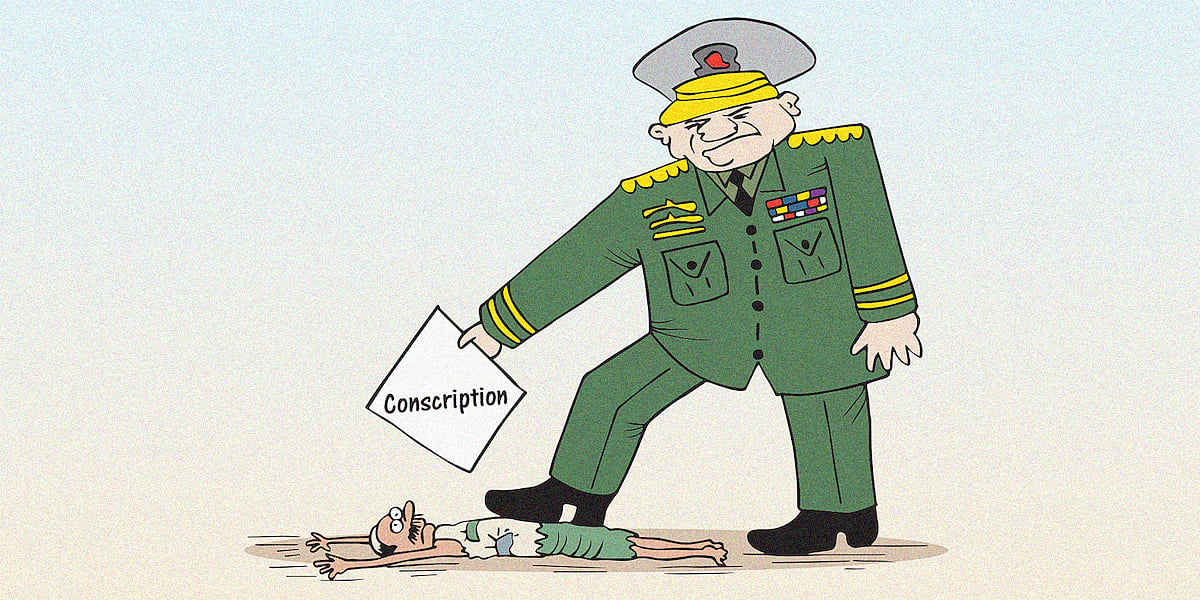
Myanmar’s military junta has begun forcibly recruiting Rohingya men from camps for the internally displaced in Rakhine state, after the enforcement of military conscription. At least 400 Rohingya men have been recruited to fight the anti-junta Arakan Army after a training period of just two weeks, raising concerns they are being used as human shields. Rohingya community leaders are being pressured by the junta to compile lists of men drawn from IDP camps and villages. The junta is saying that each Rohingya man who enrolls will receive one sack of rice, a citizenship identity card and a monthly salary of 150,000 kyats – roughly USD 40. The junta is also offering freedom of movement to Rohingya Muslims interned in camps.
The forcible recruitment drive is an extension of the violence and persecution that the Rohingya have experienced at the hands of the military junta. Myanmar’s recently enforced conscription law is meant to apply only to citizens, and critics say that the recruitment of Rohingya men is unlawful given the Rohingya’s statelessness. The Rohingya also say that the junta is trying to stoke ethnic tensions between them and Rakhines – the ethnic groups that dominates the Arakan Army.
Myanmar’s junta has suffered heavy losses due to coordinated attacks from anti-junta armed groups, dubbed Operation 1027. On 27 February, the Arakan Army killed around 80 junta personnel in Ramree in Rakhine state, despite shelling from junta forces. Over 170 junta bases have been captured in Rakhine and Chin states, even as a China-brokered ceasefire has been announced in Shan state.
Elsewhere in Southasia 📡
- Journalist Asad Toor arrested by the Federal Investigation Agency in Pakistan after social media posts criticising government, military establishment and Supreme Court, marking a crackdown on journalist’s freedom of expression following the country’s election results
- At least 10 people killed and 15 injured in an explosion at a fireworks factory in Tamil Nadu on 17 February, amid growing concerns around worker safety
- Six Congress party MLAs disqualified by the assembly speaker in the Indian state of Himachal Pradesh after cross-voting for the BJP in recent Rajya Sabha polls, drawing allegations of corruption and raising questions over the future of the Congress government in the state
- The Taliban carries out three public executions in the space of a week amid condemnation and calls to abolish the death penalty by the United Nations and rights groups
- China imposes lockdown on seven monasteries earmarked for destruction to make way for a dam project in Dege county, Tibet, despite mass protests; only 40 out of 1000 detained protesters have been released
- Curfew order imposed in Nepal’s Rautahat district after a clash over a Hindu ritual, amid growing calls for Nepal to revert to a Hindu state
- Controversial Chinese research vessel docks in the Maldives amid growing tensions between India and the Maldives, while the first team of Indian civilians arrives to replace an Indian military contingent in the country ahead of a 10 March ‘India Out’ deadline
- A woman wearing a dress marked in Arabic calligraphy saved from a mob in Lahore that accused her of blasphemy, sparking renewed discussion on Pakistan’s blasphemy laws
- Sri Lanka debates revoking long-term visas granted to Russian and Ukrainian tourists after controversy around a ‘whites-only’ party, amid growing scrutiny around foreigner-run illegal businesses operating in the south of Sri Lanka
- At least 43 dead and 22 injured in a fire at a multi-storey commercial complex in Dhaka, raising fresh calls for better enforcement of building safety regulations in Bangladesh
Only in Southasia!
When 84-year-old Herbert Fritz arrived in Afghanistan in May 2023, he liked what he saw. Described as a ‘far-right activist’ with a passion for visiting dangerous places, Fritz published an article called ‘Vacations with the Taliban’ about his travels. Unfortunately, the Taliban did not appreciate the free publicity, and arrested Fritz on suspicion of spying. Commenting on his arrest, Fritz said, ‘I think it was bad luck but I want to visit again.’ The Taliban did not appear to share Fritz’s enthusiasm. Describing his captors, Fritz said that some of them were ‘nice people’ but added ‘there were some foolish people also, I’m sorry’.
We wait with bated breath to see where Fritz will travel next.

From the archive
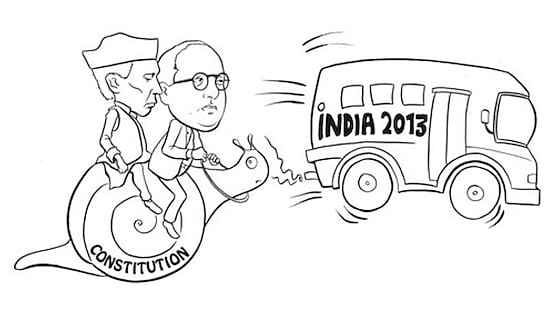
The reformatting of India (January 2013)
This week, we look at the India that emerged from its 1950 Constitution, and how the document’s focus on centralising government failed to do justice to the size and diversity of the country’s population, as well as the shared history of the Subcontinent. Kanak Mani Dixit writes that while Partition made the country New Delhi-centric to the detriment of its fringes, the time has come to consider a redesign to the superstructure.
As India braces for a general election, and with tensions over federalism rising especially between the country’s northern and southern states, this piece from our 2013 issue on the theme of ‘Are we sure about India?’ remains highly relevant.