
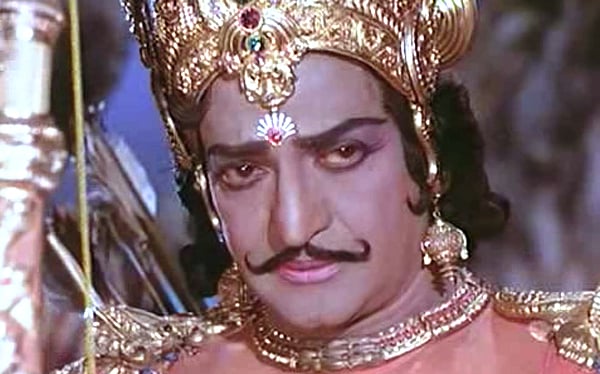
To the grossly underexplored field of Telugu cinema, S V Srinivas' Politics as Performance: A Social History of the Telugu Cinema is a significant contribution. As one of the first works on the topic it is likely to gain historical value and become a reference book. Andhra Pradesh, too, is under-studied within the social sciences and humanities in India. The Telugu film industry is the second largest in India, but there had previously been no full-length books written in English on Telugu cinema, except for one on Telugu film star Chiranjeevi (popularly known as Megastar) by the same author, Srinivas. But under-representation aside, scholarly work on Telugu cinema at this time is important: Indian cinema is usually reduced to Bollywood, and South Indian cinema to Tamil cinema.
Politics as Performance is not written in the style of a specialist 'film history', which falls within the 'film studies' genre in a narrow, conventional sense. Employing an interdisciplinary approach, it studies film culture not in isolation but in the intersection of history, economy and politics. It provides a detailed account of Telugu cinema and argues that this cultural industry is directly implicated in the emergence of a new idiom of politics. By specifically focusing on the career of one of the most charismatic stars of Telugu cinema, N T Rama Rao (NTR), who became, in 1983, the first non-Congress Chief Minister of one of the largest Indian states, Andhra Pradesh, Srinivas tries to demonstrate that cinema is crucial to understanding politics in India, particularly the south. In doing so, the author also claims an autonomous role for cinema in constituting modern identities rather than simply reflecting the existing ones.
With its readable prose and simple style, the book differs from the existing books on Indian cinema which tend to be infused with heavy doses of film theory. That does not mean it has no theoretical grounding. The author's theorisation is supported by many very significant details – largely sourced from unconventional and unexplored materials, such as film posters, film song books, 'yellow' journals – combined with empirical details, analyses of filmic texts, and so on. Thanks to the Bangalore-based MaNaSu Foundation, which has been digitising Telugu books, journals, and newspapers, Srinivas was able to include 209 images in his 431 page book. These make Politics as Performanceeasily comprehensible and enjoyable even to people who have no formal training in understanding cinema, and Srinivas has missed no opportunity in providing his reader with some of the most unusual and least-known facts: for instance, Kankara Chandraiah, the dalit entrepreneur from Telangana who went on to own eight cinema halls in Hyderabad, began his career as a 'gravel breaker'.
The "peasant industry"
The book covers a long and crucial period of Telugu cinema history, almost half a century, from the 1930s to 1980s. There are several interrelated reasons that make this period important. In post-Independence India, particularly in the south, a certain kind of elite rose to power. K Balagopal, Marxist scholar and human rights activist, has called this elite the "provincial propertied class" which, according to him, had strong links to agriculture and constituted a major proportion of India's exploiting classes. Balagopal argued that this class was the "enemy of the masses." Srinivas traces the emergence of this class to the 1930s and redefines their origins as "non-brahmin, non-vaishya and non-zamindar" (more specifically the Reddy and Kamma castes).