
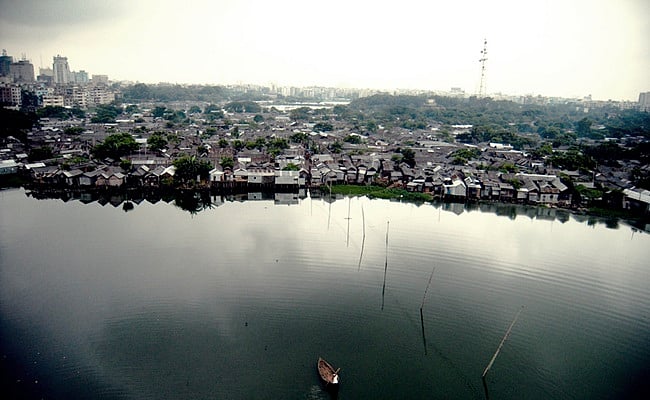
The summer heat is scorching but it does not impede the regular bustle of Korail, one of the largest slums of Dhaka, a city where an estimated quarter of the 16 million inhabitants live in slums. Rickshaw pullers come and go, fruit-sellers hawk their wares, bare-bodied boys walk around. Even the demolition of 1500 shacks has only slowed down but not halted the brisk activity required for making a living. In fact, the population of the slum scarcely diminished after the 4 April demolition carried out by the government. Most residents have not left because they have nowhere else to go. They depend on the slum and the surrounding area for their livelihoods; most of them work in the textile industries located nearby, or as household help in the neighbouring middle- and upper-class residential areas.
Though a court order has stayed further demolition and consequent evictions for the moment, the battle is far from over for Korail's residents. Like most slum-dwellers in Southasia, the residents of Korail are resigned to a precarious existence, living on the margins of the law, a short step away from falling through the cracks in governmental and social support structures because of their status as 'illegal occupants' of urban land.
Abdul Kader belongs to that group. He squats on a few sheets of newspapers spread over the ground that has now become the floor of his new home, just a few yards from the spot he used to call home for the better part of three decades. Tree branches overhead serve as a roof. Abdul Kader is in his sixties and is unwilling to move. His earnings as a fruit seller have helped him survive all these years, even enabling him to marry off his five daughters, leaving him alone in Korail with his wife. Kader does not dare rebuild his home. The slum is rife with rumours that the government will soon carry out another demolition to clear the entire area. Kader is one of around 100,000 people who live in the area and derive their livelihoods from it.
The recent eviction came at the behest of a court order that followed a newspaper report highlighting the slum's encroachment and impact on the Korail Lake. The 170 acres of land in Korail belong to the state-owned Bangladesh Telecommunications Company Limited (BTCL), the Public Works Department (PWD), and the Ministry of Information and Communication. The January 2012 news report led the Dhaka High Court to order the authorities to demarcate the lake's boundaries and remove encroachments. Following this, a designated court magistrate accompanied by BTCL officials initiated the demolition, using bulldozers to tear down the shacks.