
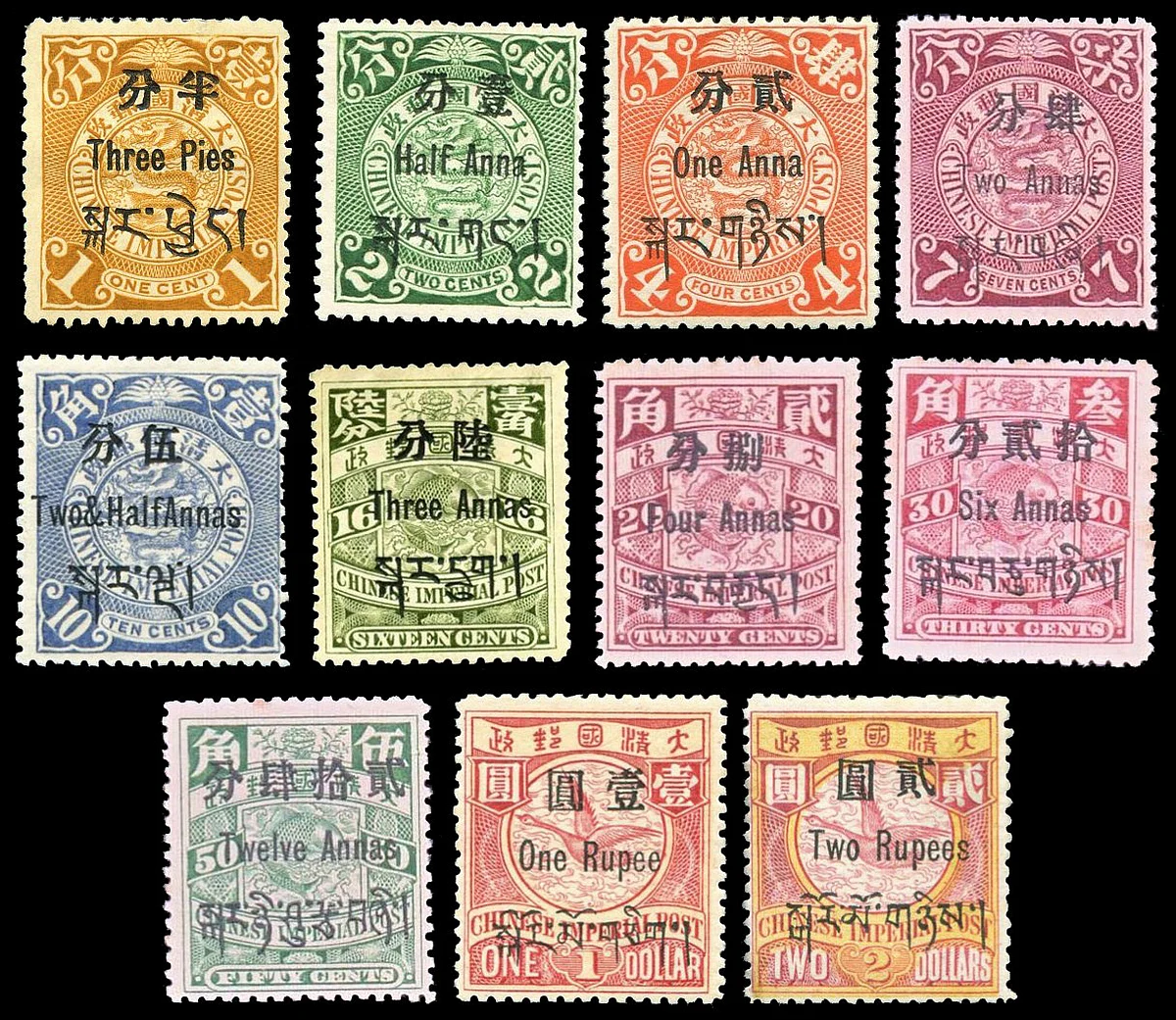
There are those who would die—and some who would kill—for old stamps from Nepal, Tibet and Bhutan.
A true philatelist (Webster's: phi-lat-e-list, "a collector of stamps") is not your everyday citizen. He or she (it's usually a he) squirrels away a prodigious amount of little squares or oblongs of coloured paper, in the gathering, studying, rearranging, and exhibiting of which he/she expends improbable amounts of time, ingenuity and money.
The bits of paper don't have to be pretty. Here, philatelists part company with collectors of paintings or sculpture or antique automobiles, all supposedly objects of beauty. Many philatelists seek out stamps others might regard as ugly, "marred" by having been cancelled. Such stamps were probably produced, not to raise money for some cash-strapped treasury, but for the more practical purpose of sending a letter on its way.
Communist, socialist, and capitalist nations alike cater to philatelists. One European stamp society boasts a membership in the hundreds of thousands. The largest in the United States, I can attest, has almost sixty thousand members. There's a lot for them to collect.