
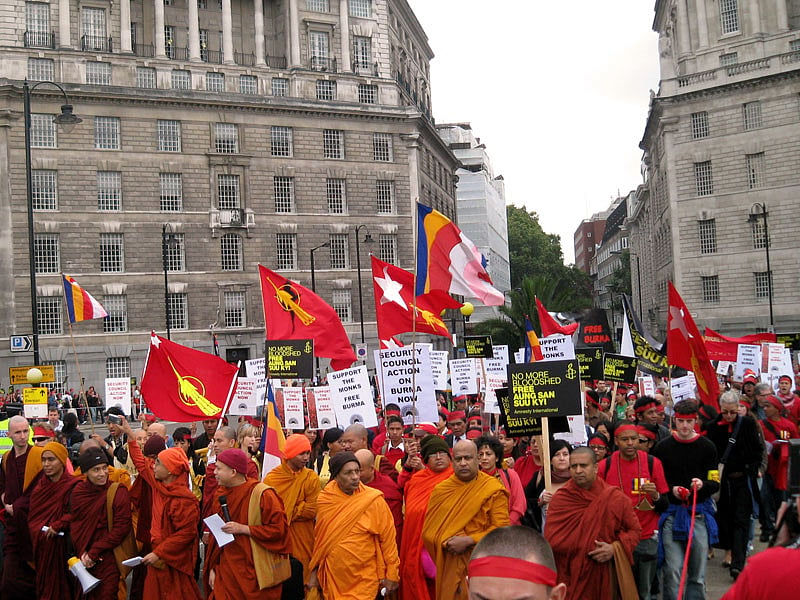
When Myanmar's new president, Htin Kyaw, was inaugurated on 30 March this year, it was a moment of celebration for the people of Myanmar, and those of us around the world who have supported their struggle for freedom. For the first time in over half a century, Myanmar has a civilian, democratic president with a clear mandate from the people.
When, a few days later, the new government created a new post, that of "State Counsellor", with powers similar to that of a prime minister, and appointed the leader of Myanmar's democracy movement, Nobel Peace Prize Laureate Aung San Suu Kyi, who more than anyone else has come to symbolise her country's struggle, it was as close as it is possible to get within the country's flawed constitution to the realisation of a dream many thought we might never see. The woman who had spent over 15 years under house arrest is now running the government.
The path to this point began in August 2011, when Myanmar's president at the time, Thein Sein, met Aung San Suu Kyi. Nine months earlier, the country held its first elections in 20 years, which were widely regarded as a sham. Suu Kyi remained under house arrest and her party, the National League for Democracy (NLD), boycotted the election and there were widespread reports of harassment, intimidation and vote rigging.
The military's party, the Union Solidarity and Development Party (USDP), formed a new government, but in effect it was simply a change of clothing, with generals swapping uniforms for suits and military rank for ministerial titles. Within days of the results, Suu Kyi was released, but for months the regime ignored her and it looked as if nothing would change. Then, one day in August 2011, Thein Sein surprised us all.