
"Heaven is a forest of miles and miles of Mohua trees / And hell is a forest of miles and miles of Mohua trees with a forest guard in it!" Thus goes a song of the Muria Adivasis in the forests of Bastar in central India. Encapsulated in this simple expression, however, is a very complicated history: of how India's vast forests were turned into a money-making industry, first at the hands of the British and then by independent India.
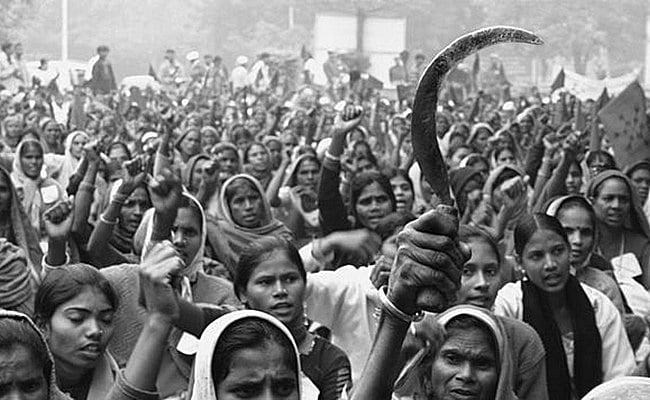
In 1855, Governor-General James Broun-Ramsey, better known as Lord Dalhousie, issued the Charter of Indian Forests, which declared much of the country's forest resources to be state property. Overnight, those who lived in these forests, mostly Adivasis, became 'intruders' in their own homes, and their livelihood practices, such as hunting-gathering and shifting cultivation, were termed 'unscientific' and deemed social evils. In many instances, they were forced to take up the plough or rendered bonded labourers or were simply driven out of the forests into uncertain futures. Forest-dependent communities increasingly lost track of their roots and, for decades, were unable to come to terms with the alien existence into which they were thrown. As the years passed, however, various resistance movements did coalesce, eventually taking on a new shape: community forest governance, or CFG.
As early as the beginning of the 20th century, local communities – especially in the tribal heartland of central and eastern India – began to realise that unless they took over management of the village commons, especially the forests, they would perish. For these communities, management meant not only protecting existing forests but also regenerating (and re-protecting) those woodlands that had been lost to the state. To the dismay of the Forest Department, a quiet revolution thus began in rural India, which was to turn violent in certain places, such as in Koraput district in the 1940s. This movement gained unprecedented, and unexpected, momentum during the 1970s, and has since spread to most parts of the country. In the process, it has put on public display what 'self-governance' can truly mean.
In particular, communities in Orissa (now Odisha) have emerged as torchbearers. Today, there are about 17,000 village forest-protection committees (FPCs) in the state, covering some 20,000 villages and protecting about two million hectares of forests. This means that more than a third of the state's total forest area is now under community control and care – even though, legally, it remains state property.