
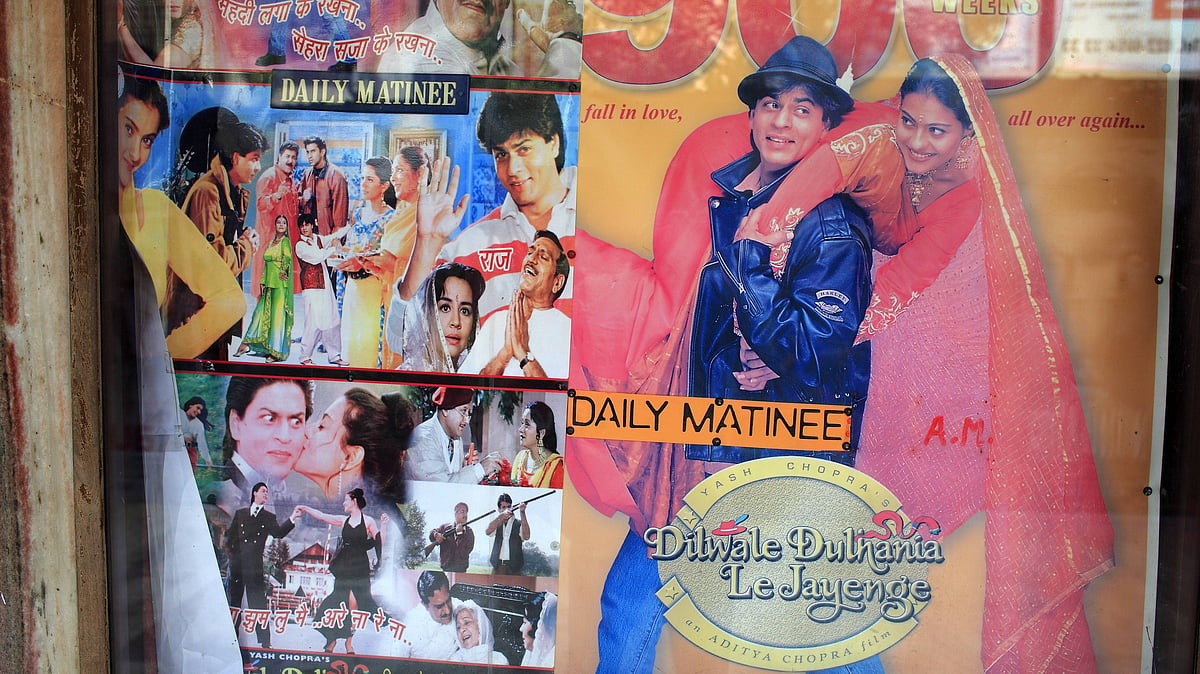
IF THERE HAD been no Dilwale Dulhania Le Jayenge (DDLJ), there may have been no Animal. Both Hindi films – DDLJ released in 1995, Animal in 2023 – earned record-breaking box-office collections. The director Aditya Chopra’s massively successful DDLJ (translation: The Brave-Hearted Will Take The Bride) set trends with its romanticisation of patriarchy as much as with its extensive use of exquisite foreign locales shot on a scale unprecedented in Hindi cinema. It established its leads, Kajol and Shah Rukh Khan, in the league of India’s most iconic screen couples. It also set Khan, who turned 60 this month, on the road to becoming one of the country’s biggest stars. As DDLJ marks its 30th anniversary this year, it remains well-loved, including by viewers who recognise its conservatism. Animal, however, has come to denote – at least in India’s liberal discourse – the depths of toxic masculinity on screen. The condemnation of Animal by many progressives who admire DDLJ reflects the story of contemporary India in a way that requires urgent discussion.
Kajol and Khan played DDLJ’s Simran and Raj, 20-something London-based non-resident Indians (NRIs) who meet and fall in love while on vacation in Europe. Simran’s father, Chaudhary Baldev Singh (played by Amrish Puri), is an autocrat who runs a convenience store and sucks the joy out of his home, like a Dementor from the Harry Potter books. Baldev has promised Simran in marriage to his friend’s son in Punjab. Her plea for permission to travel before marrying this stranger – “Can’t you, for my happiness, grant me one month out of my own life? Please Dad…” – illustrates the extent of his tyranny.
When Simran wants to elope, Raj insists he will marry her only with Baldev’s sanction. She acquiesces, which is unsurprising since she has grown up having her views disregarded by a terrifying man to whom her mother, Lajwanti (played by Farida Jalal), subordinates herself. When Lajwanti begs Raj to escape with Simran, he declines again – the only parental blessing he seeks is paternal. The women’s fears are borne out by Baldev’s conduct. He threatens dire consequences for Simran if she does not forget Raj. Later, he assaults Raj.
In the end, Daddy releases his daughter to Raj, signing off with one of Hindi cinema’s most famous lines: “Jaa Simran, jaa. Jee le apni zindagi.” (Go Simran, go. Live your life.) The victor departs with the spoils of this man-versus-man custody battle.