
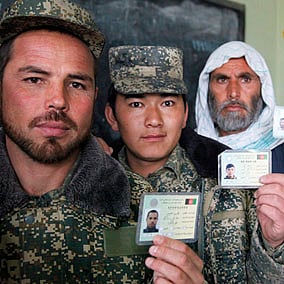
The year 2014 has become central to debate on Afghanistan, and public sentiment suggests that the country will face something of a doomsday scenario. Concerns circle around an impending collapse of the economy, a revival of the power structures encountered in 2001, the possibility of a civil war erupting, and the ascendance of religious fundamentalism. Conversely, others welcome the withdrawal, arguing that it will allow for peace to prevail and presents a unique opportunity for Afghanistan to define its own future.
After more than a decade of international assistance to Afghanistan, the year 2014 marks the beginning of a major transition period that will determine the future of international involvement. Key components of the transition include the recent presidential elections and a potential peace deal with the Taliban among other things. Foreign actors have grown tired of what appeared to be a never-ending commitment, therefore leaving policymakers little choice but to communicate the need for engagement in Afghanistan to slowly come to an end.
International military assistance and aid to Afghanistan will be reduced, and while this has been known since 2009 and forms part of the 'standard evolution' of a post-conflict scenario, many fear that the country will fall back into times of uncertainty in the absence of a strong international presence.
RECLAIMING AFGHANISTAN:
WEB-EXCLUSIVE PACKAGE